
Monaco GP FP3 Analysis: Mercedes Finds its Front-End, Leclerc Lurks, and the Battle for Pole Ignites
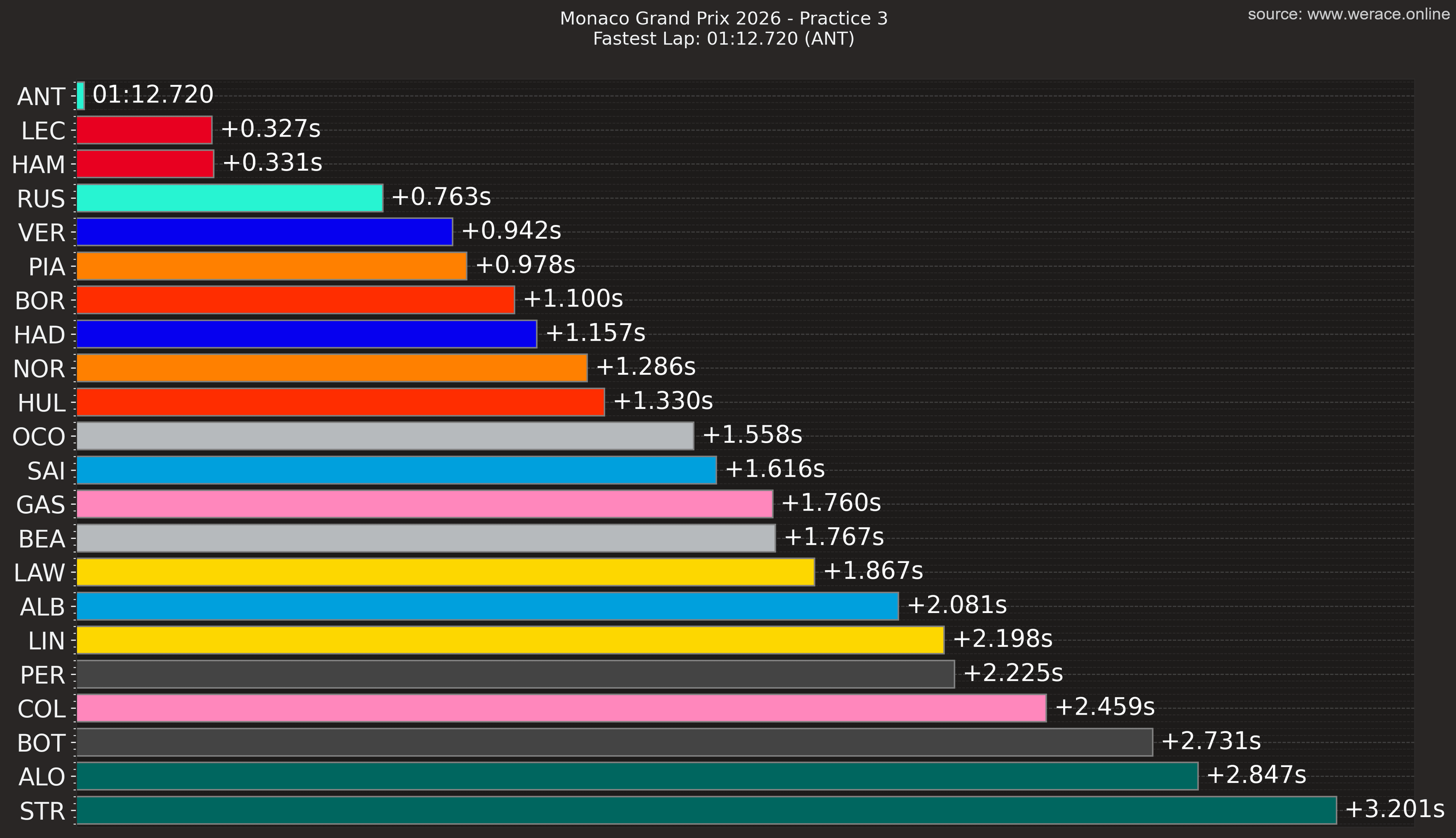
Monaco FP3 is officially in the books, and as we edge closer to Saturday's crucial qualifying shootout - undoubtedly the most thrilling and high-stakes session of the entire F1 calendar - the performance ceiling has just shattered.
The streets of Monte Carlo demanded absolute commitment today, and some teams found a lot more compliance than others. Let’s dive straight into the telemetry and weather data to understand who actually made a step forward overnight.
The Over-Night Evolution: Track Temps and Setup Breakthroughs
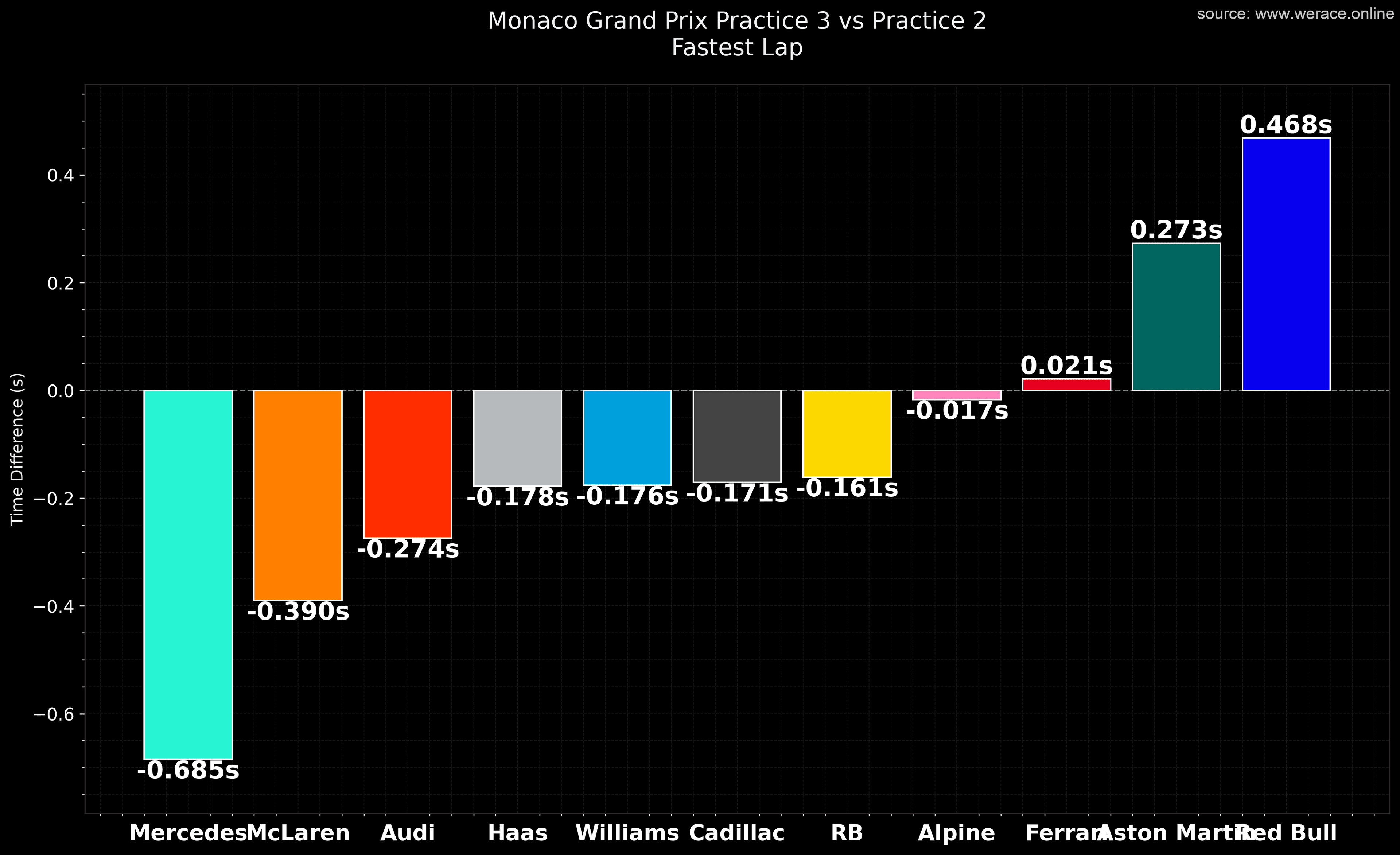
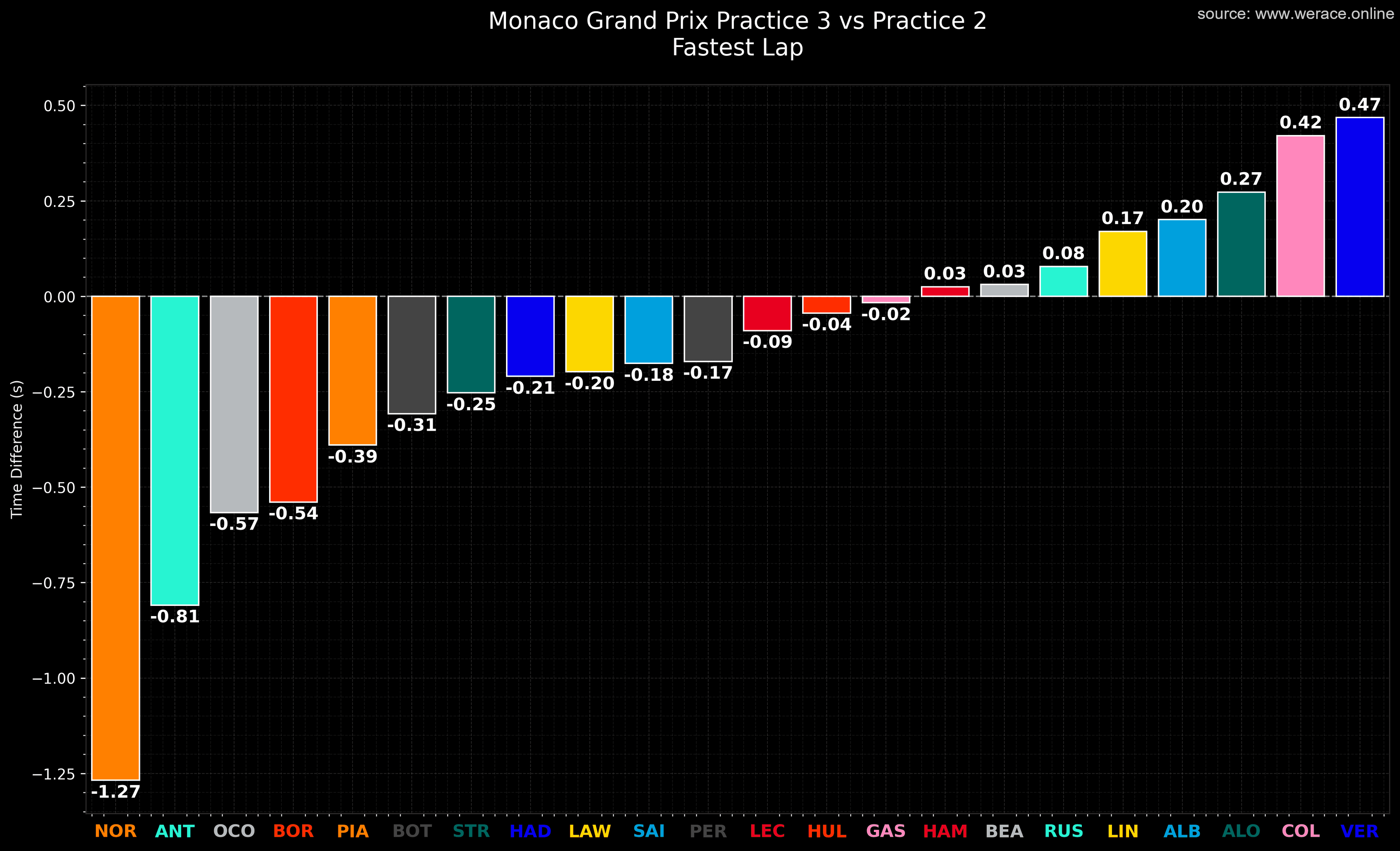
Compared to Friday's FP2 session, the single biggest surprise was the massive chunk of lap time that teams managed to shave off. Leading the charge was Mercedes, dropping over half a second compared to yesterday - the biggest improvement across the entire grid. To put that into perspective, McLaren also improved, but only by half that margin.
This sudden jump in performance boils down to two main factors: track evolution and temperatures, and overnight mechanical adjustments.
Looking at the thermal data, Friday saw track temperatures spiking aggressively during the early sessions. However, FP3 offered a much more stable environment.
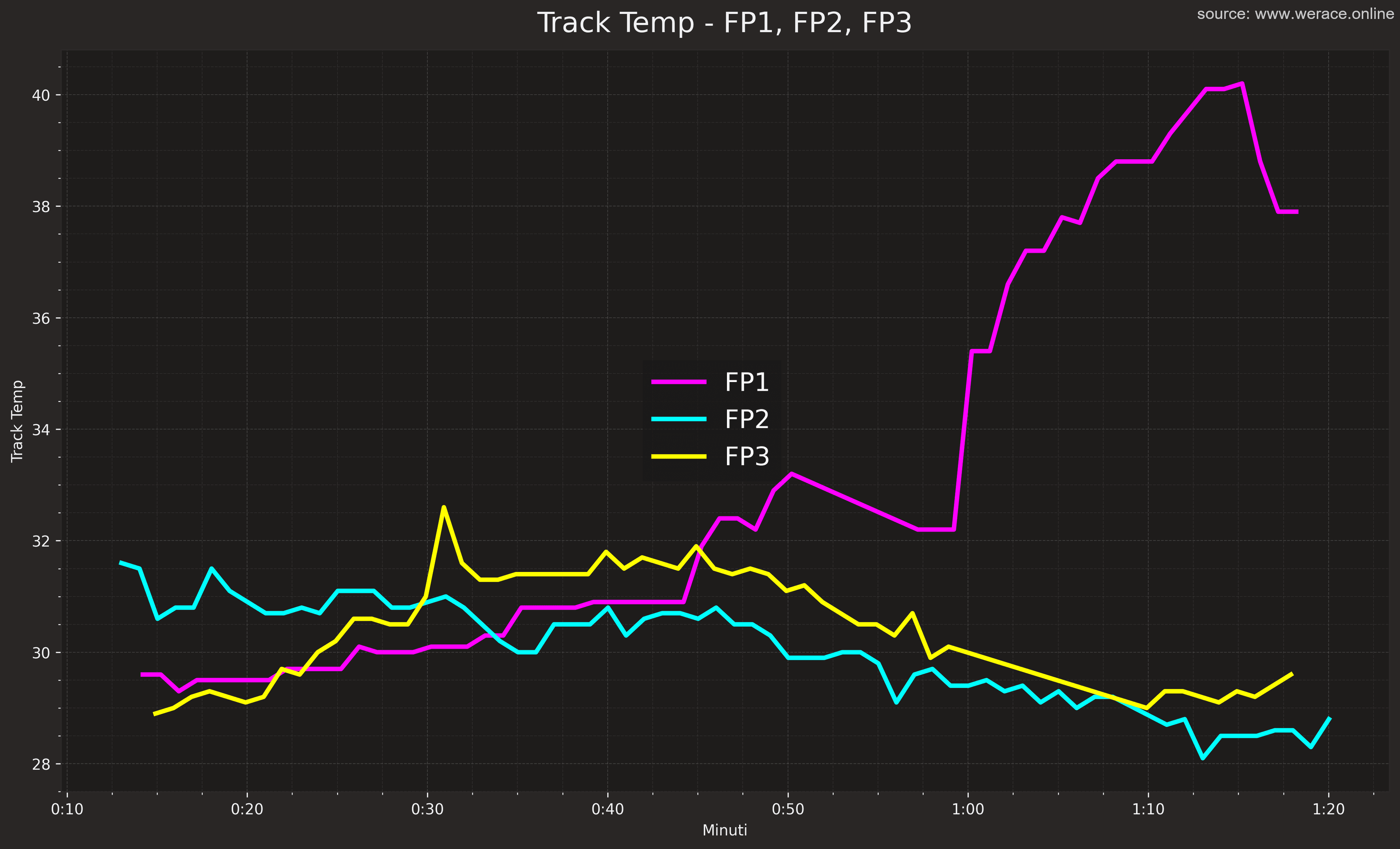
As the data shows, the FP3 curve tracked almost identically to the cooler FP2 session, giving teams a stable baseline.
Beyond the weather, the overnight work in the simulators paid off massively for Mercedes. Onboard footage revealed a much more compliant front end. The team clearly softened their suspension elements, allowing the car to absorb Monaco's harsh bumps and kerbs instead of bouncing over them.
However, this mechanical compliance came with a trade-off: almost every driver on the grid looked to be fighting a snappy, loose rear end today. Managing that low-speed oversteer will be critical once track temperatures change for Qualifying.
Telemetry Deep Dive: How Antonelli and Mercedes Unlocked the W17
The telemetry sheet tells the real story of this setup breakthrough. Yesterday, Kimi Antonelli was visibly fighting front-end understeer, struggling to rotate the car at the apex and losing crucial phase-time on traction out of the corners. Today, his steering inputs and braking phases look completely transformed.
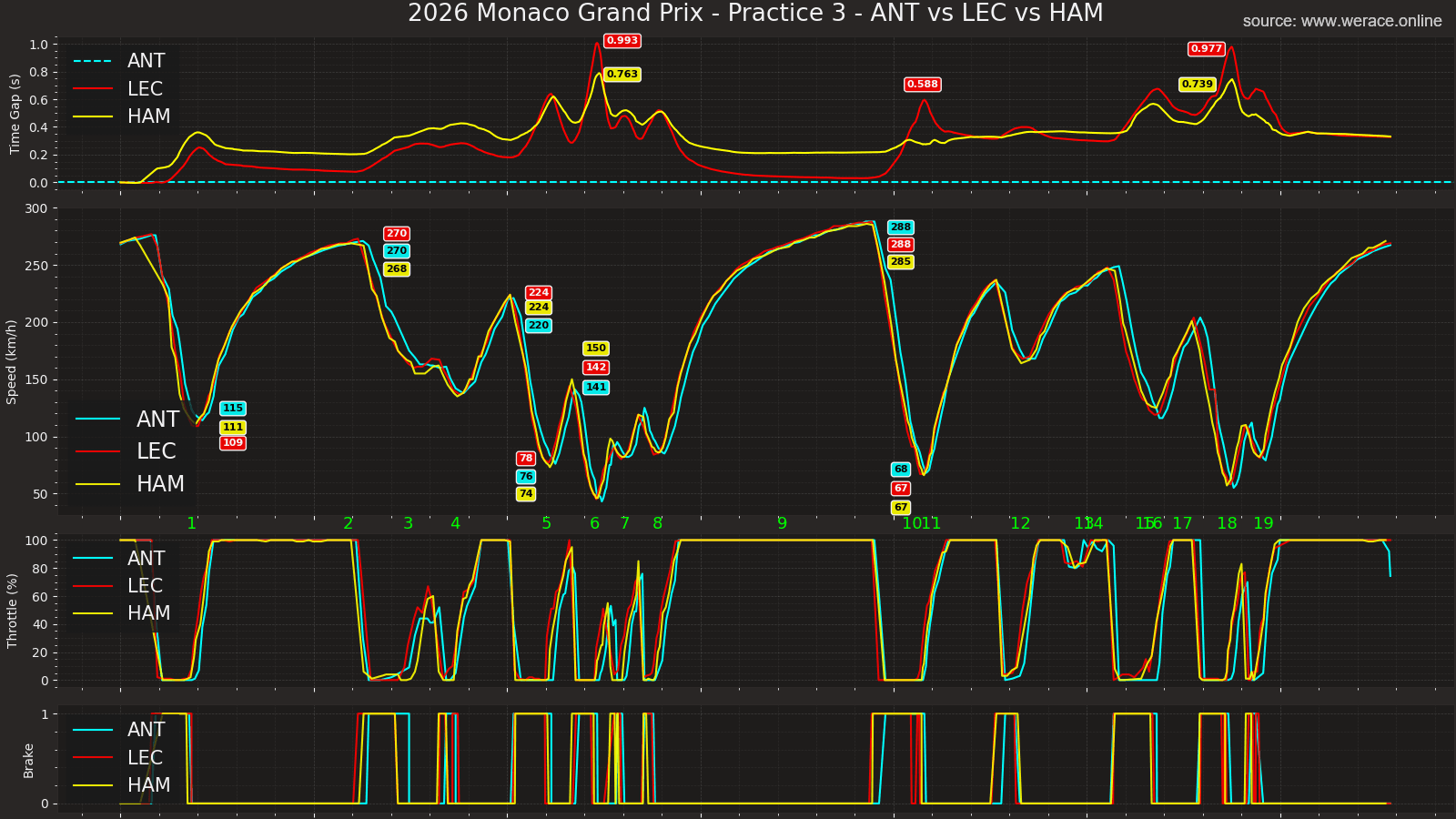
When we look at the throttle maps, Antonelli’s low-speed application at the Grand Hotel Hairpin complex (Turns 5 to 8) has shifted dramatically. Yesterday it was an uphill battle; today, his telemetry profile mirrors the mechanical compliance of Charles Leclerc's Ferrari.
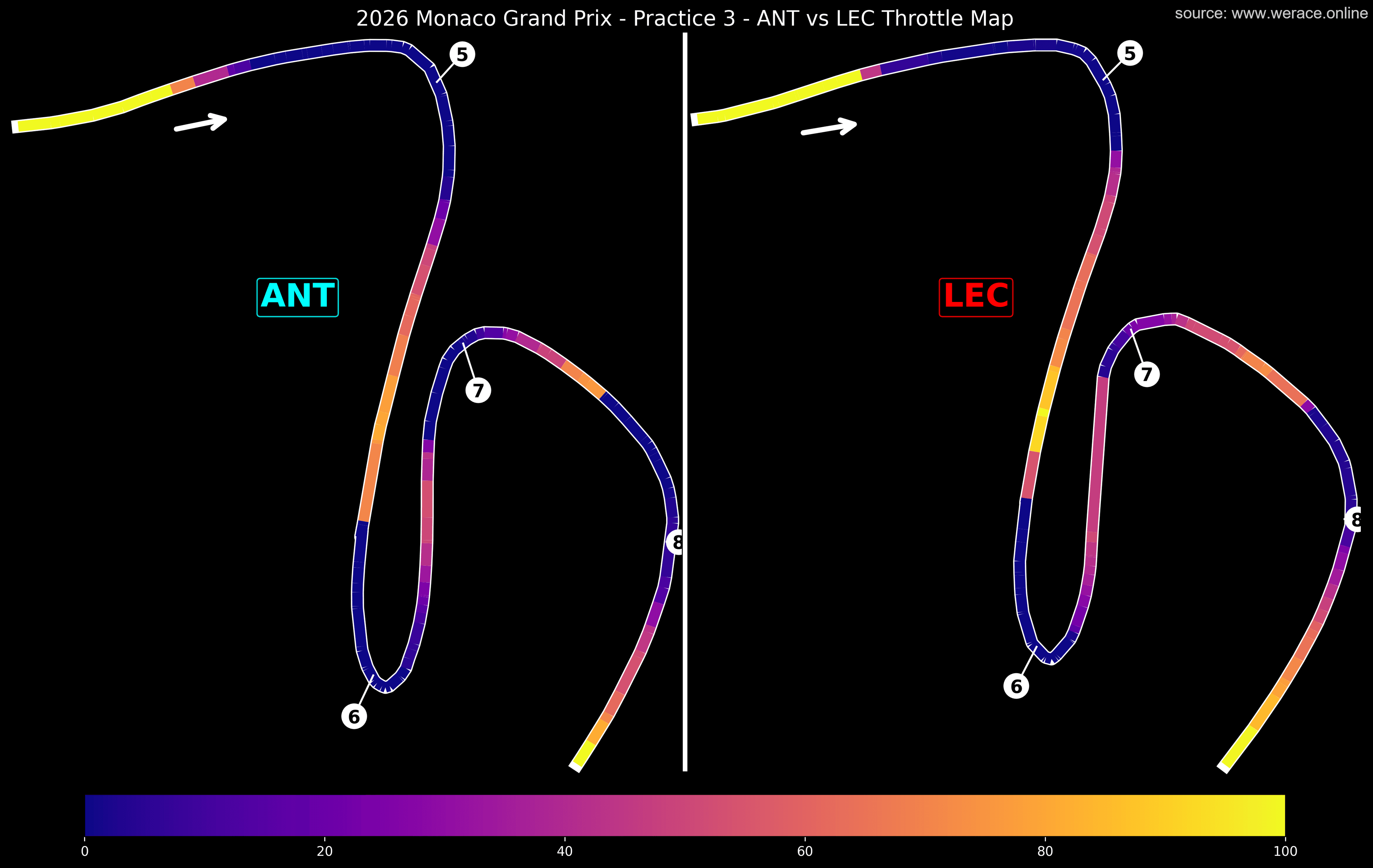
The aggressiveness of the Mercedes updates is even more evident in the high-speed and high-commitment sections. Emerging from the tunnel towards the Nouvelle Chicane (T10-T11), Antonelli is modulation-heavy but delays his initial deceleration phase, carrying immense rolling speed into the braking zone.
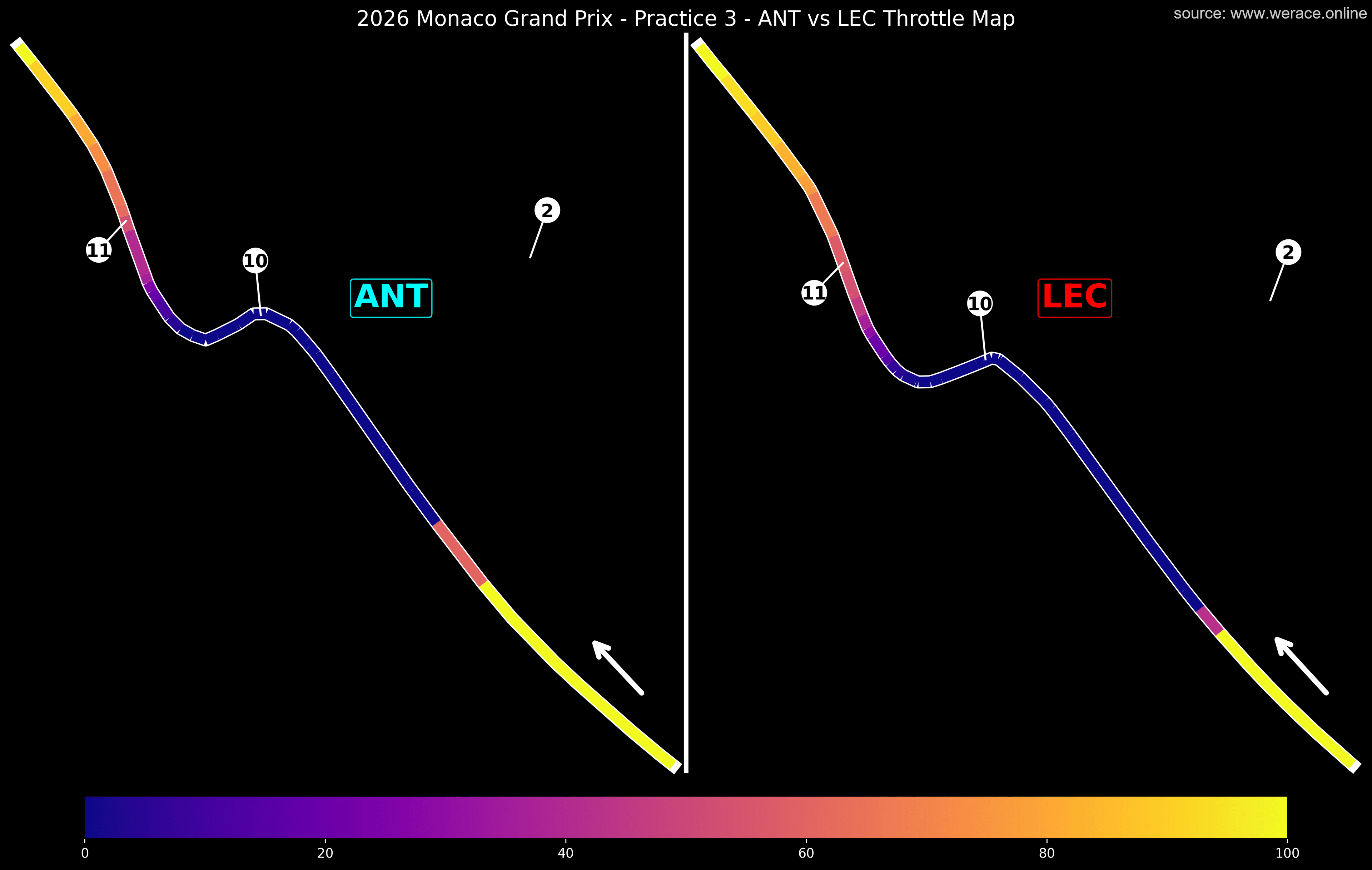
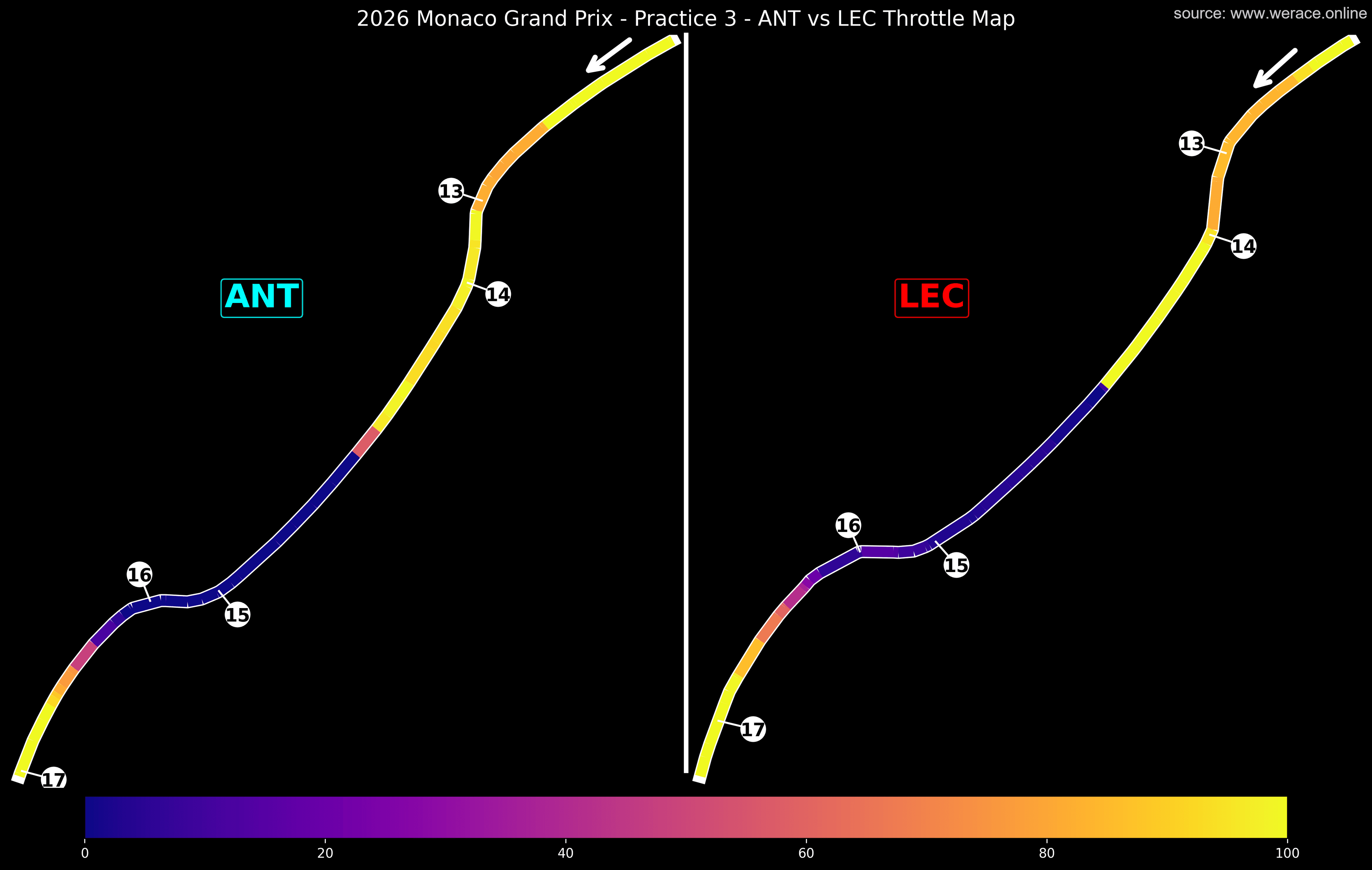
The real statement of confidence, however, comes through the Swimming Pool complex (Turns 13 to 16). Telemetry confirms that Antonelli is attacking the first part of the chicane with a significantly higher throttle percentage compared to Leclerc, keeping the car planted and carrying that momentum decisively into the second element of the Swimming Pool.
Historical Context: 2026 Regulations vs 2025
While Mercedes made a giant leap compared to Friday, the overall comparison to last year's technical regulations highlights just how much heavier these current cars feel around tight street circuits.
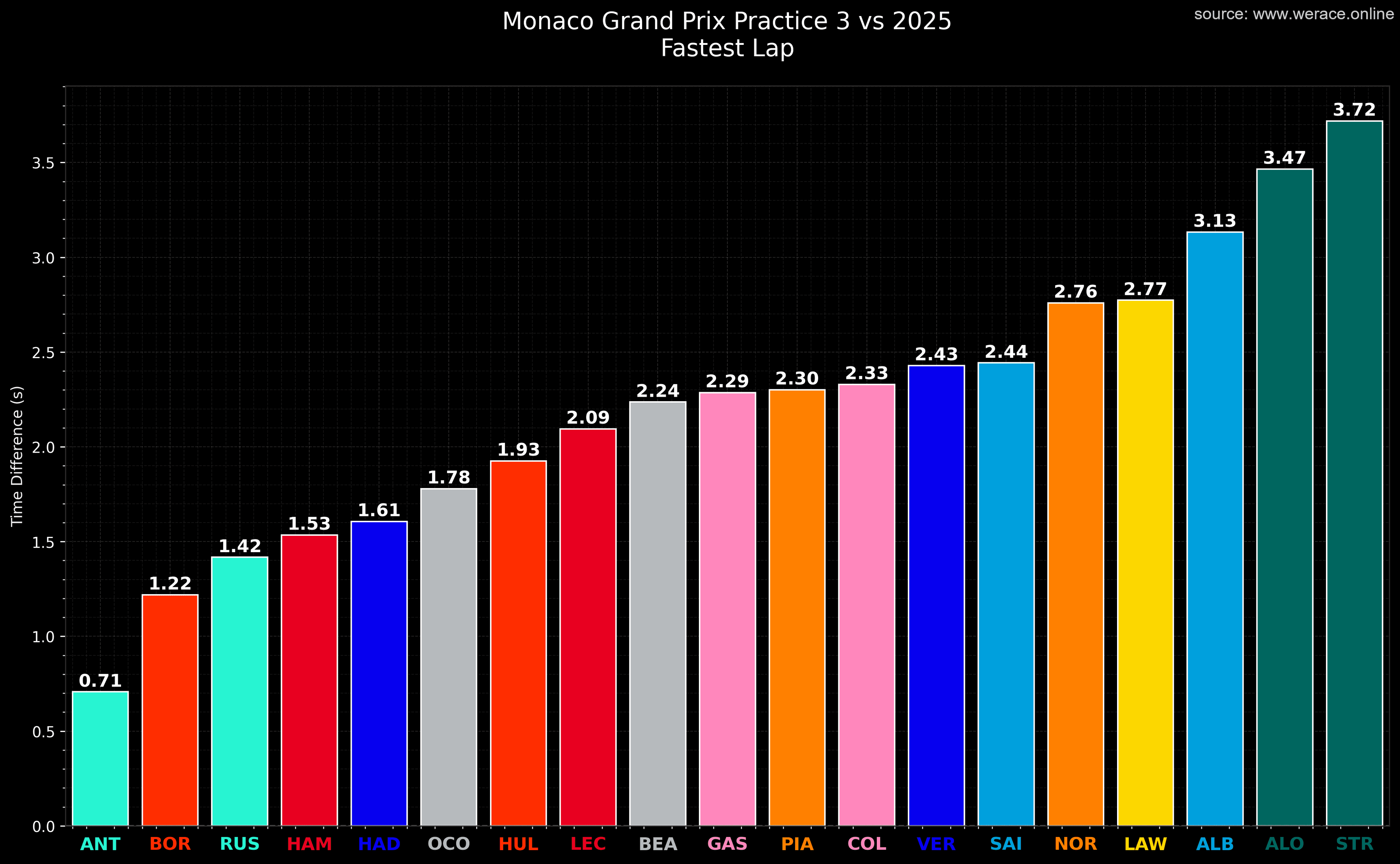
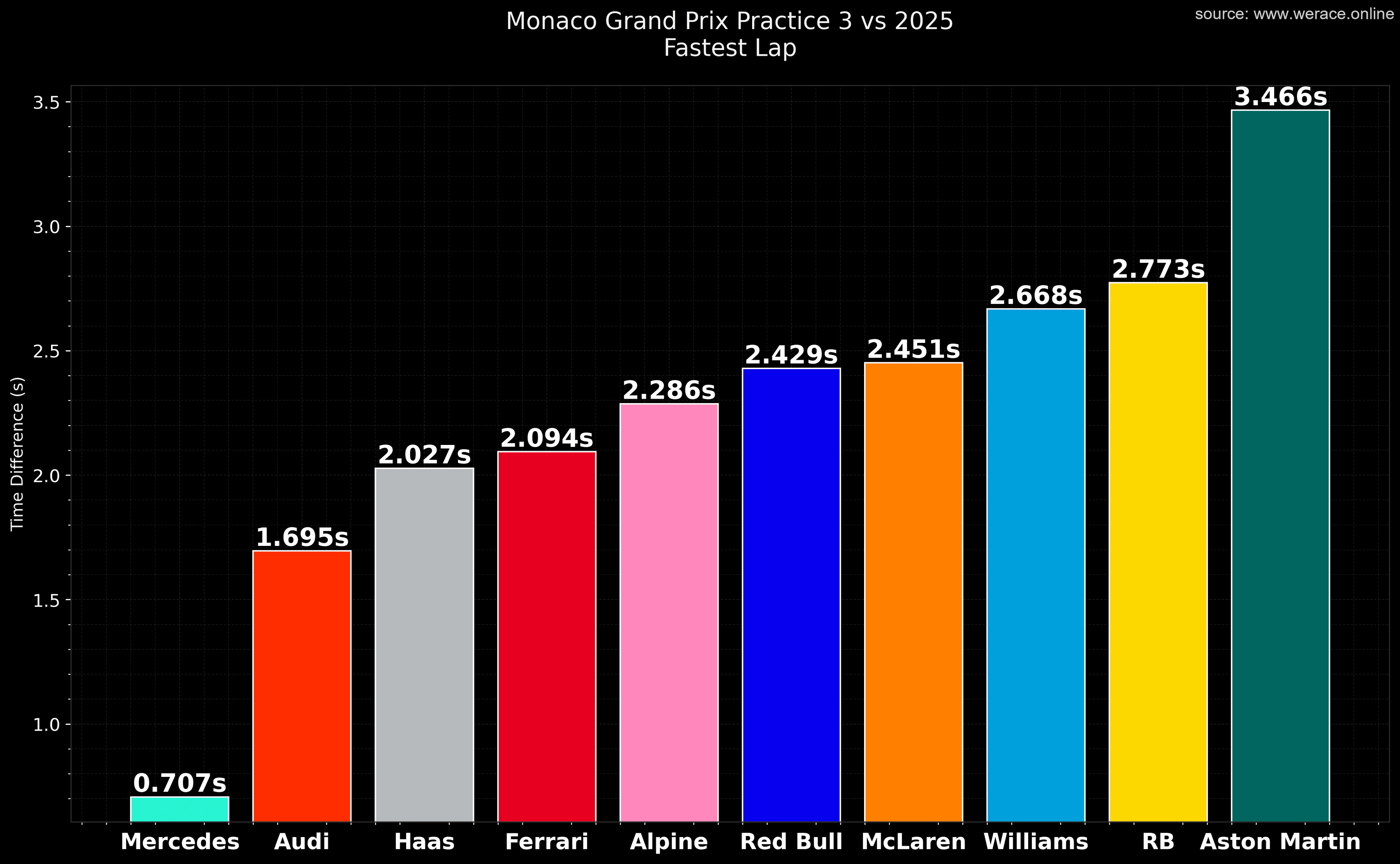
The aerodynamic losses in low-speed mechanical corners mean teams are still fighting historical deltas, making driver confidence and millimetric precision more defining than pure aerodynamic efficiency this weekend.
Theoretical vs Real: The Hidden Tenths Left on the Table
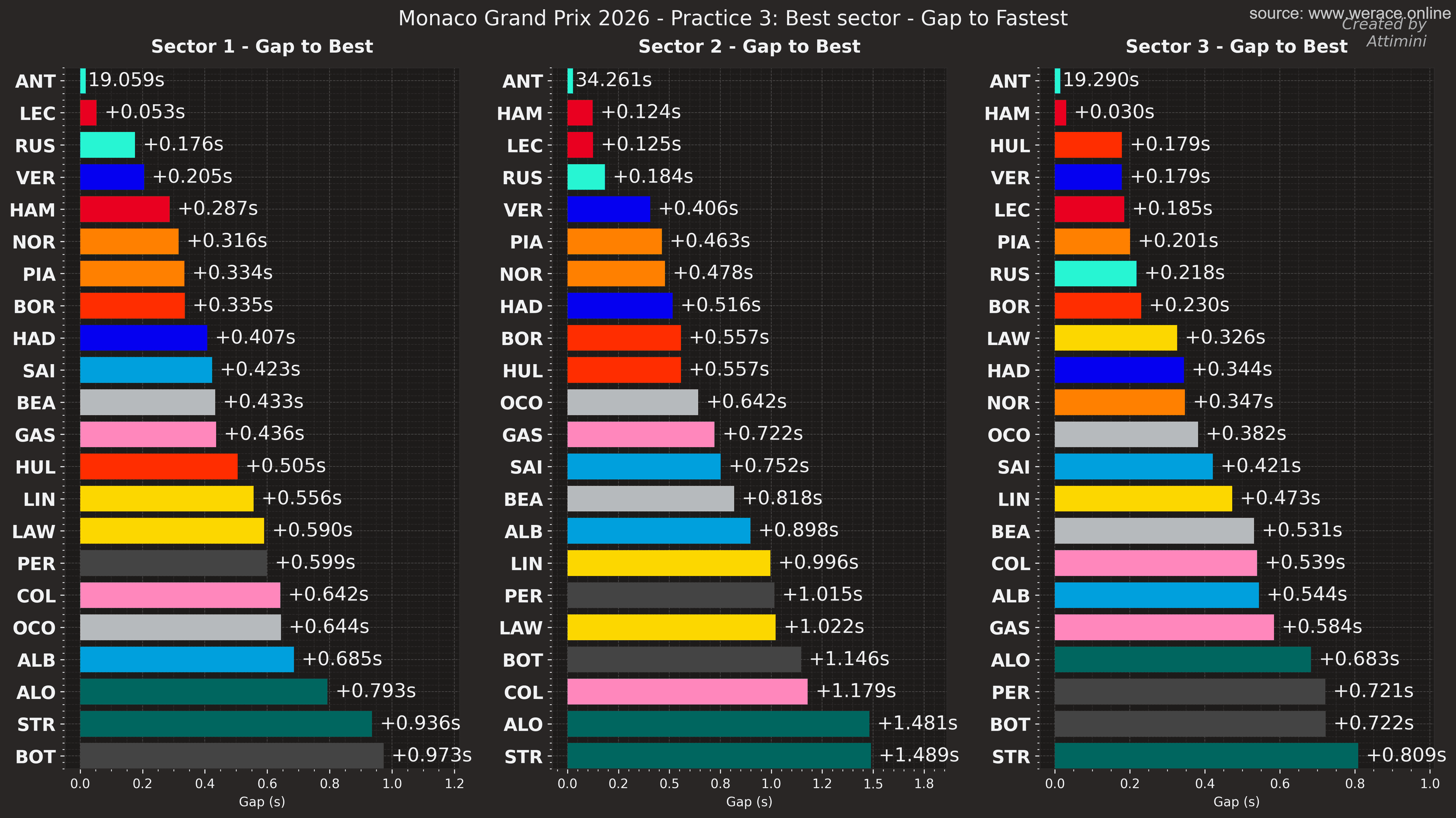
If you think the FP3 timing board represents the true pecking order for Qualifying, think again. The theoretical Ideal Lap data - which stitches together a driver's best individual micro-sectors - proves that almost every driver in the top 10 left massive performance on the table.
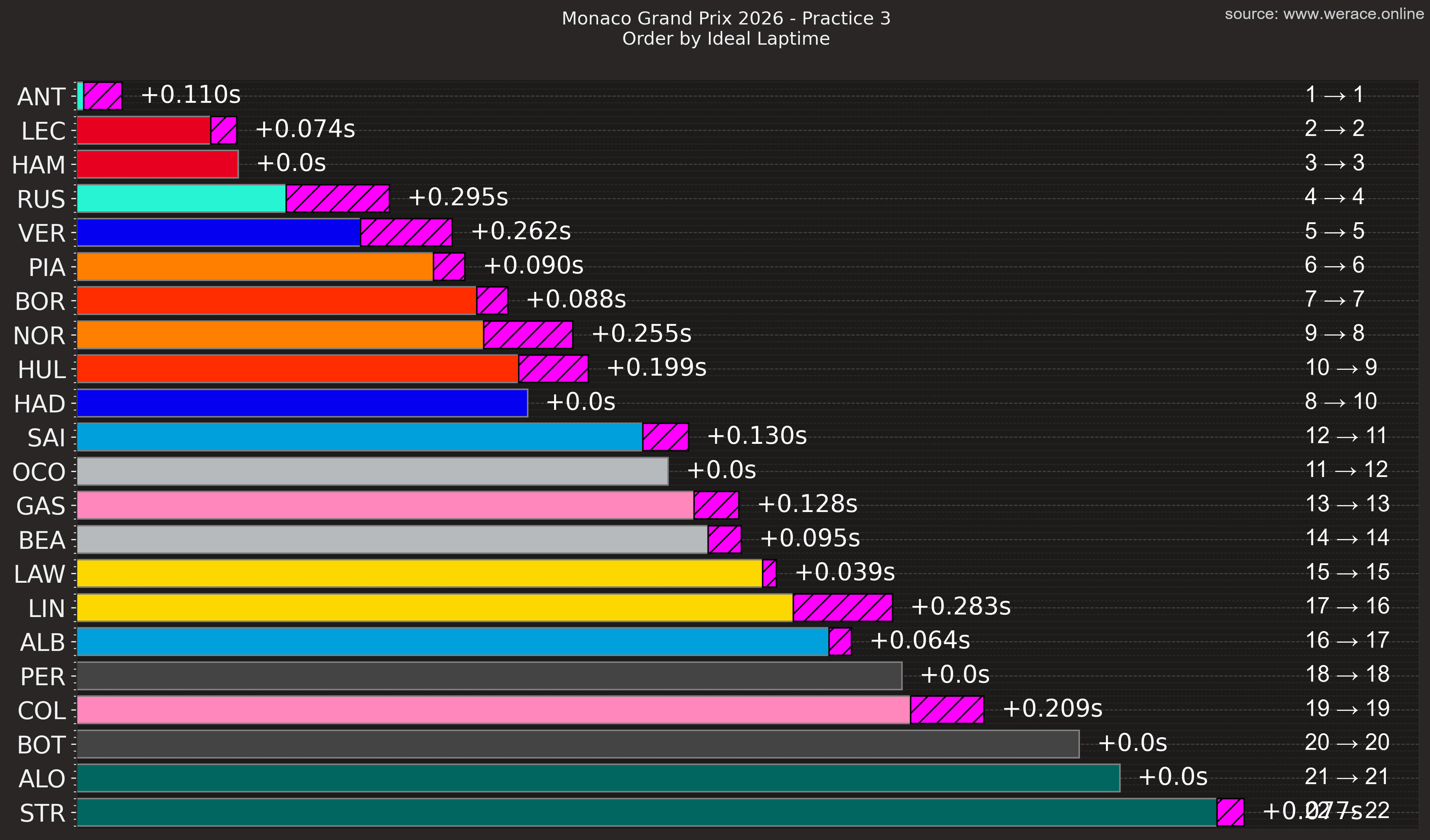
There are hidden tenths scattered all over the circuit waiting to be extracted when it matters most. George Russell stands out at the absolute top of this list.
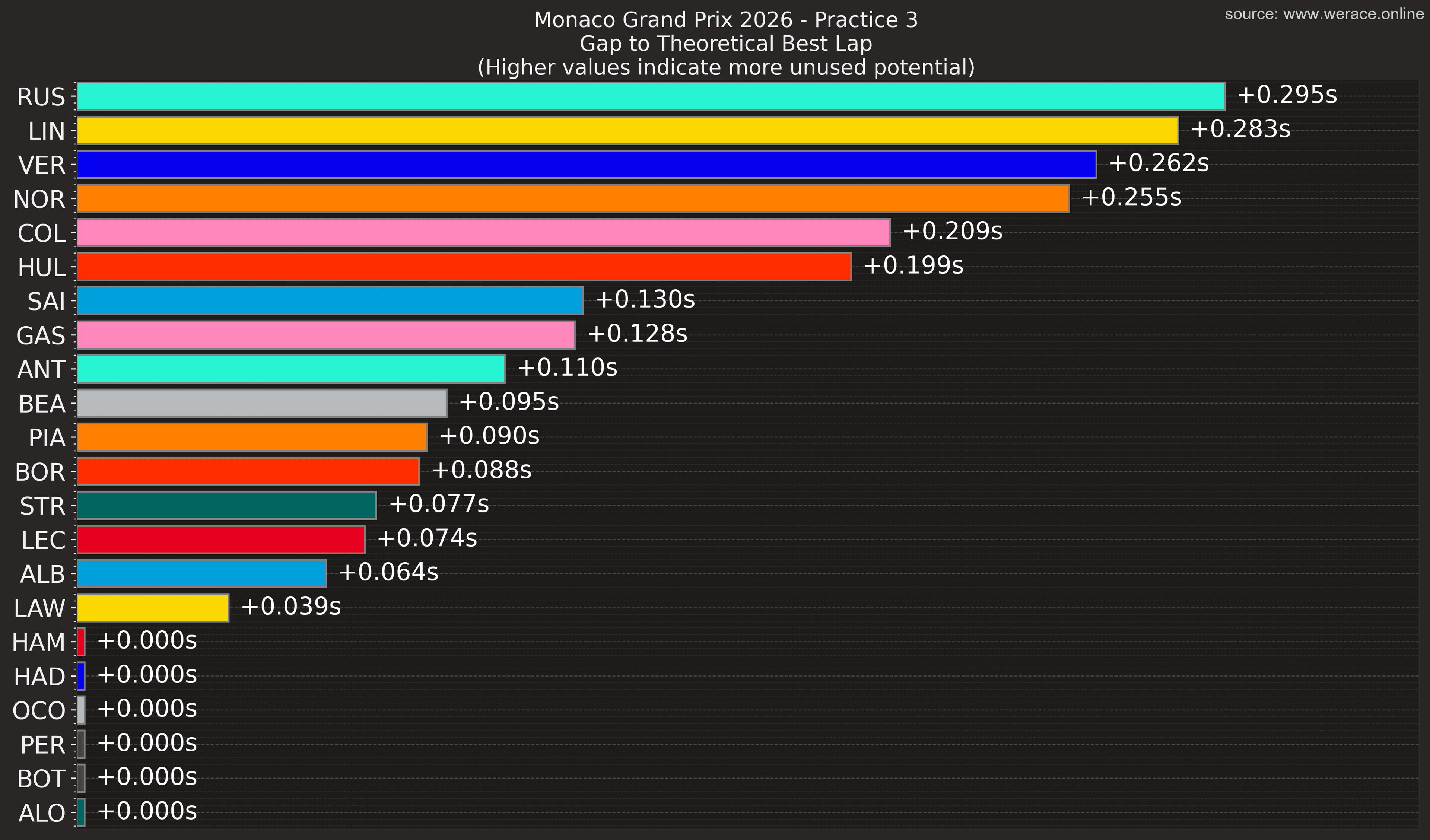
Our analysis shows Russell has a massive 0.3s of theoretical performance unlinked on his actual best FP3 lap. If he connects the dots, he is firmly in the fight for the front row. However, doing so won't be easy: Russell is losing his edge primarily in Sector 3 (Rascasse to Anthony Noghes), whereas his teammate Antonelli has been blistering in that final sector all morning.
Ultimate Commitment Awaits
Monaco is the ultimate driver's circuit. It’s a place where telemetry parameters provide the foundation, but pure bravery, handling, and millimetric proximity to the guardrails seal the pole position.
Mercedes has entered the chat, Leclerc is lurking with hidden potential, and Verstappen is right in the mix.
Get your popcorn ready. Qualifying is going to be absolute chaos, and we'll be back on Sunday morning with the full data video breakdown of how the grid was decided!