
Kimi vs Russell: This Is Only The Beginning
The Canadian Sprint may not have delivered chaos, safety cars, or endless overtakes, but thanks to Mercedes, it still gave us something extremely interesting: the first real internal fight between George Russell and Kimi Antonelli.
And honestly, without that battle, this Sprint would probably be remembered as one of the flattest races of the season.
A Sprint With Very Little Action
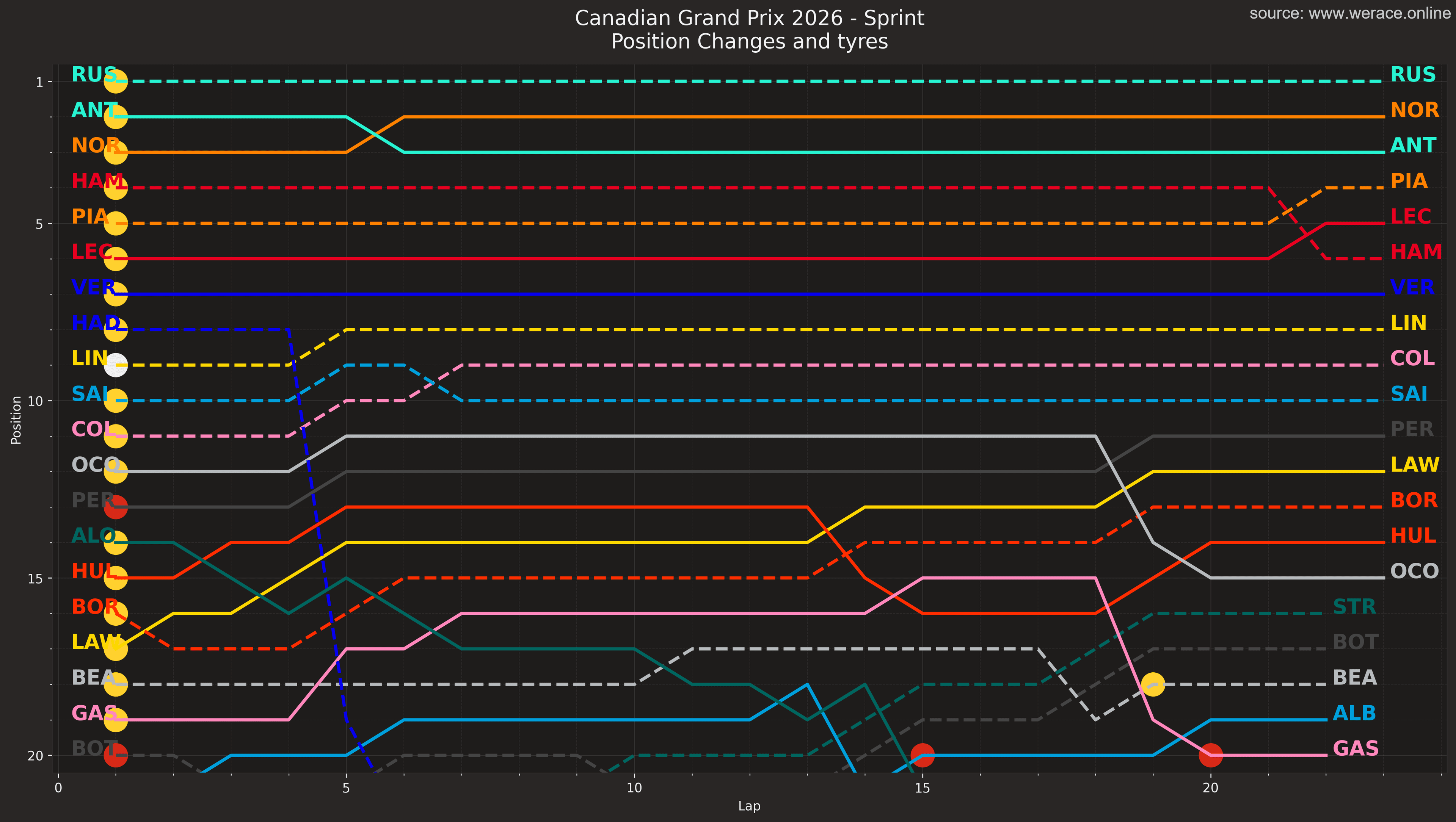
Overtaking numbers were extremely low throughout the race.
And in my opinion, there are several reasons behind it.
The first is aerodynamic evolution. The FIA keeps trying to reduce dirty air by cutting load generation opportunities, but engineers will always recover performance somehow. The first thing teams bring with upgrades are:
additional winglets, more aggressive floor geometries, increasingly complex aerodynamic surfaces.
All of that creates downforce, yes - but it also dirties the airflow behind the car even more. Following another car becomes progressively harder as wake turbulence increases.
The second factor is the slight reduction in power deployment differences. The gaps in acceleration phases are simply a bit smaller than earlier in the season.
Third, teams are getting better operationally:
software, energy management, deployment algorithms, battery harvesting strategies.
Everyone is optimizing these systems better now, which naturally compresses performance variation.
And finally, Montreal itself plays a role.
Because the circuit is full of heavy braking zones and stop-and-go traction areas, energy recovery is relatively easy. That means the fake overtakes we often see at other tracks - where one car simply runs out of deployment - were mostly absent here.
The result was a Sprint where track position became extremely important.
But fortunately for spectators, Mercedes gave us something to watch.
Antonelli Had the Pace
Kimi Antonelli started behind Russell after Sprint Qualifying - something already analyzed previously - but during the race itself, he repeatedly looked faster than his teammate.
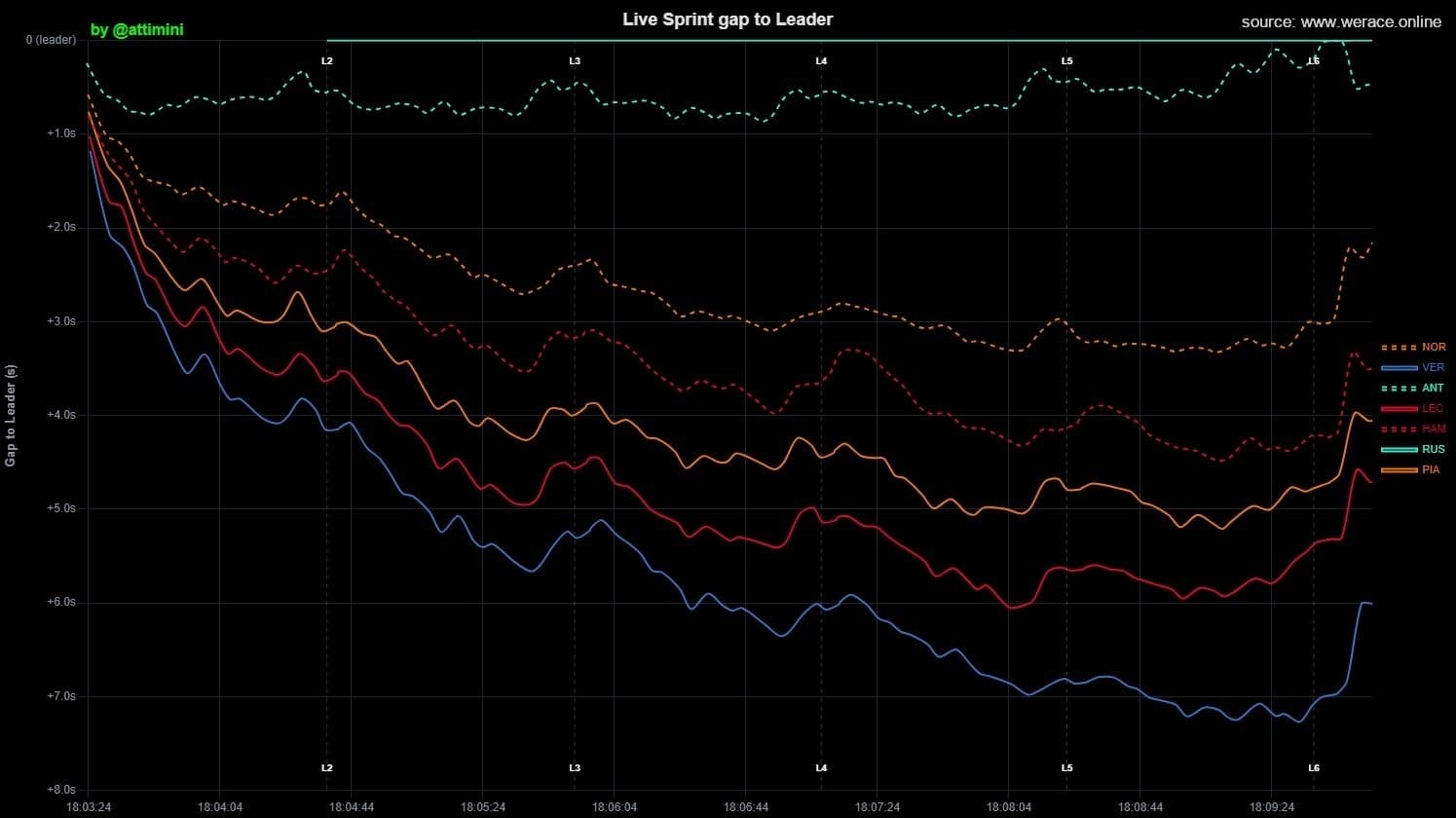
In the opening phase of the Sprint, Antonelli rapidly closed the gap to Russell and immediately started applying pressure.
The important detail is that this was not just one isolated attack attempt. Lap after lap, Kimi genuinely appeared to have slightly superior pace.
And eventually, the attack came.
The problem is that while the speed was there, the experience maybe was not.
Aggressive? Yes. But Probably Too Early
From one perspective, Antonelli absolutely did the right thing.
He is young, aggressive, confident, and hungry. In a Sprint race worth relatively few points, you want to see a driver willing to take risks instead of settling behind a teammate.
That mentality is exactly why Mercedes rate him so highly.
But at the same time, I think the move showed some of Kimi’s inexperience.
The first mistake was attacking immediately at the first available opportunity.
Up until that point, his race pace looked genuinely stronger than Russell’s. Personally, I think one more lap of preparation could have allowed him to arrive on the straight with:
better battery positioning, a cleaner run, and a much easier overtake opportunity.
Instead, he forced the issue slightly too early.
The second mistake was expecting Russell to leave space naturally around the outside.
That simply does not happen at this level.
And especially not against George Russell.
Russell is experienced, extremely intelligent wheel-to-wheel, and fully aware of how much internal hierarchy matters inside a top team. He knows exactly how far he can push situations without crossing the line.
If you attack him around the outside, he will make your life difficult every single time.
And then came the third mistake: the radio reaction.
Antonelli’s frustration over team radio felt understandable emotionally, but strategically unnecessary. Asking for a penalty against your own teammate is never a great look internally.
If anything, the correct approach would have been:
"I was ahead, give the place back."
Instead, the frustration became public immediately - and unsurprisingly Toto Wolff stepped in very quickly to calm things down.
Honestly, I would be shocked if there was not a very direct conversation internally afterwards.
Still, this is also part of the learning process.
Because despite the mistake, the important takeaway remains: Kimi looked genuinely fast enough to win the Sprint.
Mercedes Pace Was Extremely Strong
Without the internal battle, Mercedes probably would have completely controlled the Sprint.
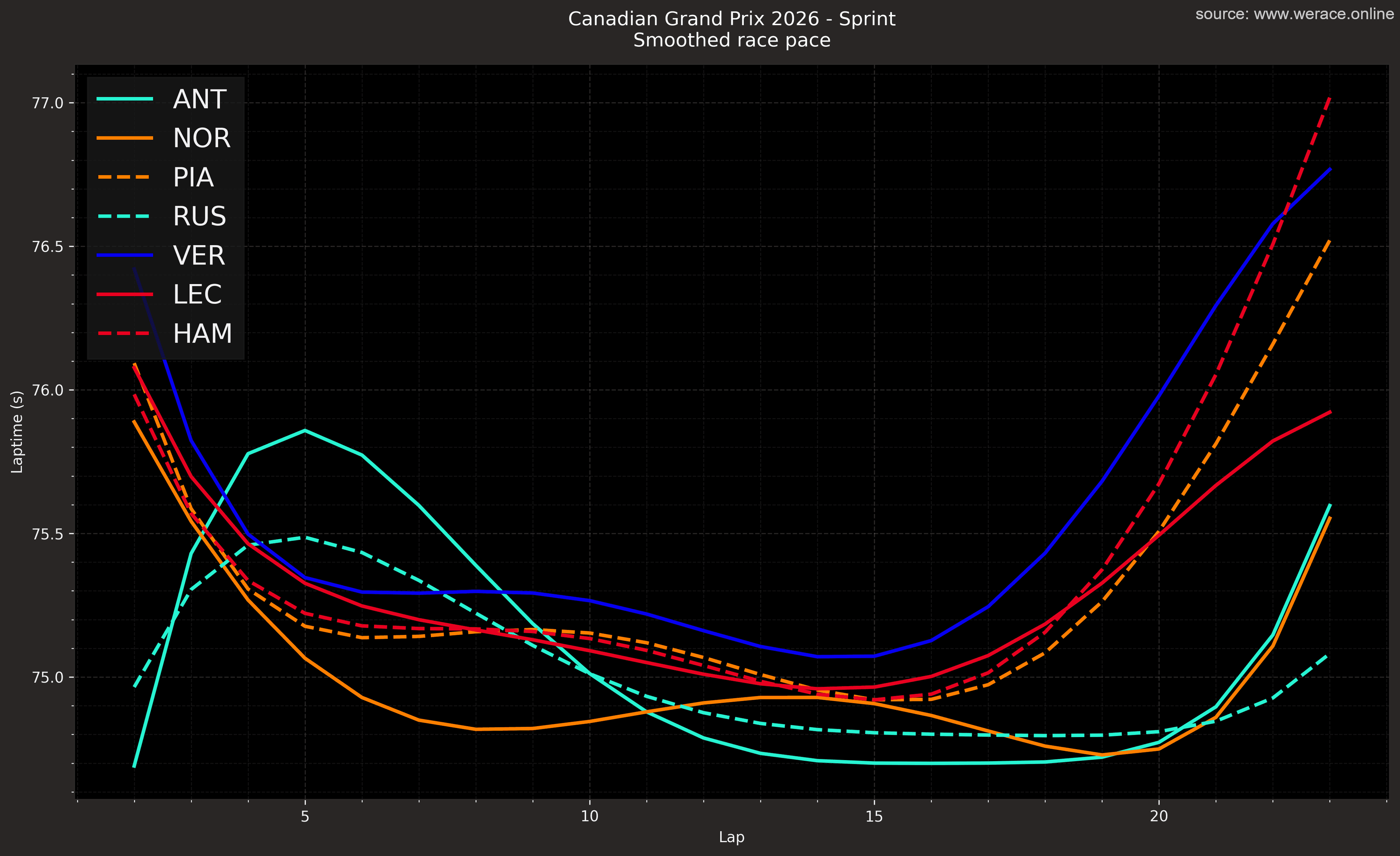
The smoothed race pace data clearly shows Mercedes operating at the front of the field throughout the race.
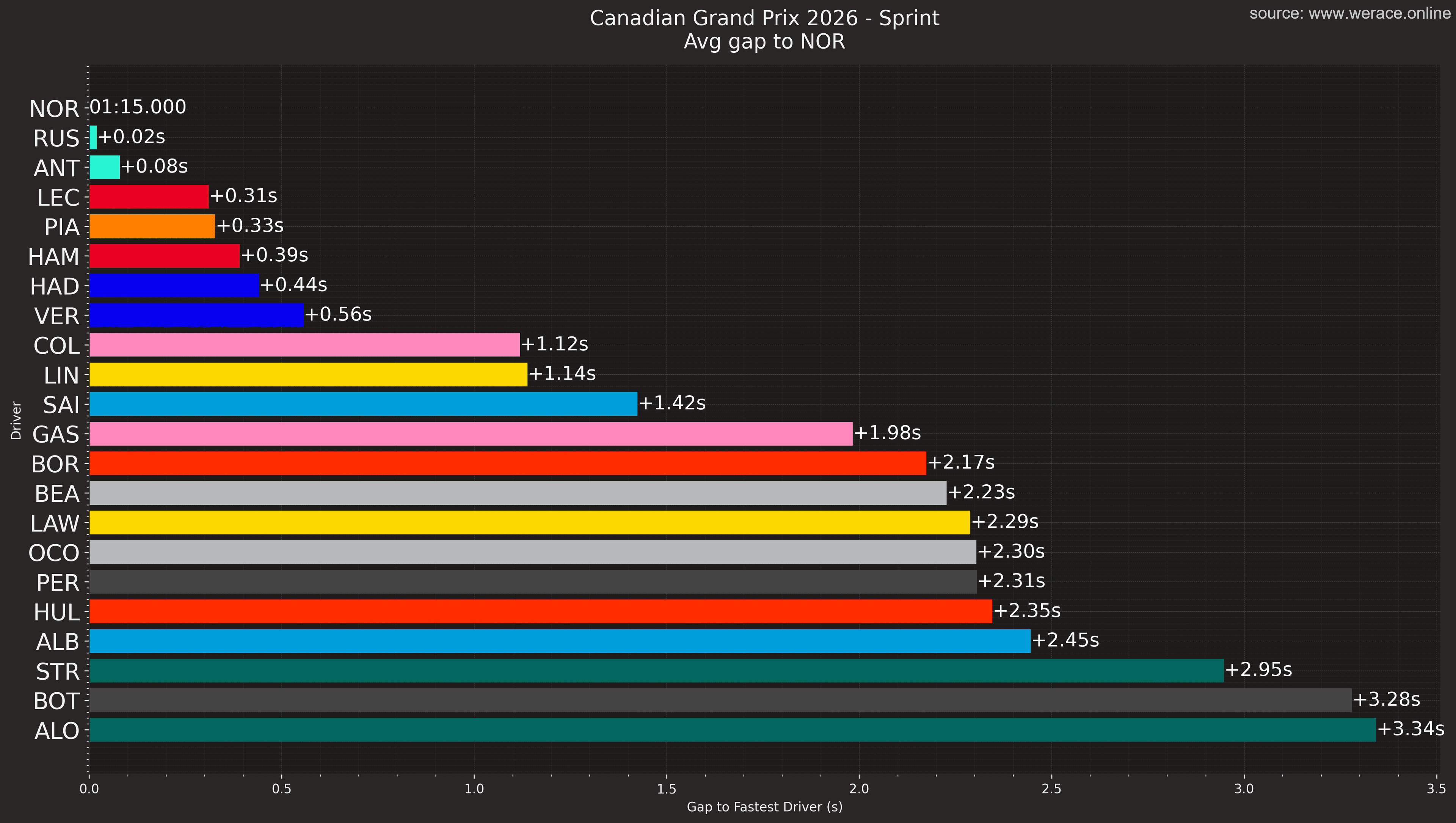
When comparing average race pace:
Norris was technically the fastest overall, only two hundredths quicker than Russell, while Antonelli sat just eight hundredths behind.
That is extremely close.
But context matters.
Mercedes almost certainly compromised their own race pace by fighting internally, while McLaren’s average is also heavily influenced by Oscar Piastri spending much of the race trapped behind Ferrari traffic.
So the raw numbers alone probably underestimate Mercedes’ true advantage.
Team average pace data supports this as well.
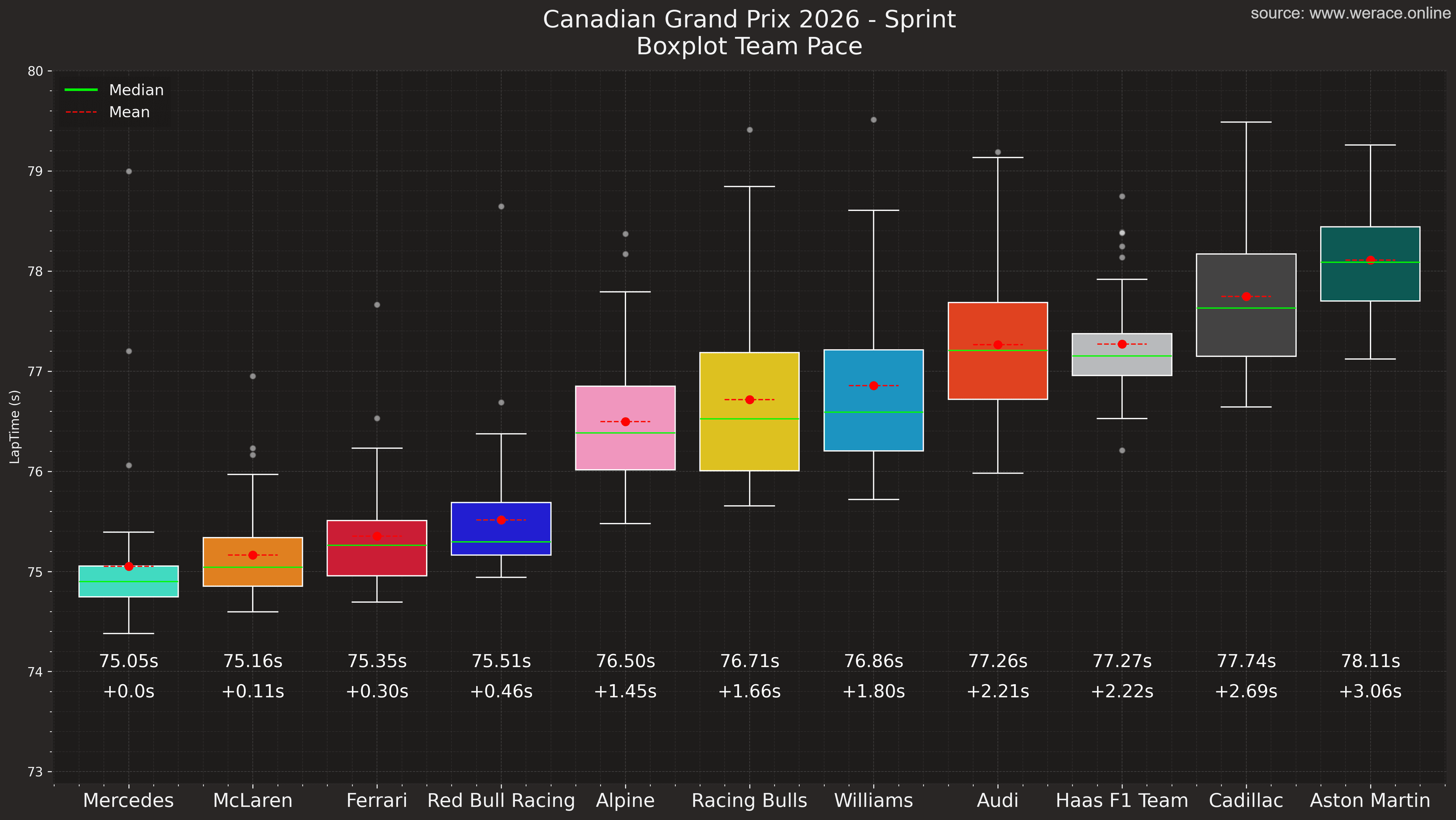
Without the internal fight, the Silver Arrows likely had enough speed to open a much larger gap to the rest of the field.
Ferrari Became a Rolling Roadblock
One of the more worrying aspects of the Sprint came from Ferrari’s late-race pace.
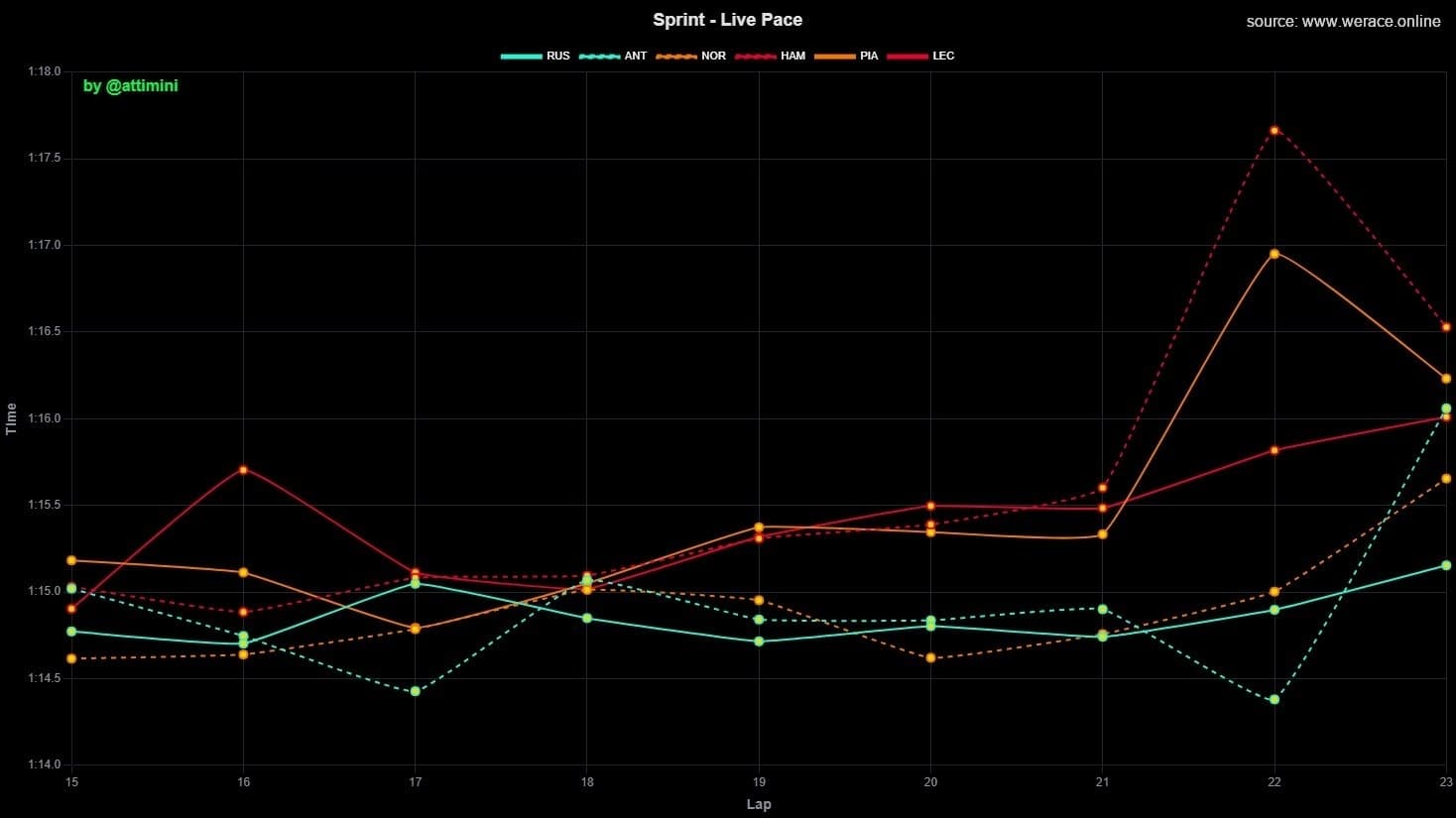
From around Lap 18 onward, Lewis Hamilton’s pace dropped dramatically.
And not just slightly.
His lap times suddenly slowed enough to create a visible train behind him, directly impacting:
Charles Leclerc, Oscar Piastri, and the entire group stuck behind the Ferrari.
That is why I would honestly describe it as a rolling roadblock phase.
Now, because parc ferme conditions reopen before main qualifying, Ferrari will almost certainly make adjustments to the setup.
And they probably need to.
Because if that level of late-race pace degradation continues into Sunday’s Grand Prix, it could become a serious strategic weakness.
The Sprint Format Still Feels... Empty
Maybe this is unpopular, but honestly: without the Mercedes battle, this Sprint would have felt largely pointless.
The field spread stabilized quickly, overtaking was limited, and strategy variation barely existed.
That is increasingly becoming the problem with modern Sprint races:
too short for strategic variation, too controlled operationally, and too optimized technically.
Ironically, the only real unpredictability came from teammates fighting each other.
And maybe that is why the Russell vs Antonelli storyline already feels important.
Because this genuinely looked like the first real flashpoint between the two Mercedes drivers.
Kimi showed the speed. Russell showed the experience.
And if both continue operating at this level, this probably will not be the last time we see sparks between them.