
Mercedes Still Rules Canada - But The Gap Is Closing
The numbers changed. The pecking order did not.
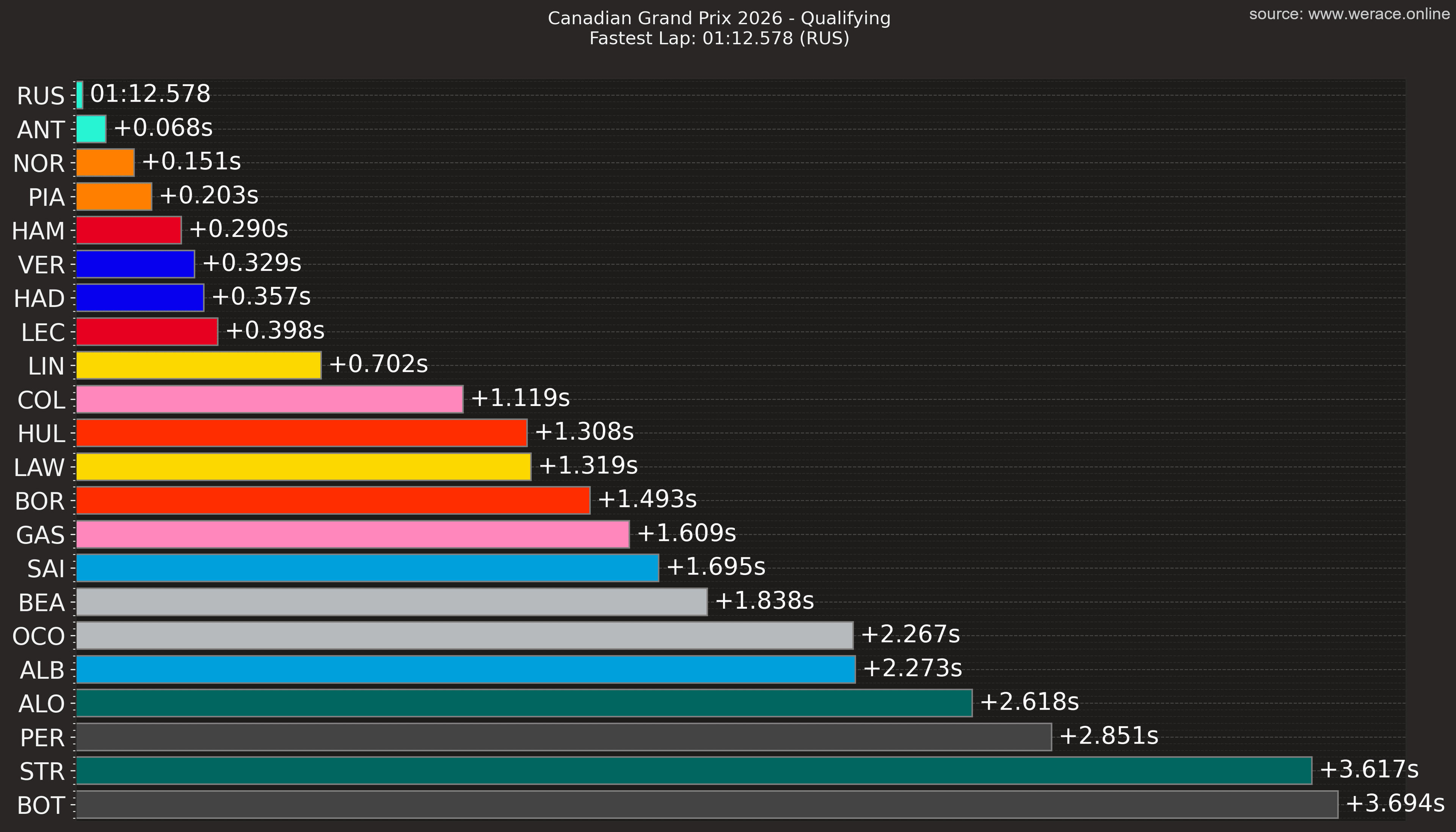
For the second qualifying session in Montreal, Mercedes-AMG Petronas Formula One Team once again locked out the front row, confirming what already looked clear on Friday: Canada suits the W17 extremely well.
But unlike Sprint Qualifying, this time the silver advantage suddenly looked... human.
Yesterday Mercedes had nearly three tenths in hand over the field. This time the margin was almost cut in half, and that completely changed the feeling of the session.
The headline remains the same - Mercedes fastest - but the context is very different.
And beyond the battle for pole itself, the most fascinating story was the internal war between George Russell and Andrea Kimi Antonelli.
Russell's Pole Felt Like a Championship
Russell's radio after pole was almost shocking.
This was not the reaction of a driver celebrating a normal pole position. It sounded closer to someone who had just won a title fight after months of pressure building under the surface.
And honestly... maybe that's exactly what happened.
After dominating the Sprint earlier in the day, Russell came into qualifying with momentum, but also with something to prove. Antonelli's growth over the last races has been impossible to ignore, and for the first time this season the internal balance at Mercedes genuinely started shifting.
Australia? Russell comfortably ahead by three tenths. But since then, Antonelli progressively erased the gap - and then started beating him consistently, often by increasing margins.
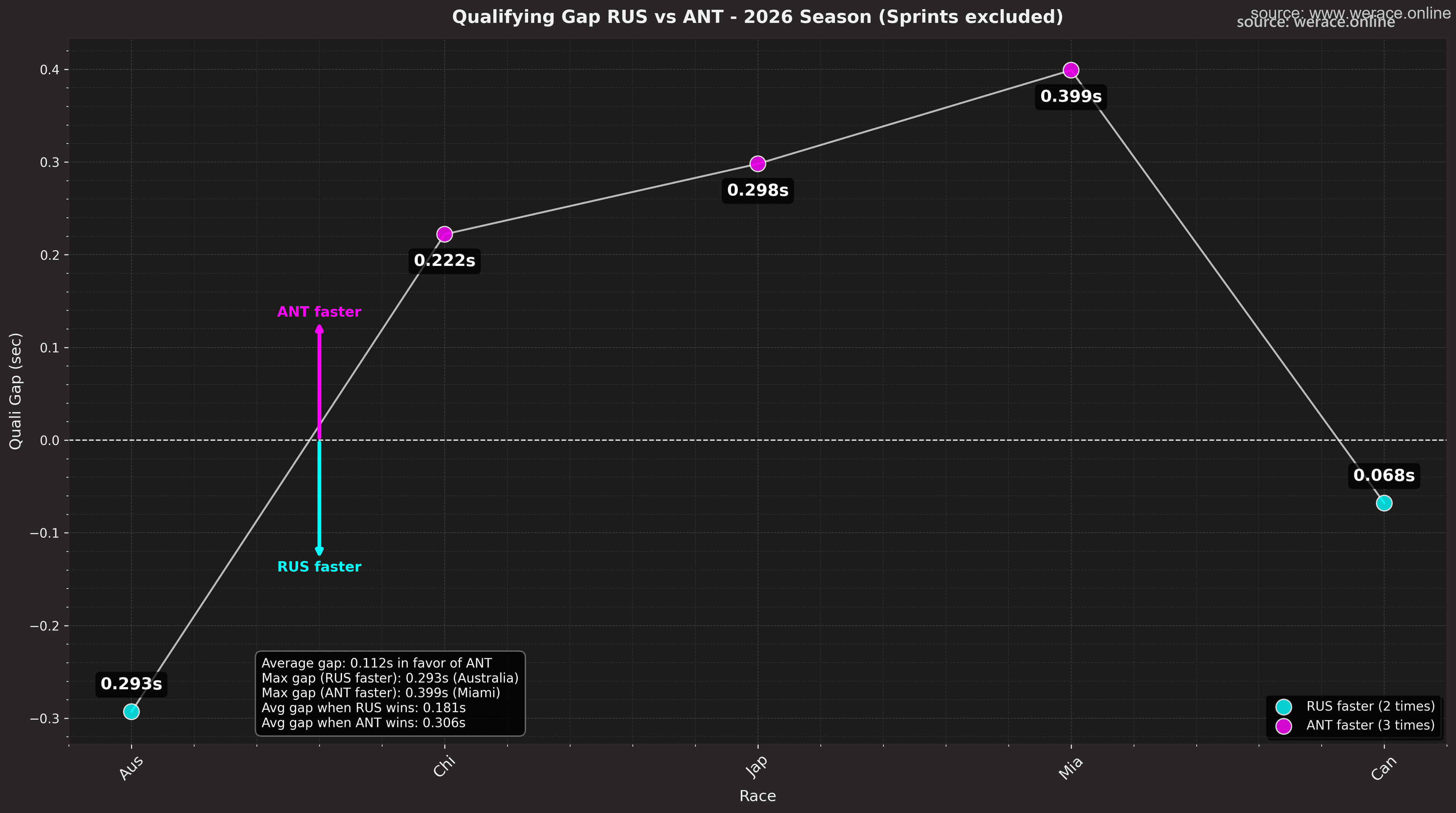
This pole may not solve the long-term battle, but emotionally it felt like Russell finally stopping the bleeding.
And for us watching from the outside? That makes Formula 1 far more entertaining.
Russell Built the Pole Slowly
The funny part is that Russell's weekend never looked smooth.
First he complained about instability over kerbs and bumps. Then he complained about one set of tyres in Q2. Then he locked up in Q3 and had to abort the lap entirely.
Yet underneath all the frustration, his confidence was quietly building session after session.
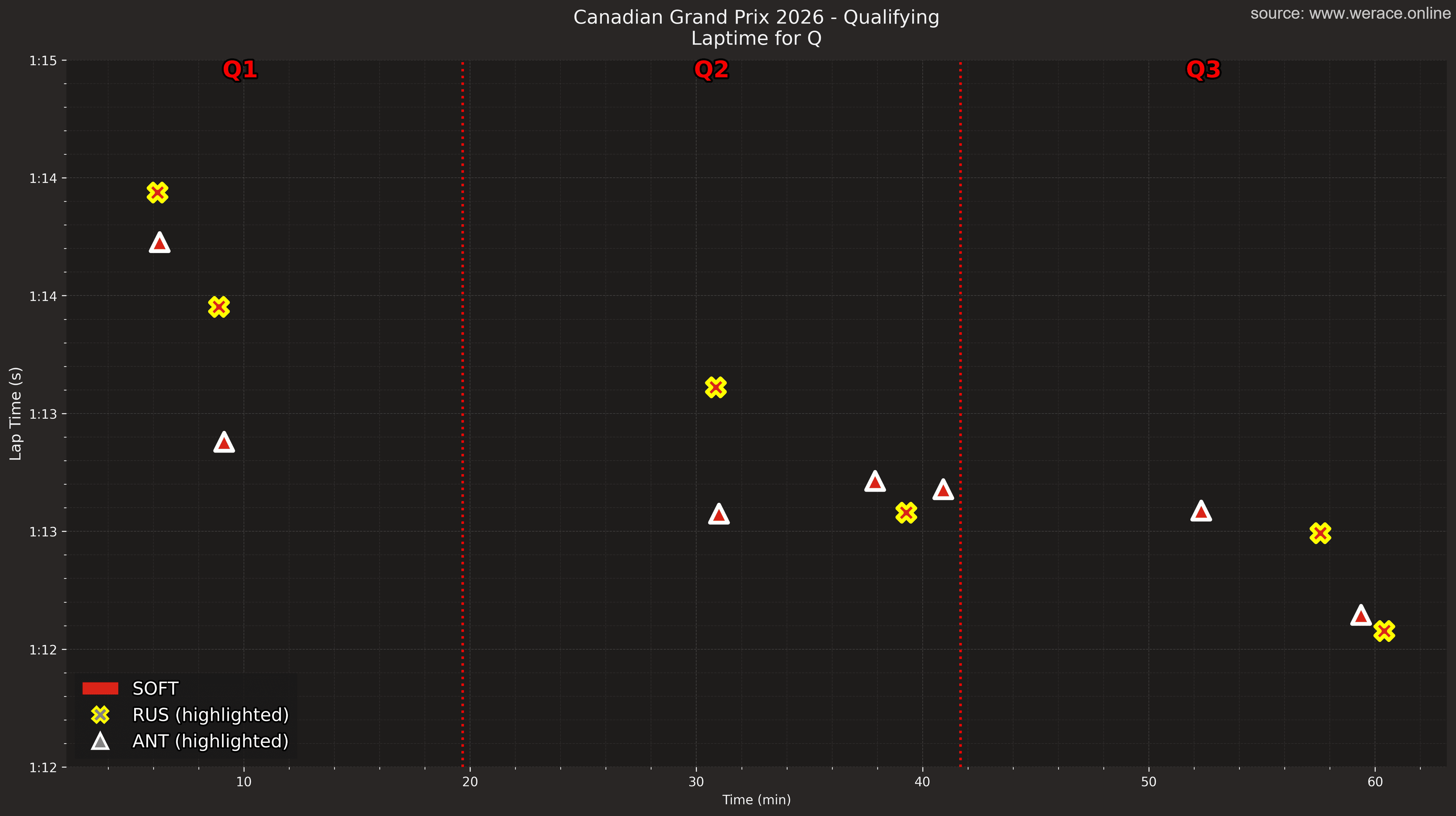
This chart tells the entire story.
Antonelli's triangles consistently sat lower than Russell's yellow crosses in Q1 - meaning Kimi was faster on both attempts. The same happened during the first Q2 push lap.
But then the balance started changing.
Antonelli was already approaching his maximum performance ceiling, while Russell kept finding time. On the final Q2 run the Mercedes #63 suddenly moved much closer.
Then came the decisive moment.
In Q3 Russell locked up and aborted the lap. Ironically, that mistake may have won him pole.
Because he returned to the pits immediately, Mercedes rushed a fresh soft tyre set onto the car and sent him back out with enough fuel for two proper attempts instead of one. That completely changed the scenario.
The first lap was solid but not spectacular. Antonelli then raised the benchmark again.
But Russell now had one final shot with tyres already prepared from the previous push, better surface condition, and maximum track evolution. That final lap delivered pole.
A genuine qualifying paradox: the mistake created the opportunity.
Mercedes Was Faster Yesterday
Oddly enough, Mercedes actually struggled more in this session compared to Sprint Qualifying.
There are probably two explanations.
The first: with rain expected for the race, Mercedes may already have shifted the setup slightly toward tyre protection rather than absolute peak pace.
The second explanation is even more important.
Track temperature.
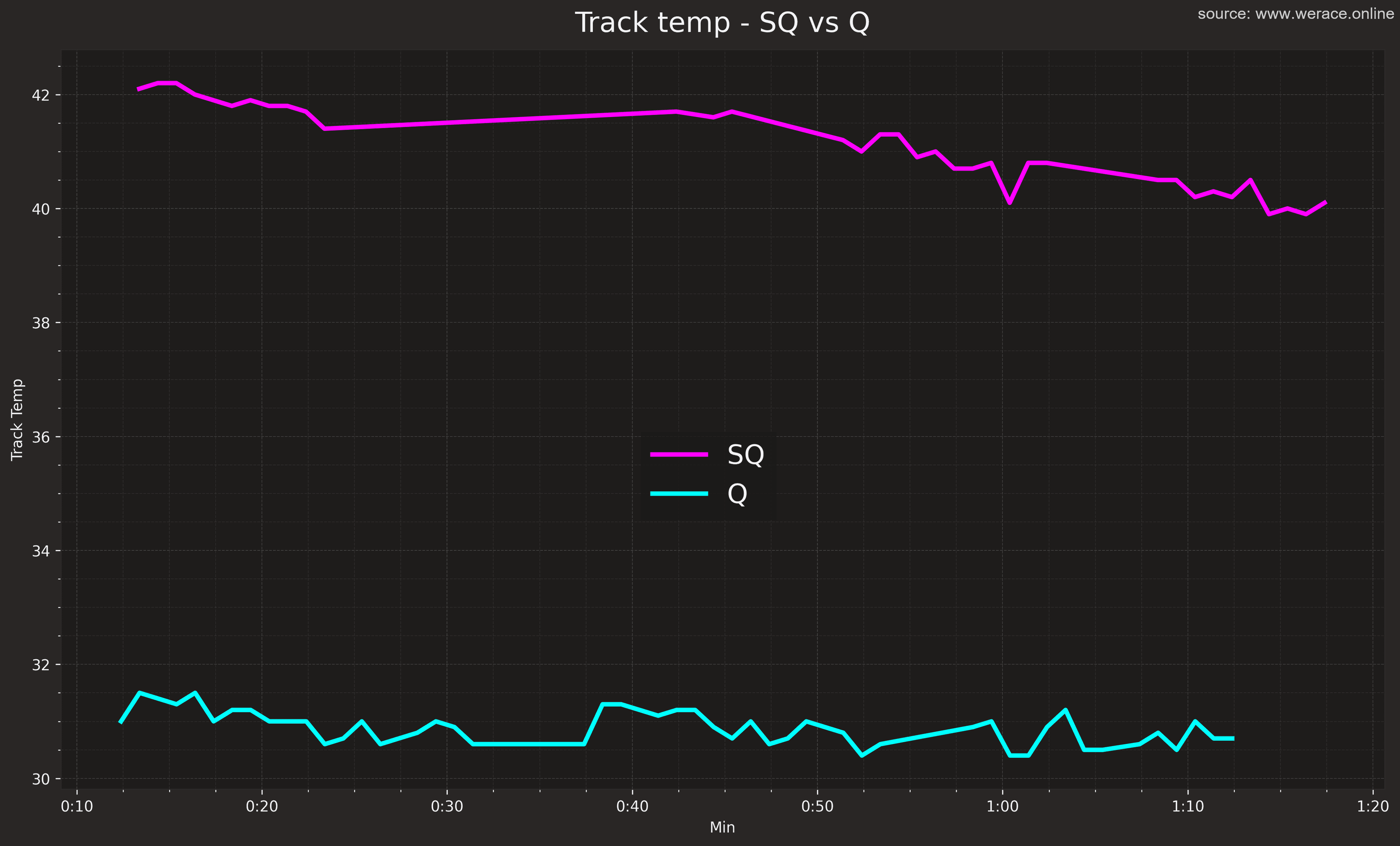
Between Friday qualifying and Saturday qualifying there was almost a 10°C drop in asphalt temperature. Under these new-generation regulations, that changes everything.
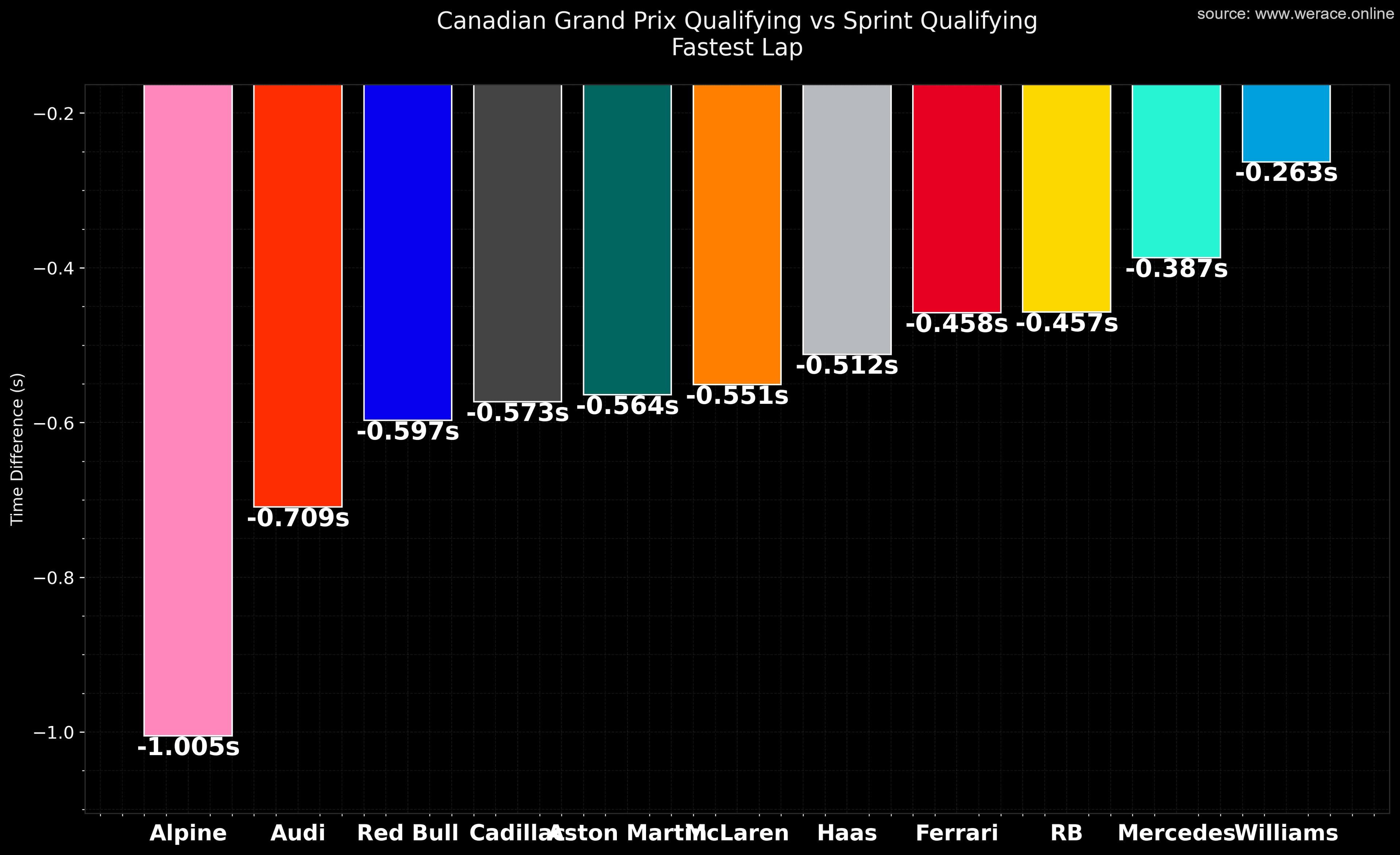
And the data confirms it.
Mercedes improved by only around four tenths compared to Sprint Qualifying, while McLaren Formula 1 Team gained over half a second and suddenly moved much closer.
On a circuit that theoretically should not perfectly suit McLaren, that is a very important signal heading into the race.
If rain truly arrives on Sunday, the competitive order could swing even more dramatically.
McLaren Is Suddenly Right There
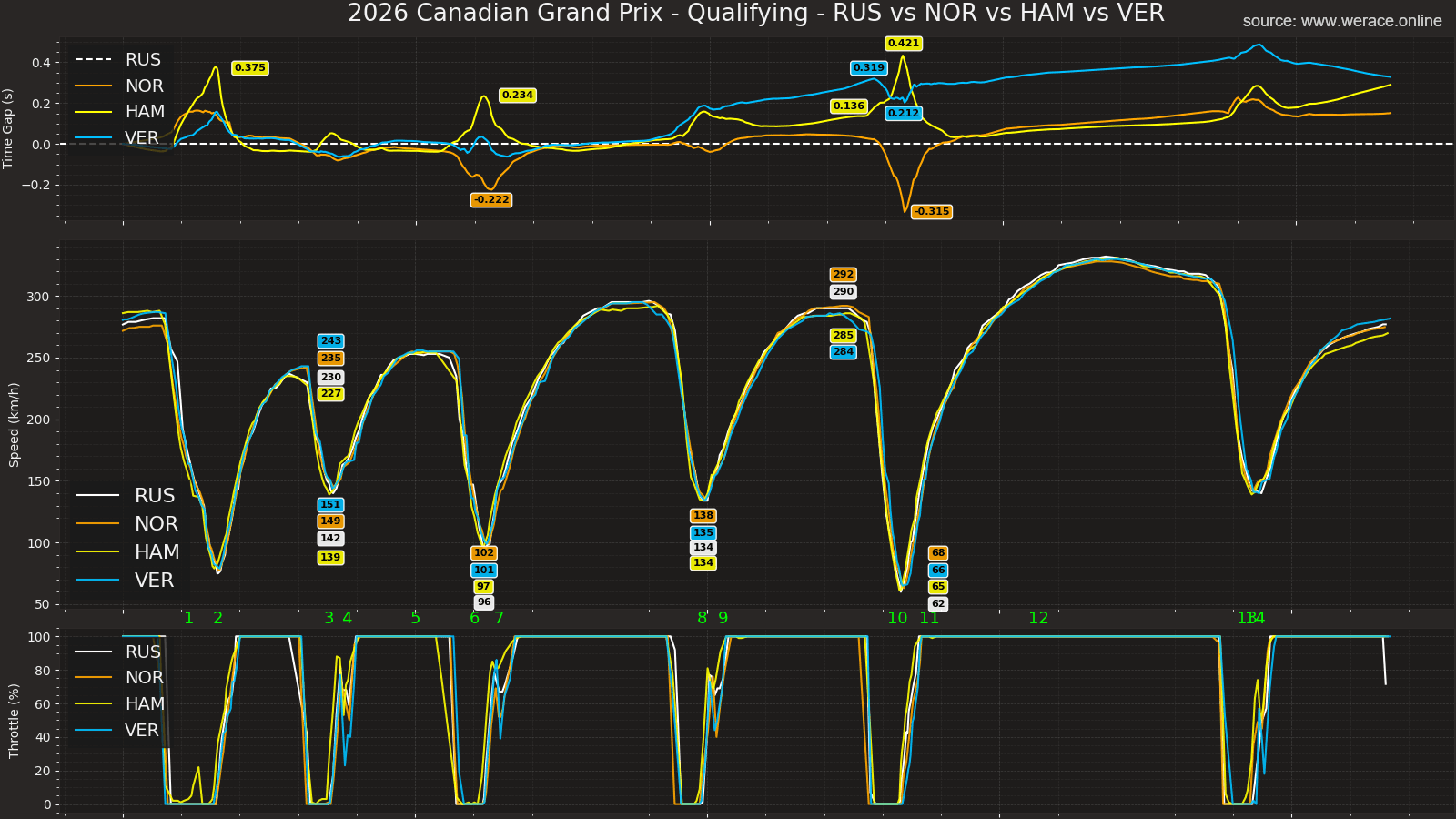
Compared to Friday, the telemetry traces are now dramatically flatter and more balanced between the top teams.
The orange line of Lando Norris loses time almost exclusively on the final straight before the Wall of Champions. Everywhere else, McLaren is effectively matching Russell.
The most impressive section comes through Turn 10.
Norris carries enormous entry speed - more than anyone else - but compromises the exit slightly, hurting acceleration down the following straight.
That trade-off probably prevented a real attack on pole, but the overall picture is extremely competitive.
Hamilton Maximizes Everything Ferrari Had
Meanwhile inside Scuderia Ferrari, Lewis Hamilton won the intra-team battle again.
This time, unlike Friday, he extracted essentially everything from the lap.
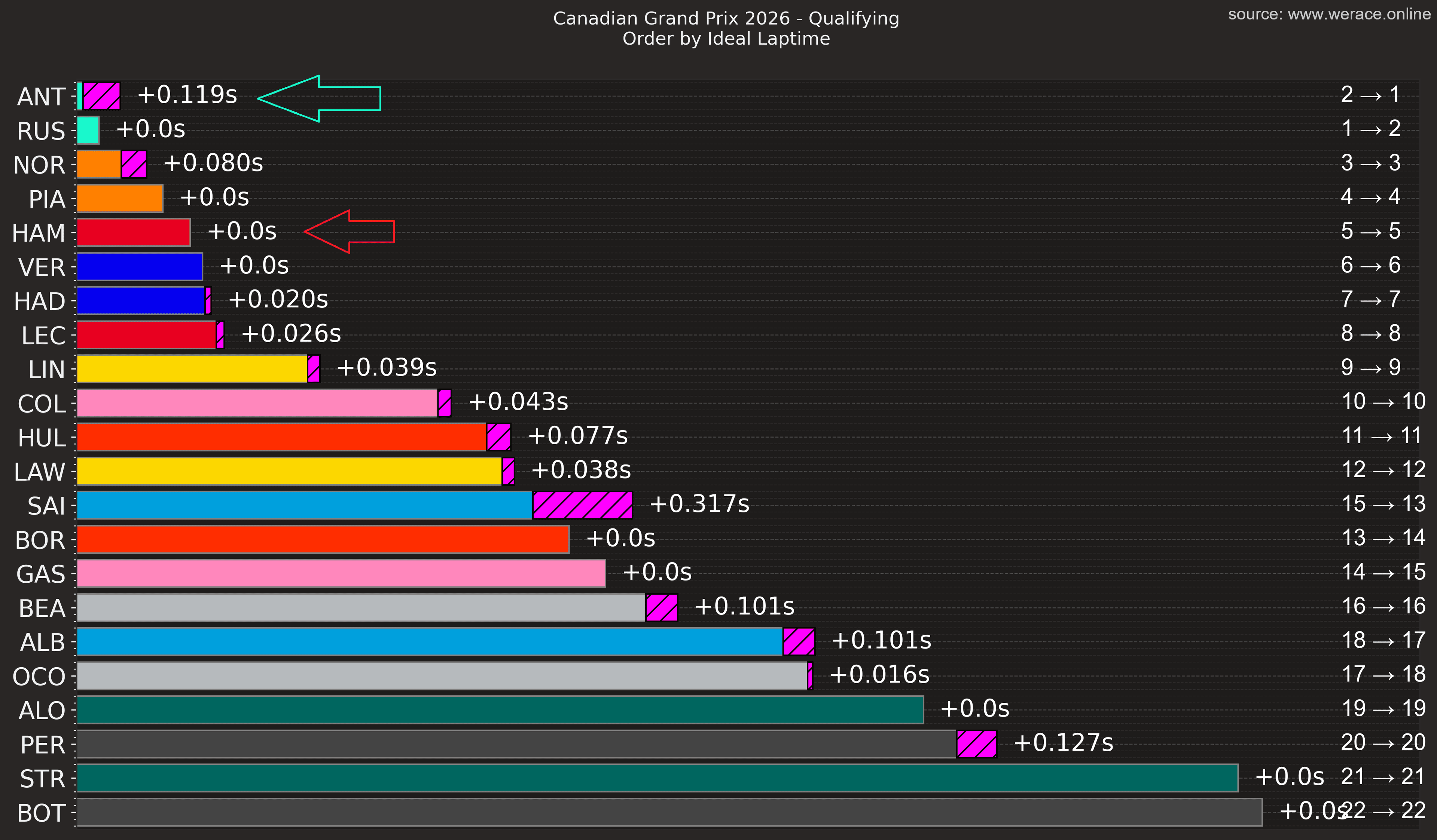
Hamilton's ideal lap matches his actual lap almost perfectly: +0.000.
That means there was virtually nothing left on the table.
Antonelli, meanwhile, had unfinished business. Combining all his best sectors would actually have produced a theoretical pole lap.
Hamilton did not embarrass himself at all - especially considering Ferrari's difficult balance - but he could not reproduce the monster first sector he delivered on Friday.
This time his relative strength moved more toward Sector 2.
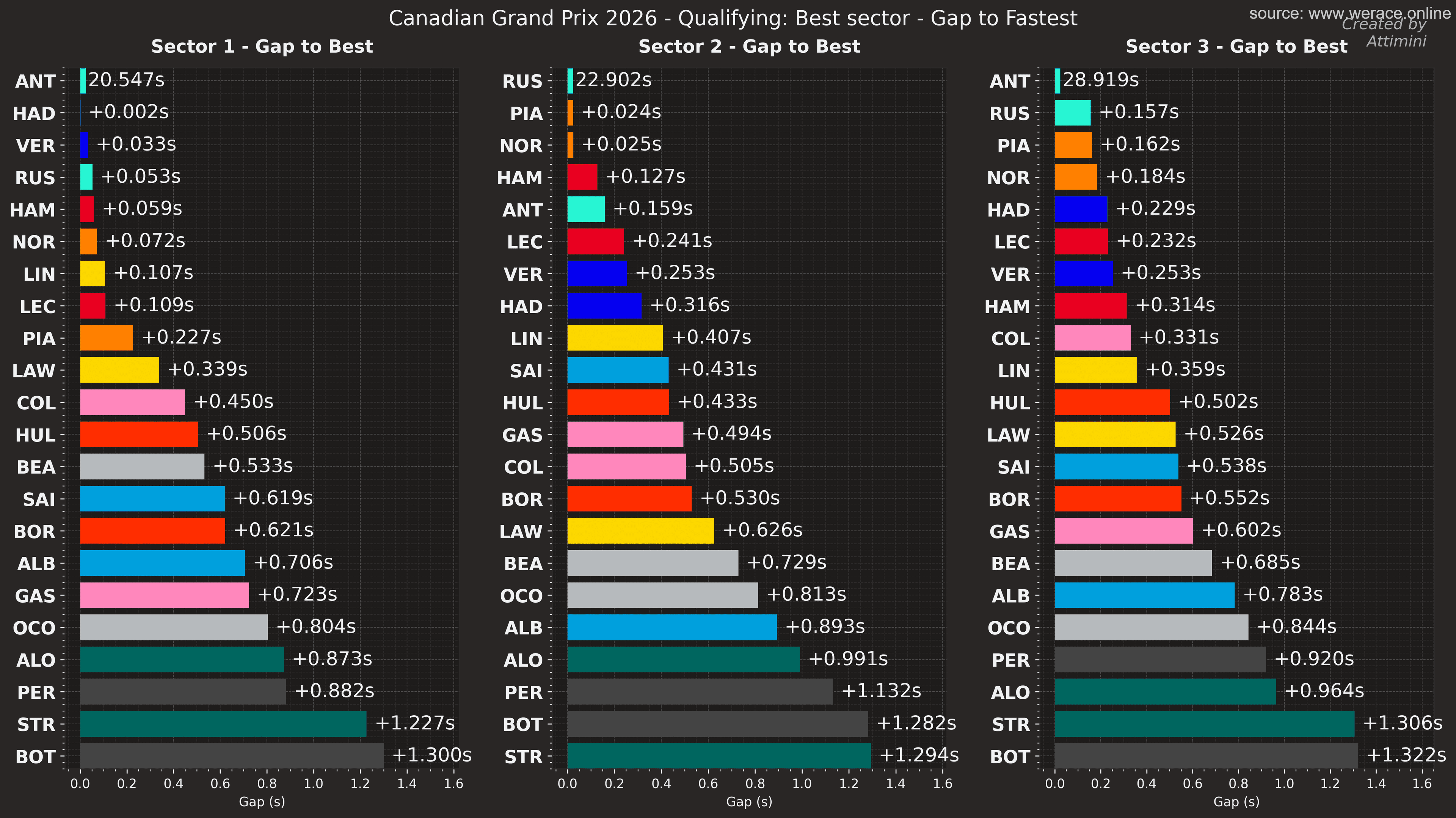
And once we return to telemetry, the weakness becomes obvious.
Hamilton loses heavily in the final sector and especially on the last straight. After the Wall of Champions, the Ferrari simply produces less speed than the rivals.
The reason appears strongly connected to electrical deployment.
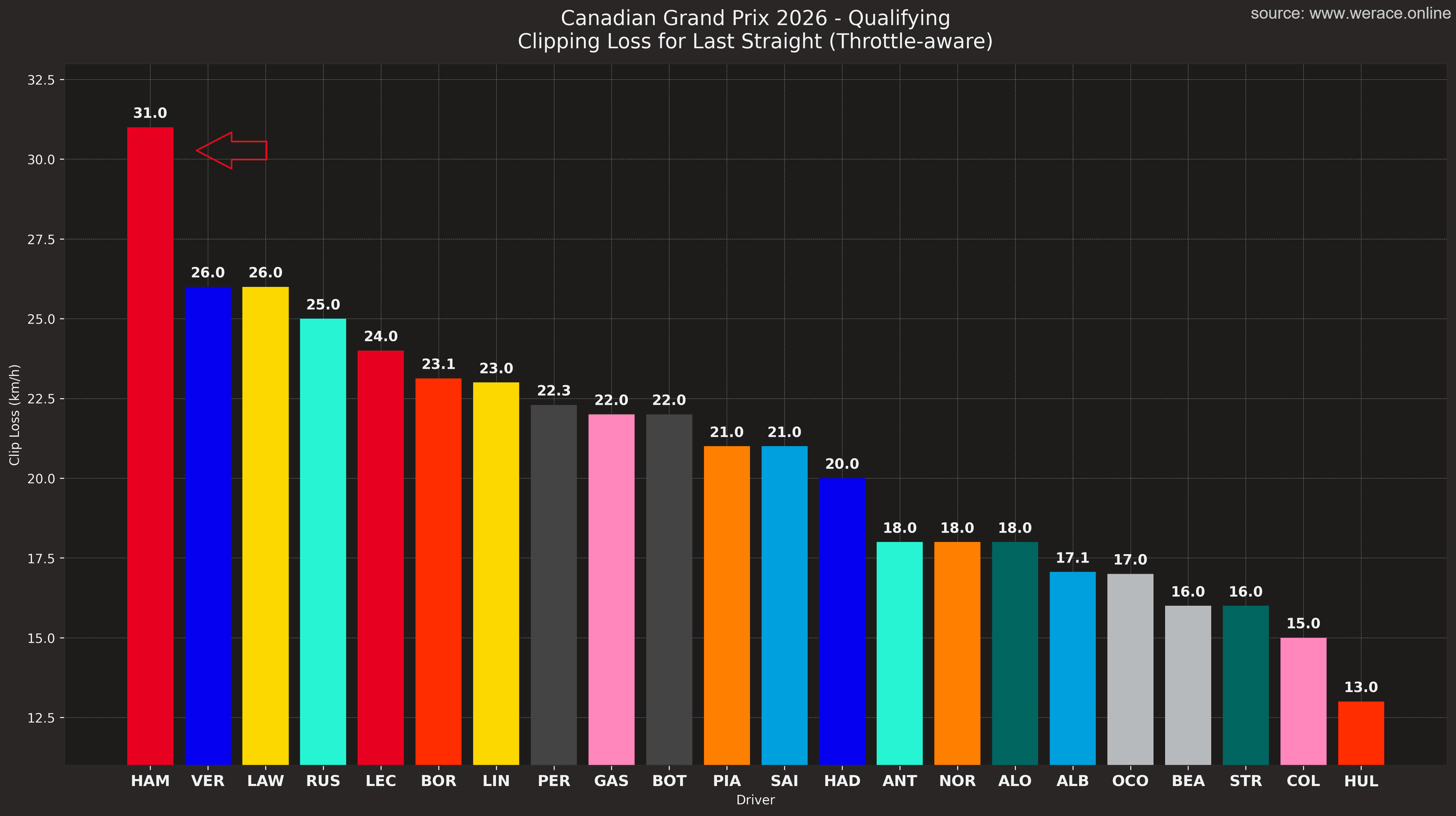
From the clipping analysis, Hamilton loses as much as 31 km/h at peak derating - the biggest value recorded all weekend.
That is an enormous number around Montreal.
Leclerc's Session Was Pure Chaos
The other Ferrari garage looked far less composed.
Throughout Q1 and Q2, Charles Leclerc repeatedly complained about tyre preparation, tyre window, and traffic during the outlap.
Modern qualifying preparation has become absurdly complicated with the 2026-style energy management systems. Drivers are no longer simply warming tyres - they are also constantly managing battery regeneration and deployment cycles.
With track temperatures dropping sharply, Leclerc clearly needed a calm and clean preparation lap.
Instead, Ferrari repeatedly released him into traffic.
By Q3 conditions improved slightly with fewer cars around, but the final result remained exactly as Leclerc himself described it:
"A disaster."
P8 was all Ferrari could manage.
Verstappen Was Right To Complain
Another driver unhappy throughout qualifying was Max Verstappen.
And the telemetry says he had every reason to be.
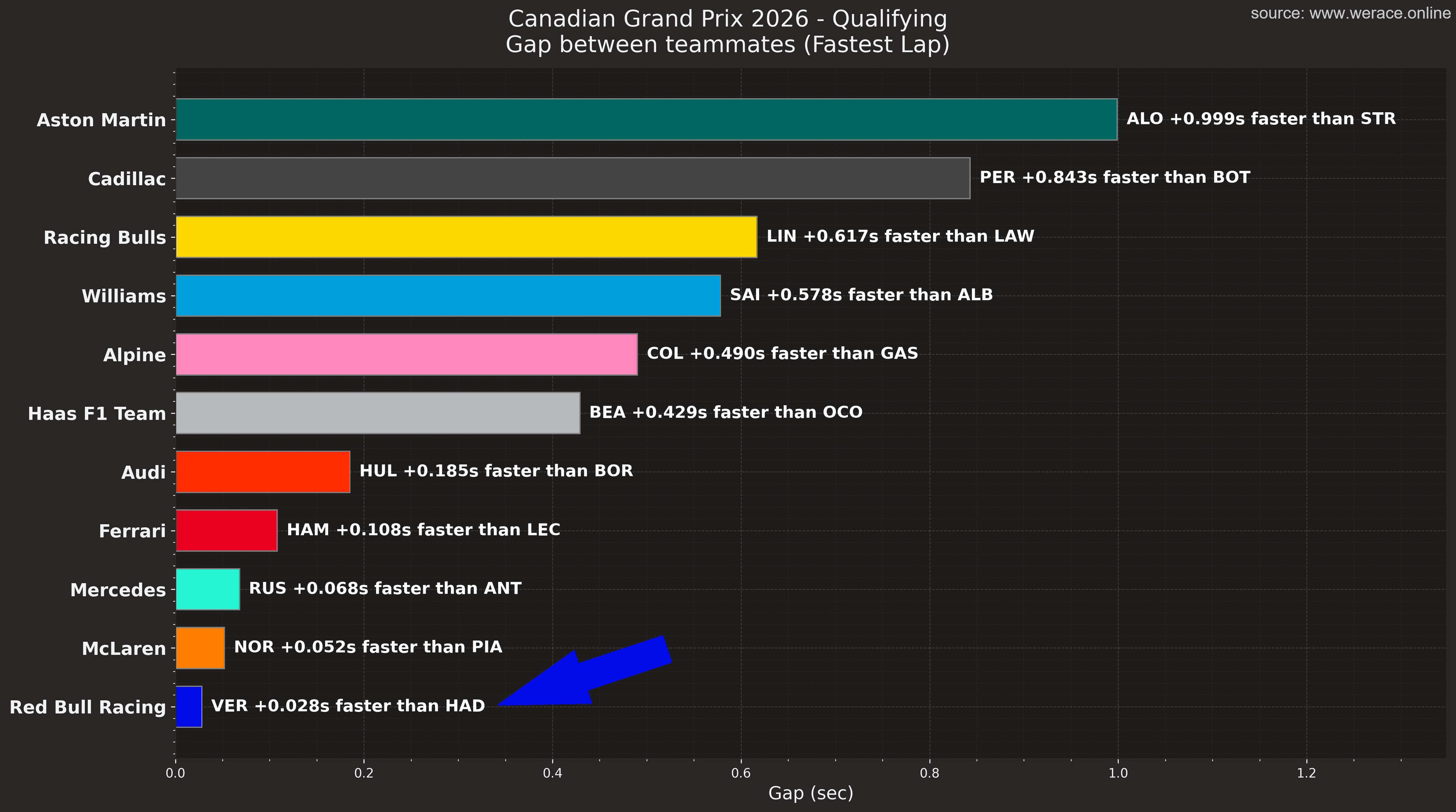
For once, the gap to teammate Isack Hadjar was tiny - only three hundredths.
That is an unusually small margin by Red Bull standards.
Verstappen repeatedly complained about driving on ice and about losing straight-line speed as qualifying progressed.
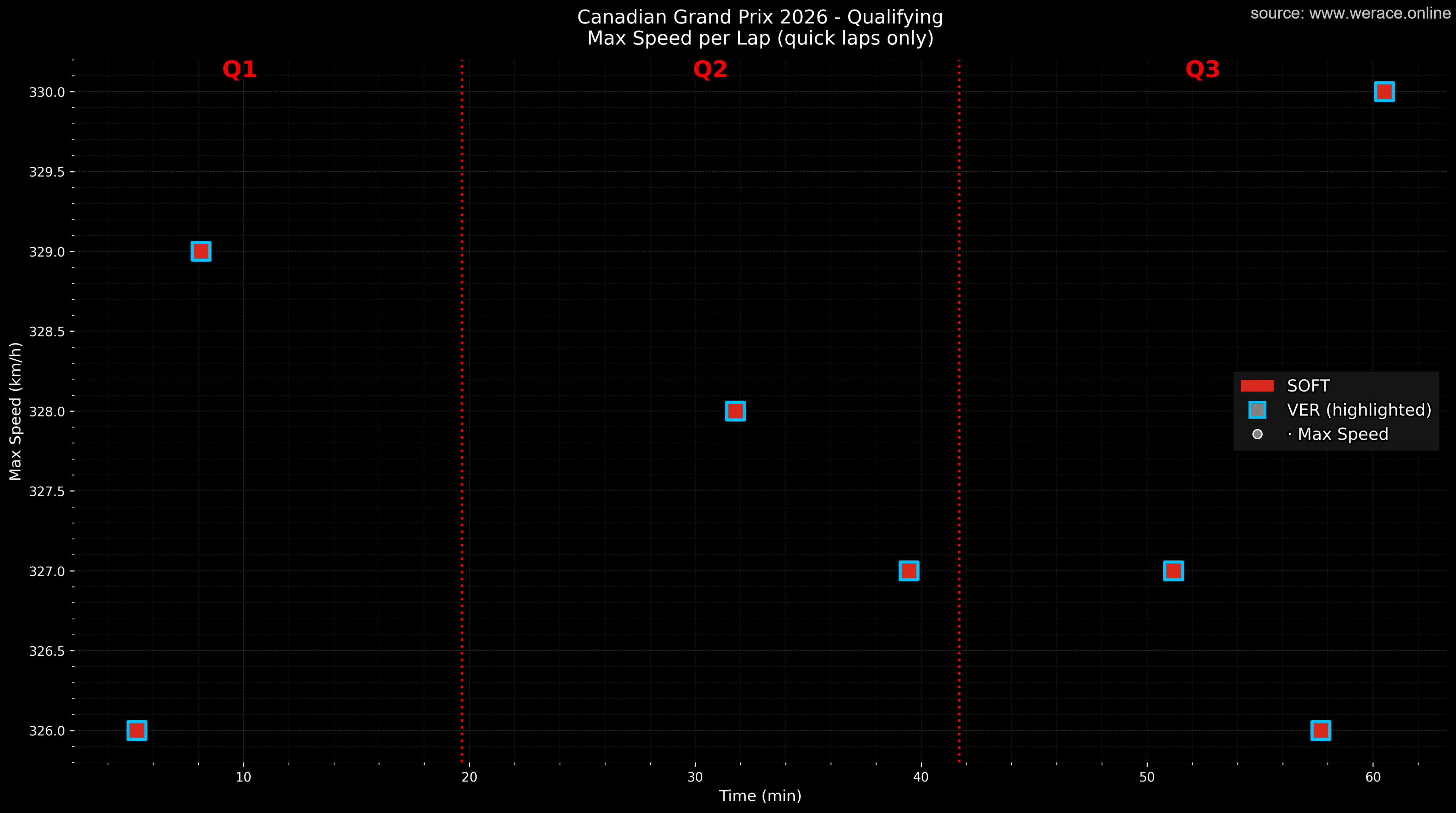
The data confirms the feeling perfectly.
His top speeds steadily dropped:
329 km/h in Q1 328 km/h in Q2 barely 325 km/h in Q3
And telemetry reveals why.
The Red Bull is extremely aggressive in the short acceleration zones early in the lap, but then suffers heavy derating on the two major straights.
Before Turn 10 the speed deficit exceeds 5 km/h, followed by a visible deployment step where the car simply runs out of electrical assistance.
Curiously, like on Friday, the Red Bull still regains strong speed near the start-finish line.
But overall the RB appears to plateau much more aggressively than its rivals over the lap.
Now Everything Depends On The Weather
And now... everything shifts toward Sunday.
Because nobody truly knows what will happen if rain arrives.
This would be the first wet race for this generation of cars under these regulations. Active aerodynamics will be disabled, electrical deployment heavily reduced, and the internal combustion engine could suddenly become far more influential again.
That scenario may push Mercedes even further ahead.
Or maybe not.
Because we genuinely do not know how these cars will behave in the wet. Ferrari's chassis balance might suddenly become a strength. McLaren's tyre management could become decisive. Red Bull may recover performance completely.
For now, qualifying gave us one certainty: Mercedes is still on top in Canada!