
F1 2026 Melbourne Qualifying: A Nightmare Regulation Where Mercedes Dominates & Ferrari Hides Surprising Pace
The first qualifying session of the 2026 Formula 1 era is in the books, and we need to be brutally honest: it wasn't the spectacle we are used to.
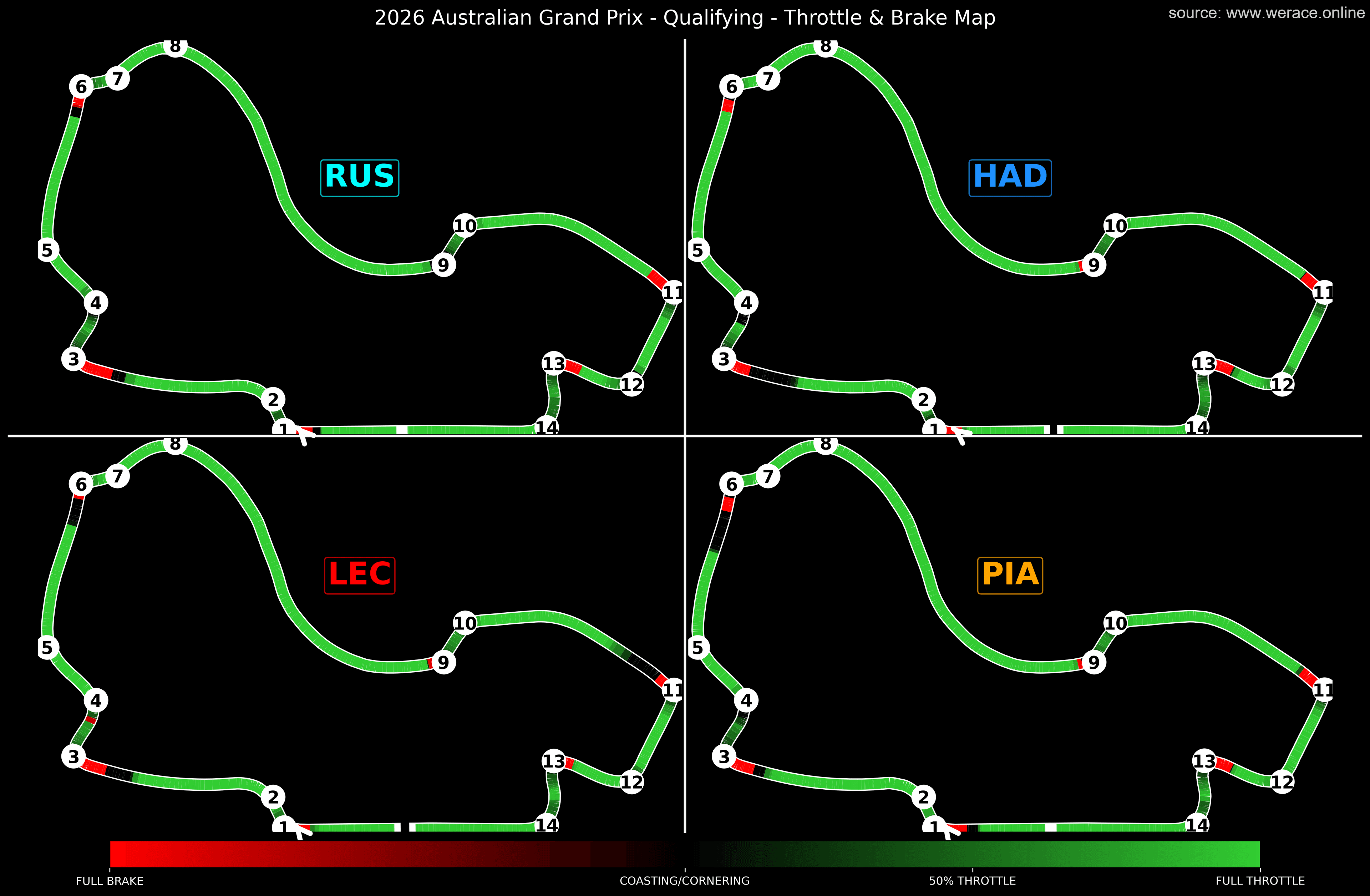
For purists, qualifying has always been the ultimate expression of the premier class of motorsport—pushing the car to the absolute limit, full throttle, where the only limiting factor was tire degradation. Instead, these new regulations have forced drivers into a totally unnatural driving style. Due to the fact that energy deployment now heavily outpaces energy regeneration, we are seeing drivers lifting off the throttle way before the corners, even on a flying lap. It feels wrong, but right now, the team with the highest energy efficiency wins.
And right now, that team is Mercedes.
The Art of "Super Clipping"
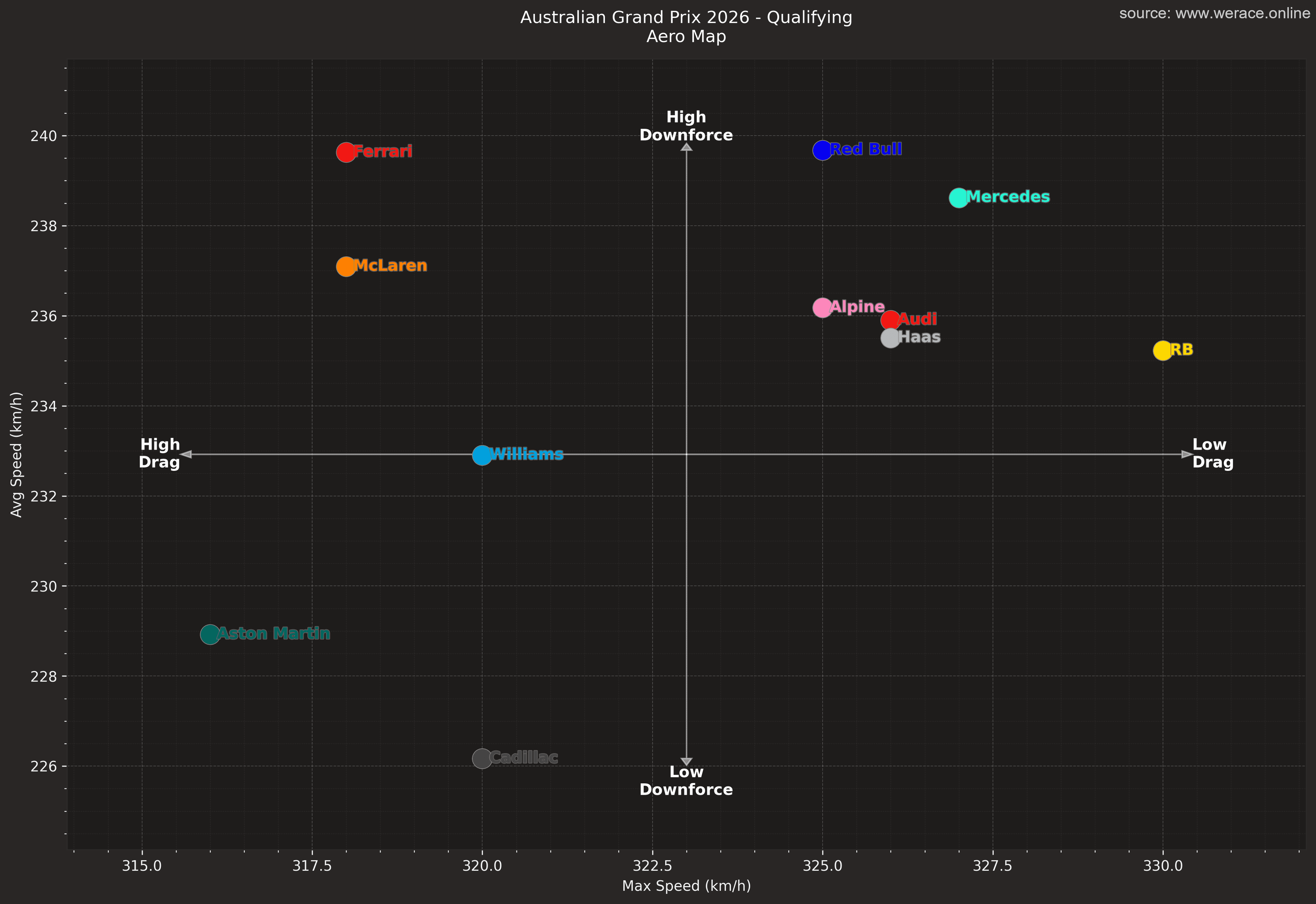
I mentioned it after Friday's practice, and despite some initial skepticism, the telemetry data from qualifying speaks volumes. The Mercedes package (Power Unit + chassis) boasts monstrous aerodynamic and energy efficiency.
On a fast circuit where efficiency matters more than raw downforce, the Mercedes ICE (Internal Combustion Engine) is incredibly strong. They have a massive dual advantage:
- They can deploy more electrical energy because their ICE charges the battery faster than the competition.
- Even while in a heavy harvesting phase, the internal combustion engine still provides immense forward thrust.
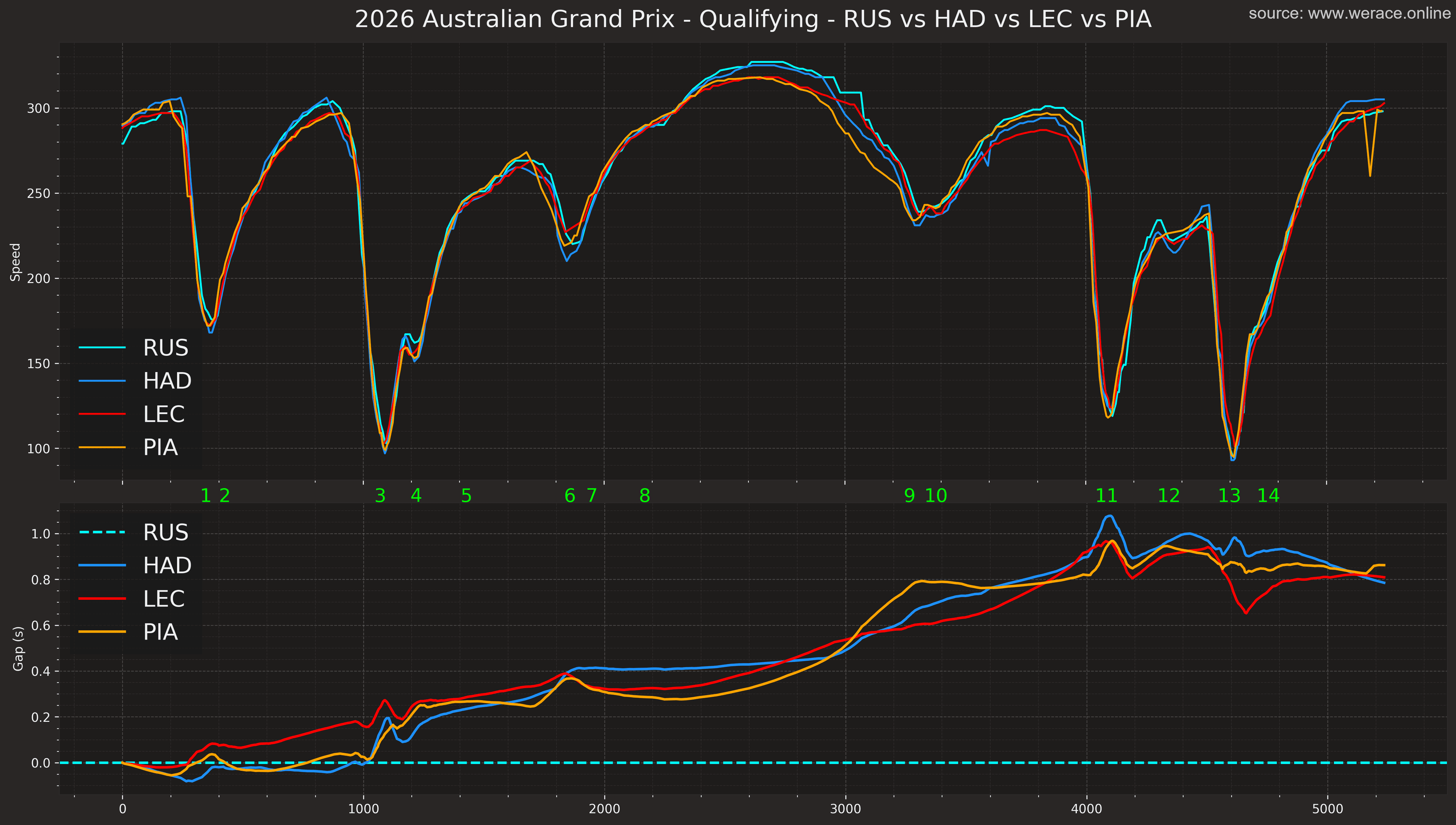
Looking at the telemetry, the Mercedes cars are the only ones able to push so high on the straights. Before the heavy braking zones—like Turn 9—other cars experience a massive speed drop. Mercedes, instead, triggers what is now known as "super clipping." Their ICE is powerful enough to sustain the aerodynamic drag while simultaneously spinning the MGU-K to recharge the battery. Entering the final sequence of corners, they are carrying over 10 km/h more than the rest of the field.
The Customer Trap: Why is McLaren 9 Tenths Behind?
If the Mercedes PU is so dominant, why is McLaren—running the exact same engine—nearly 9 tenths of a second off the pace?
The answer lies in a mix of software and mechanical philosophy:
The Software Advantage: As McLaren's Andrea Stella brilliantly explained, under these new rules, the works team has full control and understanding of the complex energy management software. Customer teams currently lack this deep access to optimize their electrical maps.
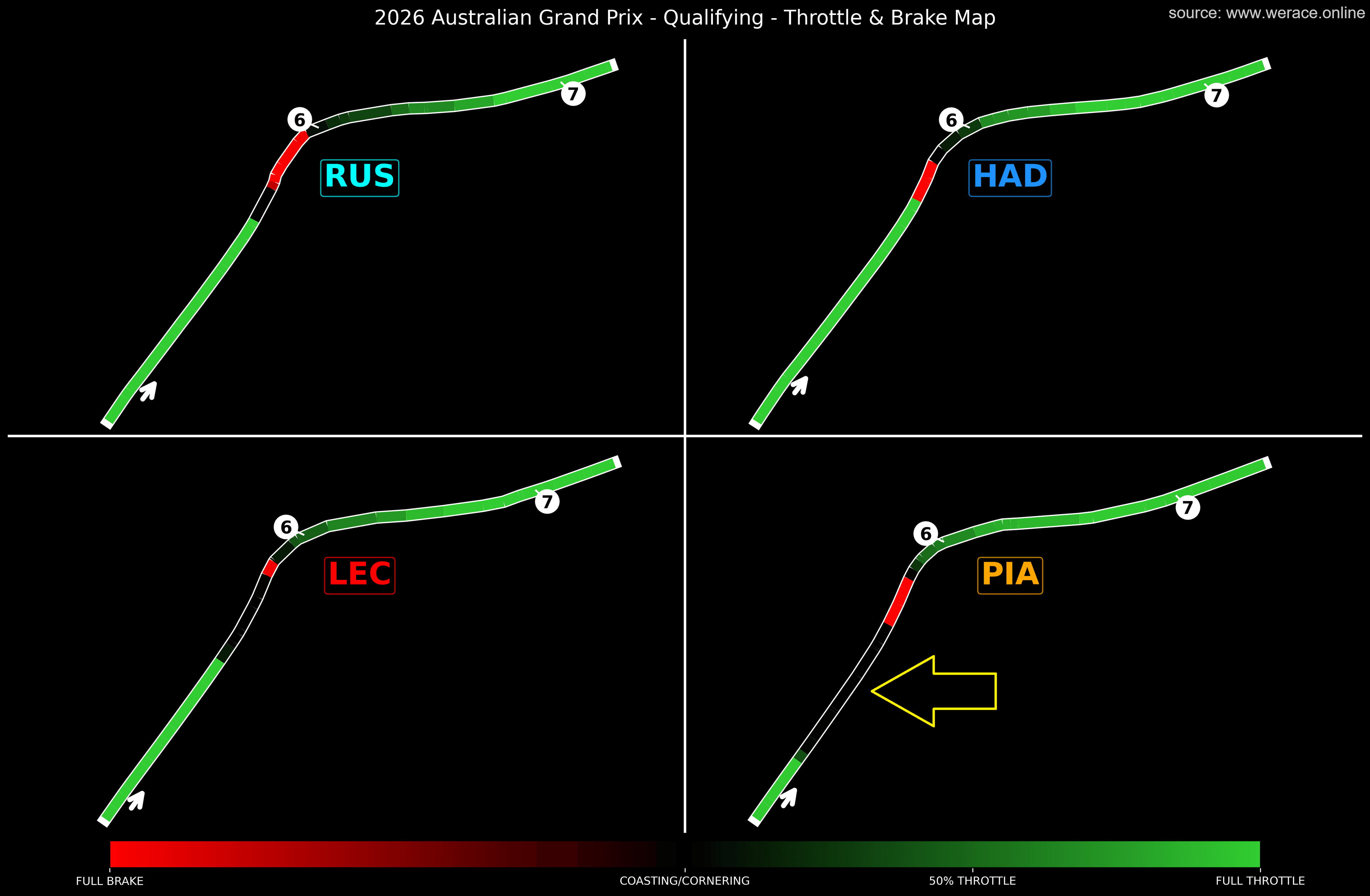
Gearing and Lift & Coast: The MCL40 uses much shorter gear ratios. This mechanical choice forces Oscar Piastri to do a massive amount of "lift and coast", whereas Russell and Hamilton can keep their foot planted, relying on super clipping.
Weight Issues: The Papaya car seems to be slightly overweight, as evidenced by Piastri's struggles in the slower, more mechanical corners.
Red Bull-Ford: The Silent Threat
Before we move to Ferrari, we must highlight the incredible debut of the Red Bull-Ford powertrains.
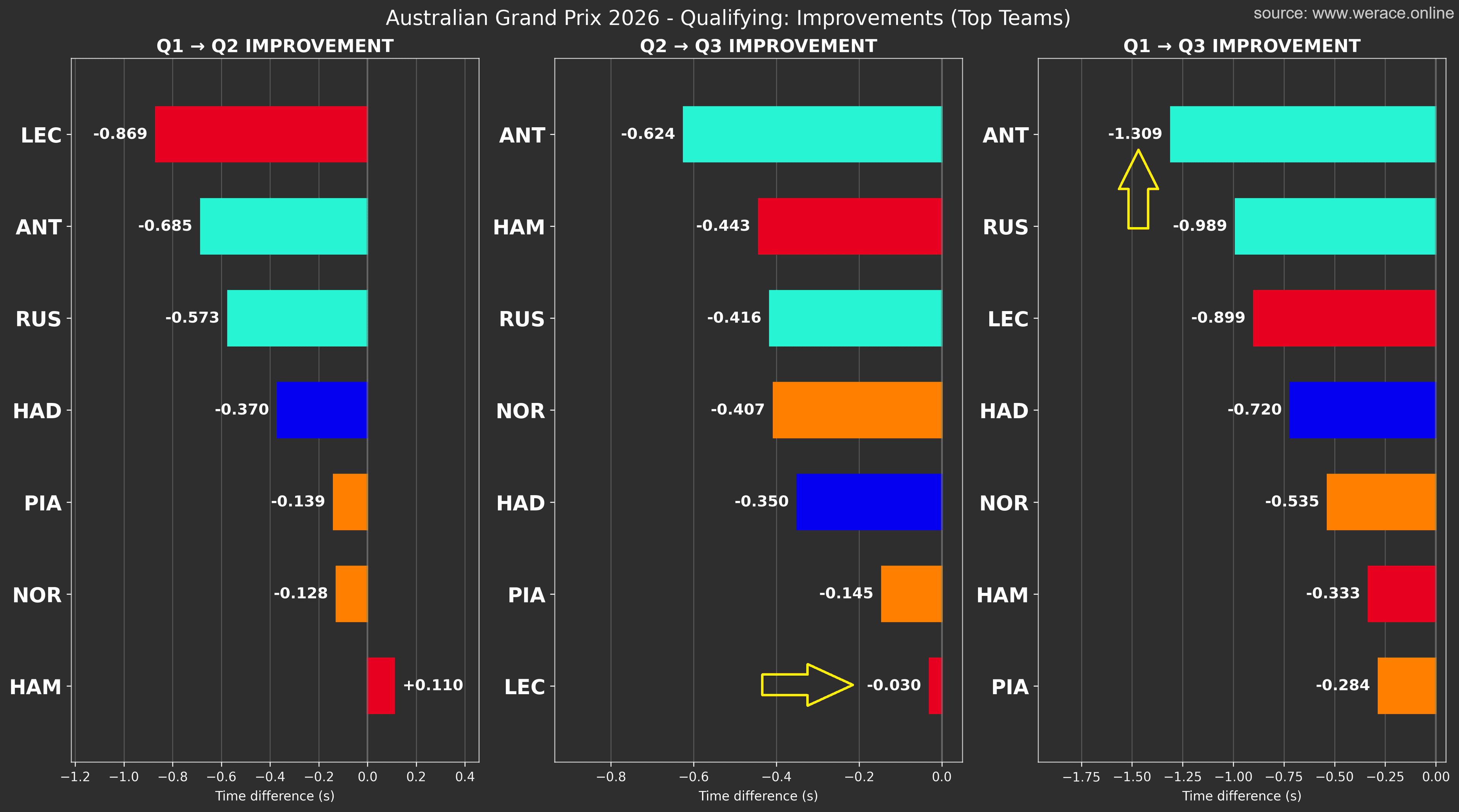
If you look at the progression from Q1 to Q3, the Red Bull is the closest car to the Mercedes in terms of power delivery and speed. With Max Verstappen surprisingly knocked out in Q1 (due to rear locking, a clear sign of how tricky the new regenerative braking system is to manage), rookie Isack Hadjar stepped up massively. Putting that car in P3 proves that Red Bull has excellently translated Honda's old know-how into this new Ford PU, showing incredible harvesting capabilities at high speeds.
The Ferrari Illusion: A Great Chassis Starved of Energy
Looking at the final timesheet, Ferrari suffered heavily. Following a setup mistake in FP2, they reverted to a more neutral baseline for Saturday, but their Q2 was plagued by PU deployment issues. Both drivers suffered from premature electrical clipping on the straights.
However, calling the SF-26 a bad car would be a huge mistake. The Ferrari chassis is actually excellent.
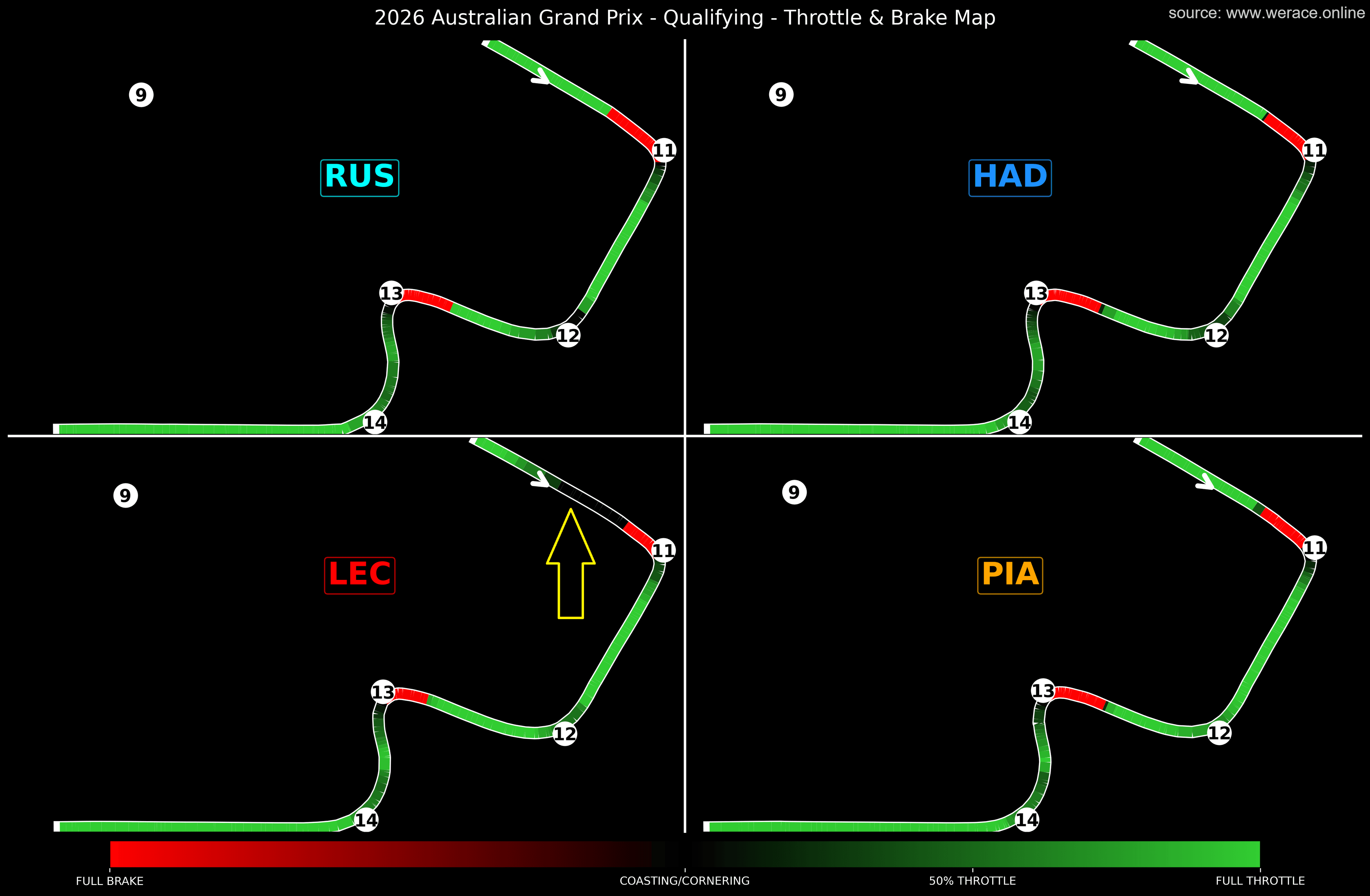
If we look at Sector 3—the twisty, tire-critical section of the track—Charles Leclerc was actually the fastest man on track, pulling 0.15s to 0.2s on his direct rivals. The car is aerodynamically sound. The 8-tenth gap to Mercedes is almost entirely caused by a severe "energy starvation" on the straights.
Because the Ferrari PU fails to harvest enough energy in the earlier parts of the lap, Leclerc is forced into a massive lift and coast before Turn 11. The result? He arrives at the braking zone a staggering 14 km/h slower than George Russell. It's not an aero deficit; it's an energy management nightmare.
A Blasphemy to F1?
Seeing Formula 1 cars forced to lift and coast in Q3 feels like a blasphemy to the sport. And we, the tech analysts and fans, aren't the only ones feeling frustrated.
Listening to the post-qualifying interviews, World Champions like Max Verstappen and Lewis Hamilton voiced the exact same concerns. Verstappen bluntly stated he doesn't enjoy driving these cars at all, while Hamilton—despite feeling much more confident in his W17 compared to last year—reiterated that lifting on a straight to save energy is the exact opposite of what F1's DNA should be.
Mercedes has nailed the assignment, but this 2026 regulation formula might already be giving the FIA nightmares.