
F1 2026 Shanghai Sprint Qualifying: Beautiful but Doesn't Dance — Macarena Flops, Red Bull Crumbles, Mercedes Flies
Welcome back, tech nerds! Just 24 hours ago, I was genuinely optimistic about seeing a more balanced fight here in China. Well, after the Sprint Qualifying session, I have to admit I was wrong. We are witnessing a stratospheric Mercedes, and the show at the top is, frankly, a bit desolate. Let's dive deep into the telemetry, the failed upgrades, and the tire dramas to understand what really happened on this first day in Shanghai.
The Silver Dominance (And They Have Margin...)
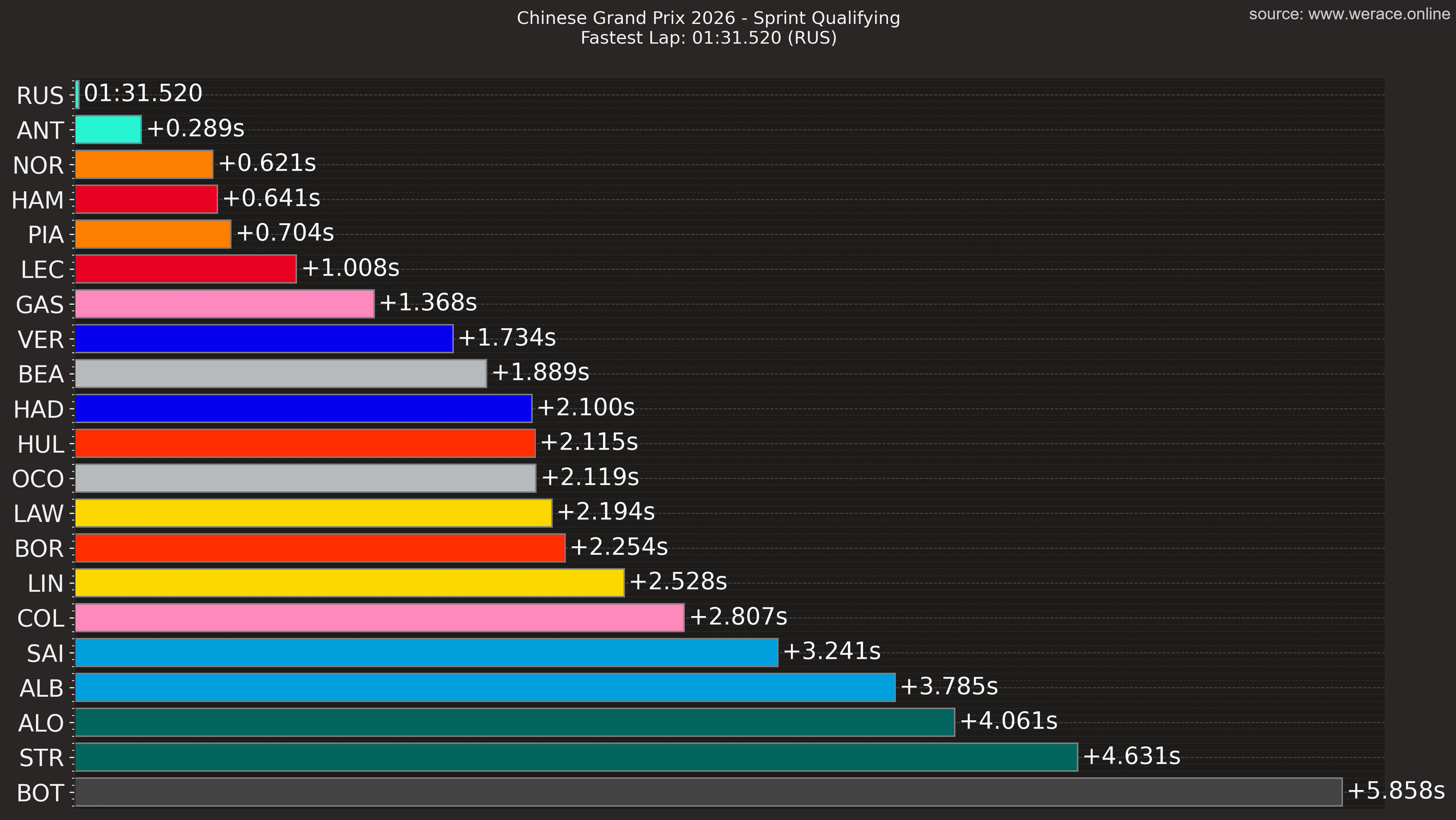
Looking at the overall gap, George Russell took pole with over half a second of advantage over Lando Norris and Lewis Hamilton. But the scariest part isn't just the stopwatch; it's how they are doing it. From Brackley, rumors suggest that Mercedes ran this qualifying session with an engine mapping set to just 3.5 out of 5.0. Yes, you read that right: they still have margin to turn up the power. The W17 looks like it's on rails, extremely stable mid-corner, while everyone else is sliding, correcting, and struggling with the front end.
The AI Brain and the "Robot" Russell
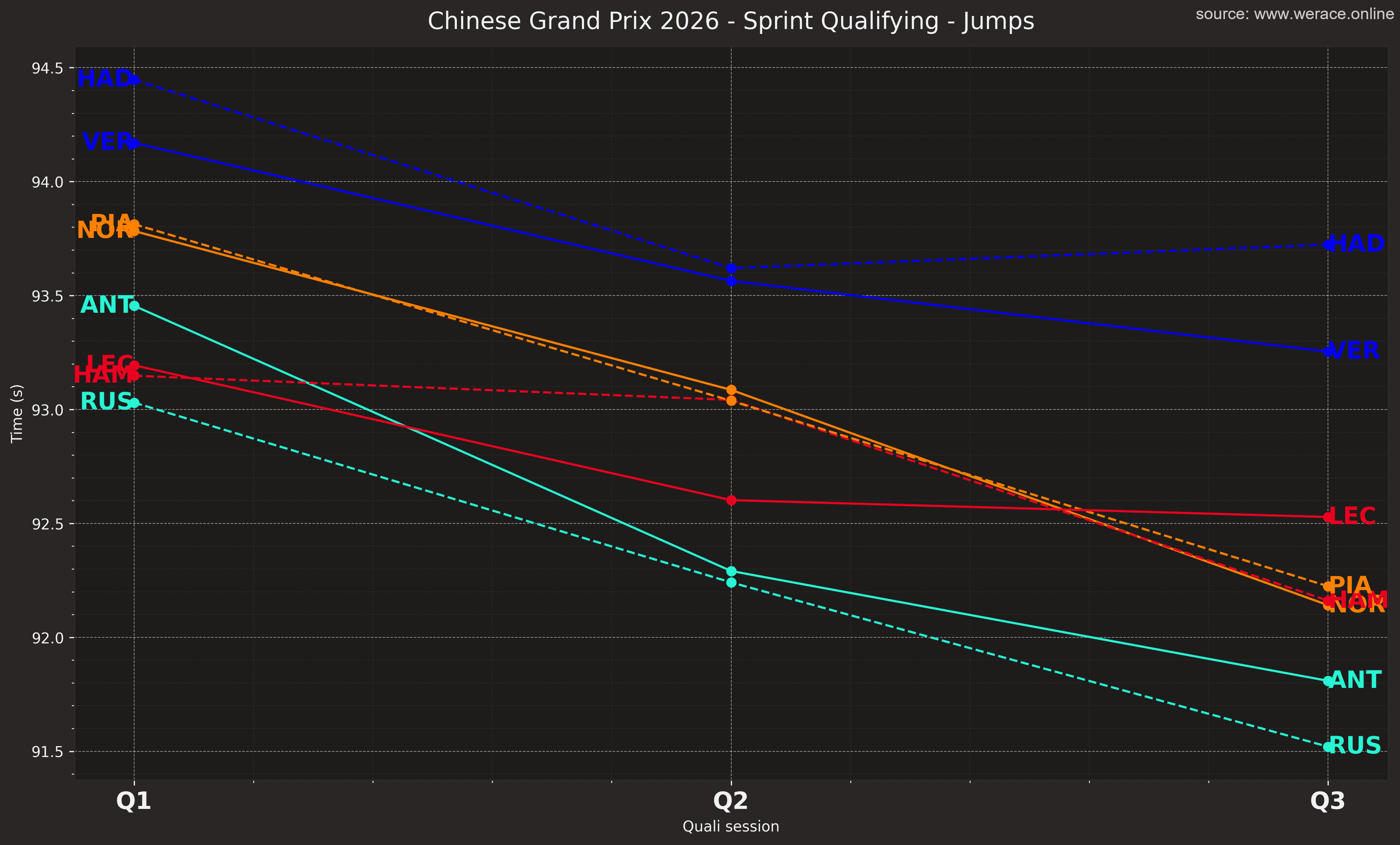
If we look at the progression through the qualifying phases, Russell is doing a completely different job compared to the rest, including his teammate Kimi Antonelli. Antonelli got closer in Q2, but then lost touch in Q3. Kimi was very honest in his interviews, pointing out something crucial about these 2026 cars: the AI-driven Engine Control Units (ECUs) auto-learn lap after lap.
If a driver makes a slight mistake or takes a different line through a corner, the software loses its references and literally messes up the energy harvesting and deployment for the rest of the lap. Right now, Russell is driving like a robot, perfectly consistent, giving the software exactly what it needs. His line through every turn is identical, lap after lap. This consistency is what allows the AI-ECU to optimize energy management to perfection.
Ferrari's Step Back: The "Macarena" Disaster
So, what about Ferrari? They tried a massive gamble by bringing the highly anticipated "Macarena" rear wing earlier than planned, but it created more chaos than performance. In FP1, Lewis Hamilton went out, activated the wing, and when he hit the brakes, the disaster happened. The hydraulic system of the flap is simply too slow. It gets out of sync with the front wing, creating a sudden aerodynamic imbalance under braking.
The car lost its rear downforce, Hamilton spun, and completely flat-spotted his tires—a disaster on a Sprint weekend where tire sets are precious. Ferrari had to tell the drivers to close the wing manually before the braking zones. Unsurprisingly, they packed it up after FP1. Fred Vasseur said they will evaluate at the factory "if it's worth continuing" with it, hinting that the costs might outweigh the benefits. This is a shocking retreat for a solution that was supposed to be their secret weapon.
The Turn 11 Trick: Extreme Super-Clipping
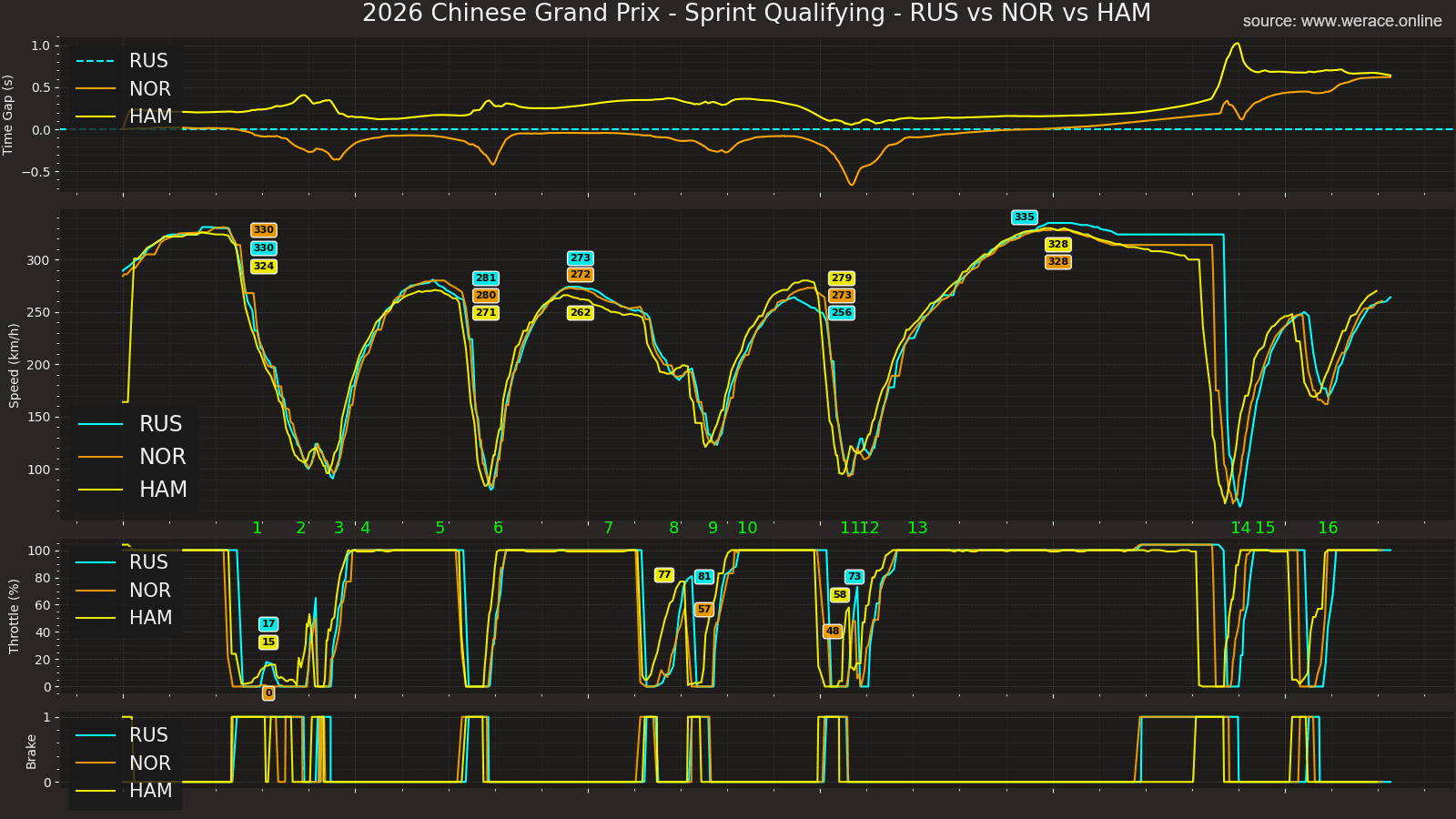
This telemetry chart is the real key to understanding the Mercedes advantage. Approaching Turn 11, everyone keeps their foot pinned, but look at Russell's speed trace: he is intentionally 20 km/h slower. Why? Because George is doing a massive harvesting phase, losing 16 km/h in just 6 seconds on the straight to recharge the battery.
He sacrifices speed there to deploy an absolute monster amount of energy on the mega straight before Turn 14. Hamilton tried a smarter, different strategy (harvesting at Turn 5 and deploying at 11), but he suffered from deployment cuts on the main straight. The Ferrari chassis is actually great—Hamilton was the fastest in the slow corners and Turn 14—but they are losing a massive 8 tenths on the straights, recovering only 2 tenths in the corners.
McLaren's Mathematical Gap
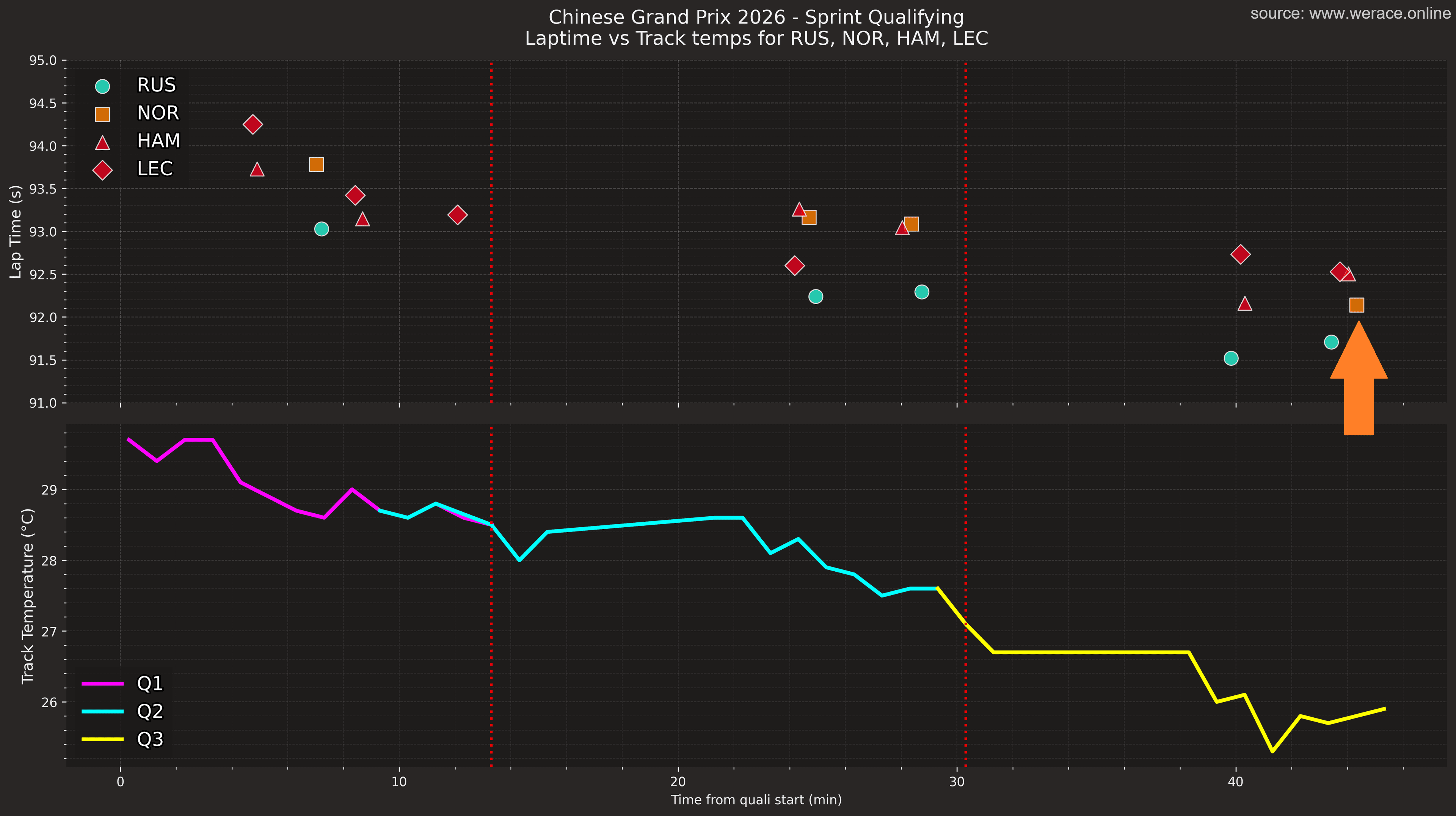
McLaren decided to send Lando Norris out at the very last moment in SQ3 as track temperatures were dropping. They secured a great P3, but there's a 0.6s gap to Mercedes. Woking's Team Principal, Andrea Stella, has been very clear about this: they estimate that 0.2s of that gap is due to their ongoing learning process of the Mercedes PU software, while the remaining 0.4s is a pure lack of downforce and chassis performance from the MCL40 compared to the W17.
They are getting better at managing the clipping, but the car still lacks pure grip. The strategic call to go out late was necessary—track temperature had dropped by 0.8°C by the time of his final run, which netted them approximately 0.15s—but it's still insufficient to overcome the inherent performance delta.
Engine Superiority
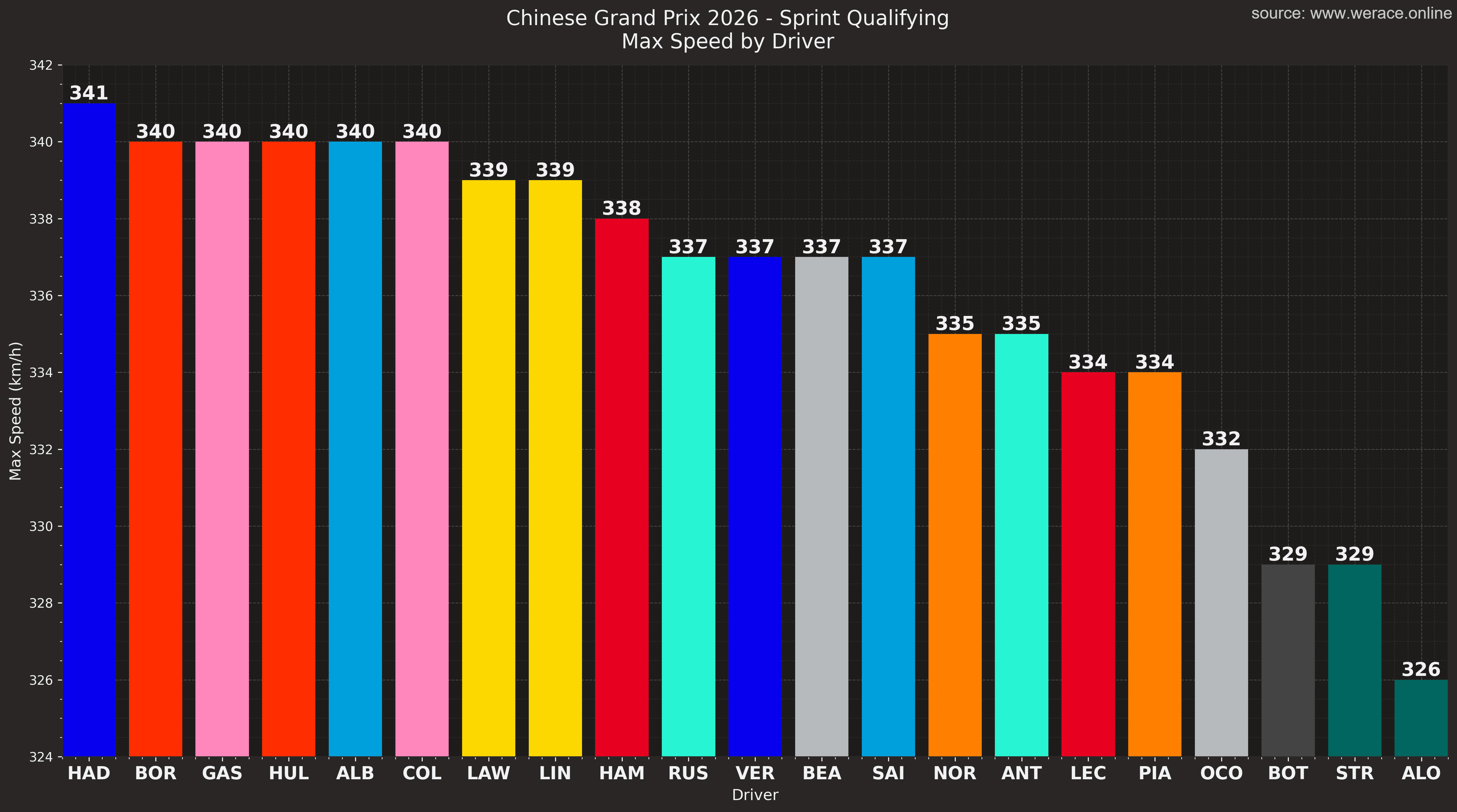
The top speed chart confirms one brutal truth: the Mercedes Power Unit is miles ahead. Just look at the top speeds on the short straight after Turn 7: Mercedes-powered cars are hitting 272-273 km/h, while Ferrari is 10 km/h slower. This raw power advantage is also why Alpine had a surprisingly good day. Benefiting from the Mercedes engine in the back, Alpine was able to mask some of their aerodynamic deficiencies, shining on the long Shanghai straights.
Red Bull's Nightmare: It's Not the Engine
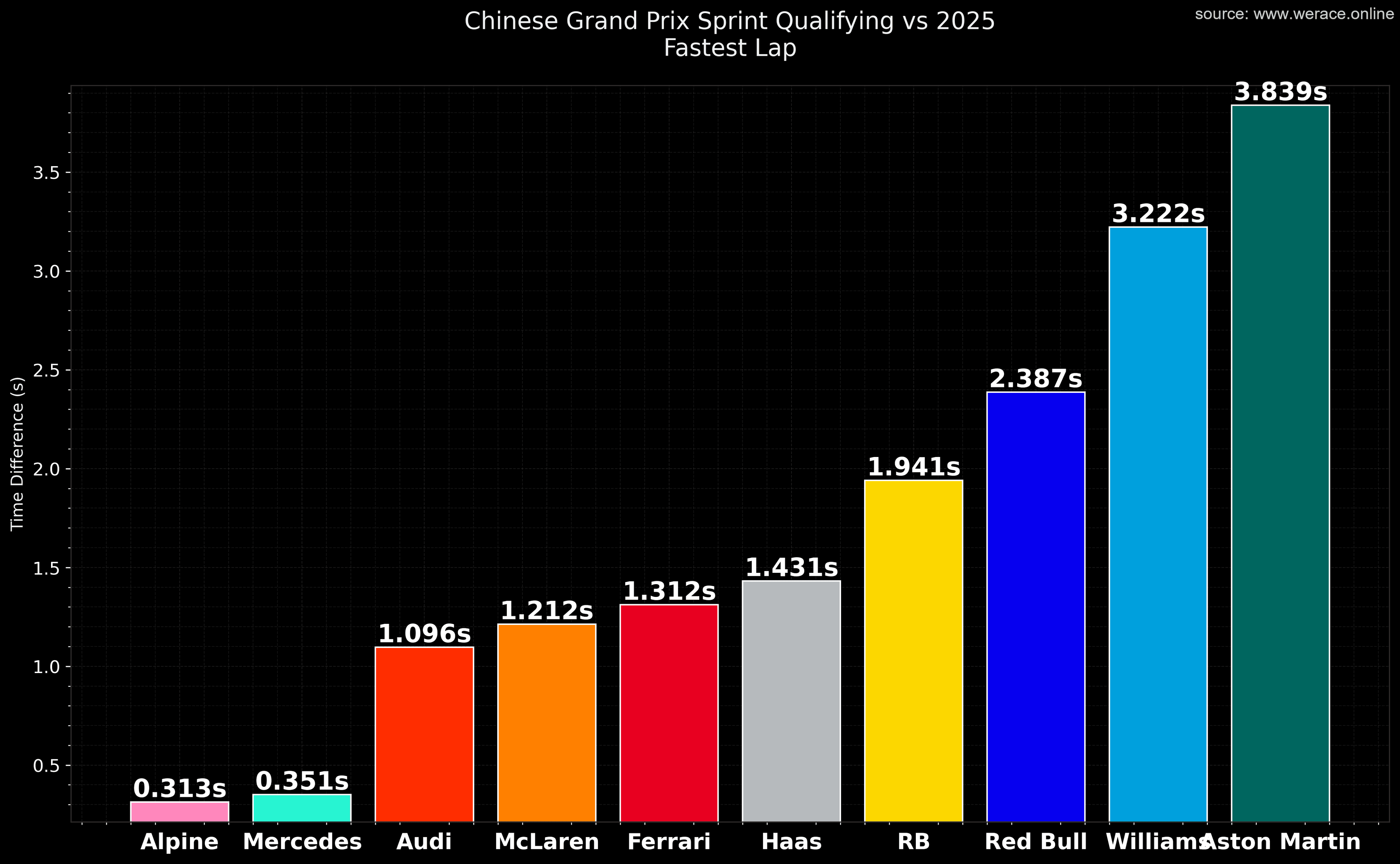
Comparing the lap times to 2025, Alpine and Mercedes lost the least amount of performance. Ferrari lost a bit more, but look at Red Bull: almost 2 seconds slower! Max Verstappen qualified a shocking 1.7 seconds behind Russell. The crazy part? It's not the Honda power unit's fault. The RB22 has an absolutely terrible balance.
The car lacks traction, and the handling in the slow corners is completely off. This setup disaster is literally devouring the front-left tire, creating extreme graining after just a few laps. Verstappen called the drivability "horrendous," and right now, they have no idea how to fix it. The team is frantically trying different wing angles and brake biases, but nothing has worked so far. This is a catastrophic weekend unfolding for the reigning champions.
What to Expect from the Sprint
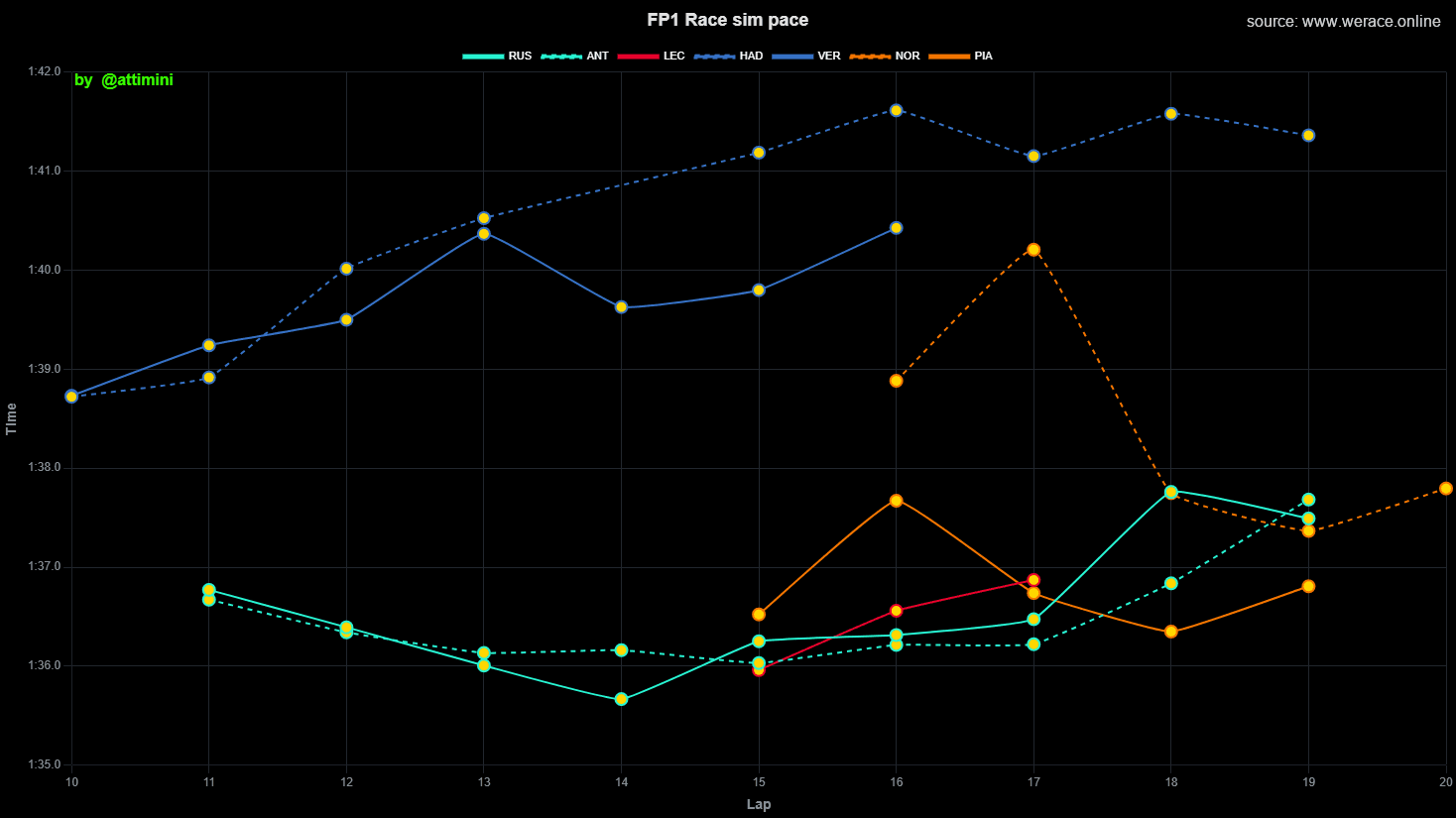
Looking ahead to the Sprint Race, the FP1 race pace data paints a clear picture. Mercedes showed a long, decent, and consistent sequence of fast laps. Red Bull tried a long run, but their times were significantly higher due to the aforementioned tire destruction. McLaren and Ferrari, unfortunately, have very little data: Hamilton's flat-spotted tires ruined their run plan, so they are going into the Sprint somewhat blind.
The Sprint will be a massive test. Will Ferrari's tire management save them? Will Red Bull figure out their setup? And, most importantly, can anyone actually challenge the Mercedes super-clipping in a race scenario? We'll find out tomorrow. See you for the post-Sprint analysis!