
- Published on
F1 2026 Shanghai Qualifying: Antonelli Takes Pole, Mercedes Survives Chaos
- Authors

- Name
- Attimini
- @attiminii
The Field Spread: Battle Intensifies
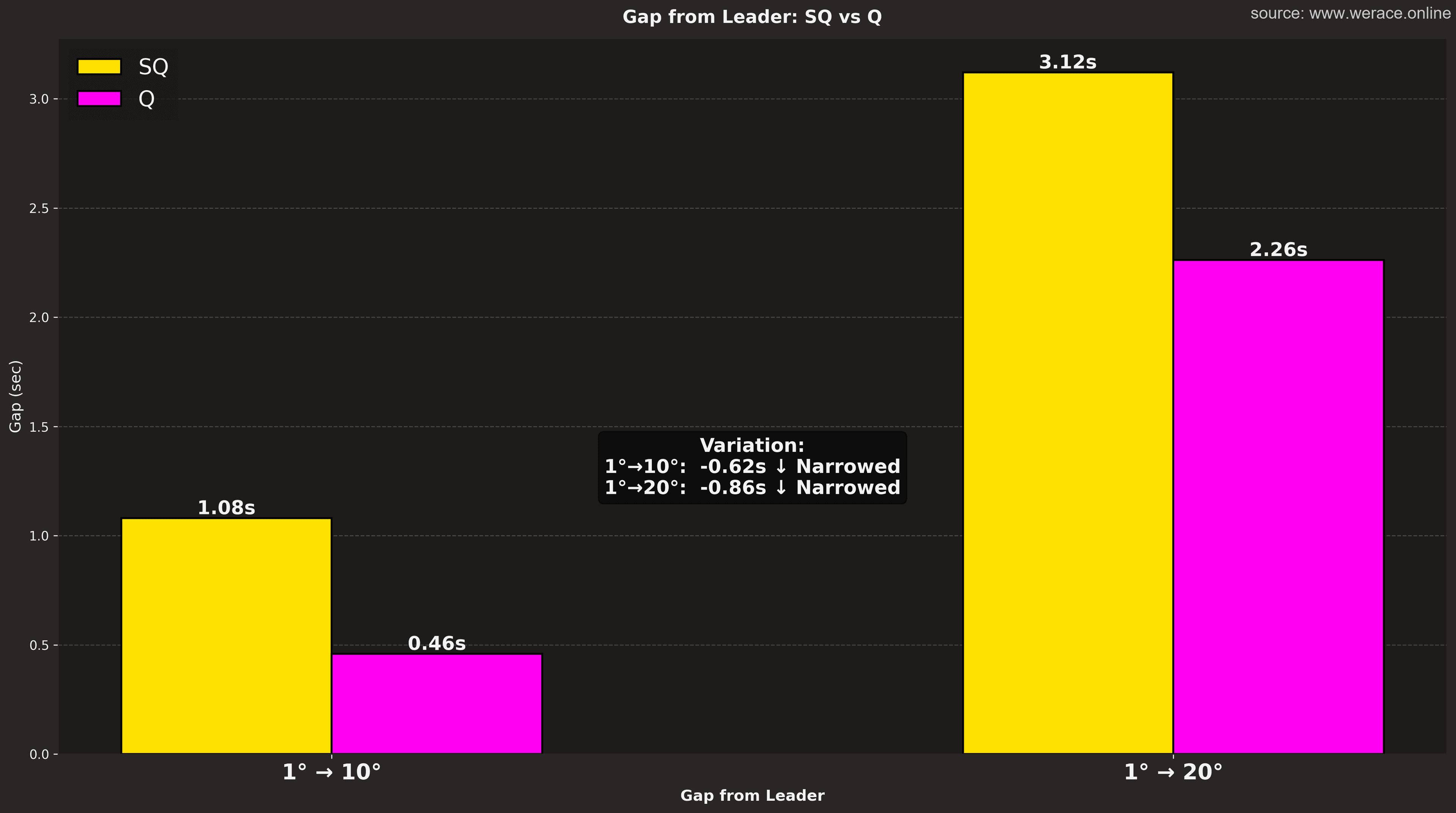
The gap on Saturday qualifying shows a dramatic tightening against Sprint Qualifying. The field spread has compressed significantly after yesterday's chaotic session. Antonelli's pole position advantage is 0.089s over Hamilton—razor-thin in modern F1 terms. The data reveals how little separates the top contenders this weekend.
Team Progression: Session-to-Session Analysis
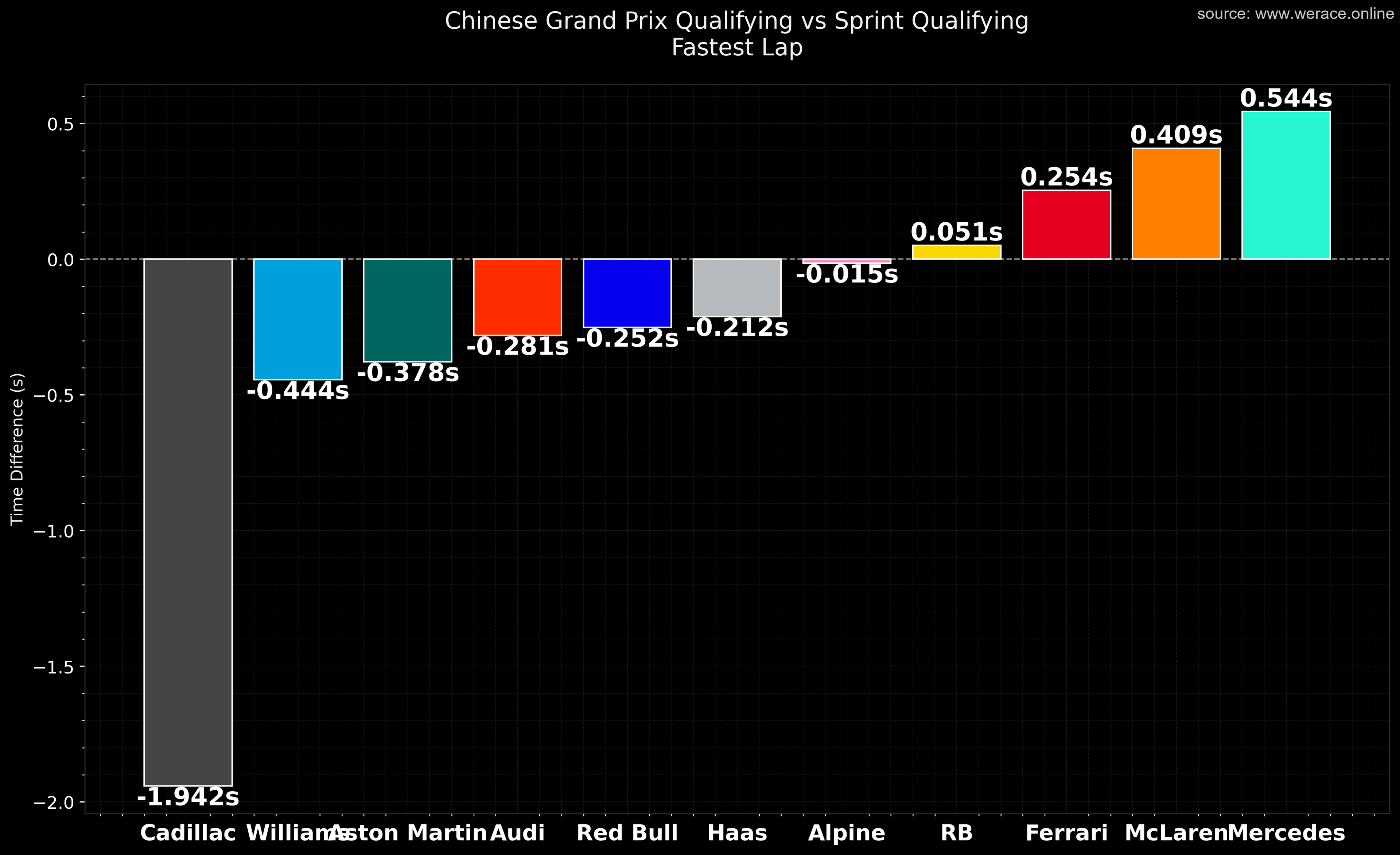
Comparing team performance between Sprint Qualifying and Final Qualifying reveals strategic adjustments working (or not). Ferrari made significant changes post-sprint, attempting to correct the wing hydraulic issues. Mercedes maintained their aggressive clipping approach despite yesterday's margin. The telemetry shows each team's evolution through the session progression.
Qualifying Jumps: Q1→Q2→Q3 Progression
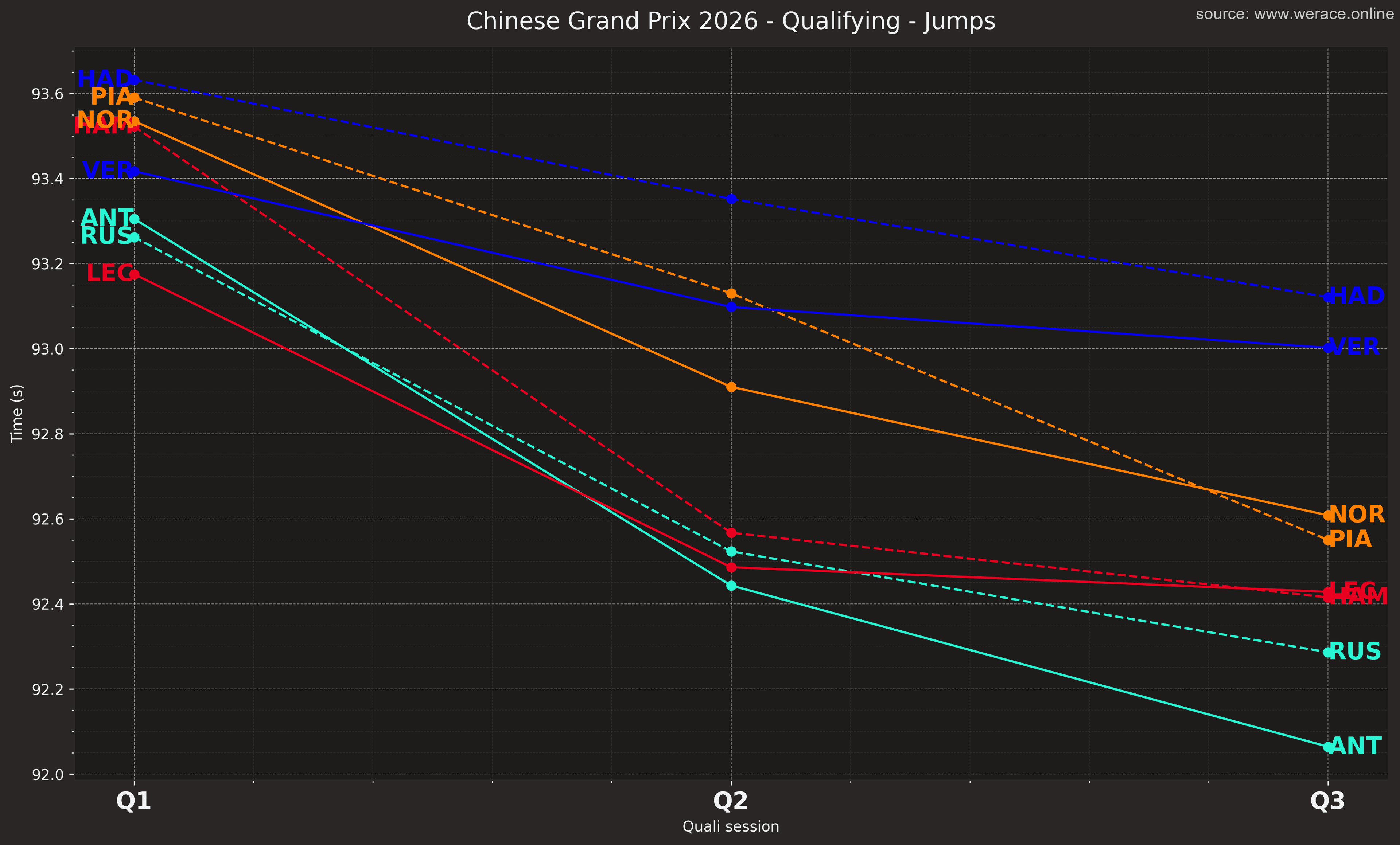
The progression through three qualifying segments tells a story of who adapted quickly to changing track conditions. The Q2-to-Q3 jump reveals massive improvements from drivers hunting pole position. Russell's progression shows methodical improvement lap-by-lap, while Antonelli's ascending trend peaks at the final moment—literally outqualifying Russell by milliseconds with a structural setup detail nobody anticipated.
Russell's Electronic Failure and Recovery
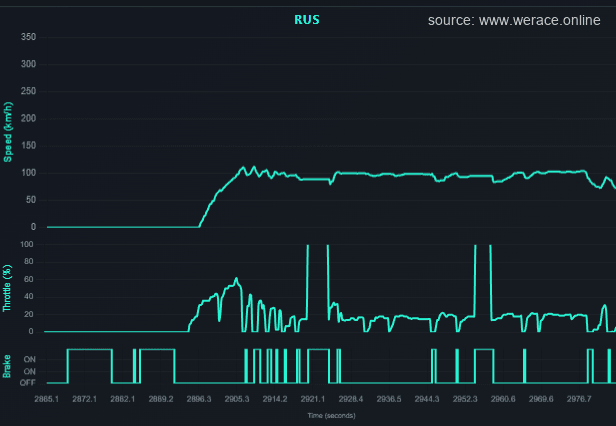
Mercedes faced an unexpected challenge mid-qualifying when Russell encountered electronic issues during Q2. The telemetry trace reveals the sudden loss of power delivery—confirming an electrical anomaly rather than a fuel system problem. Mercedes engineers demonstrated why they dominate these moments: recovery was instantaneous, and Russell clawed back to competitive pace within two laps. The data shows his final Q3 push unaffected despite the mid-session drama.
Ferrari's Second Row Lock: Antonelli and Leclerc Data
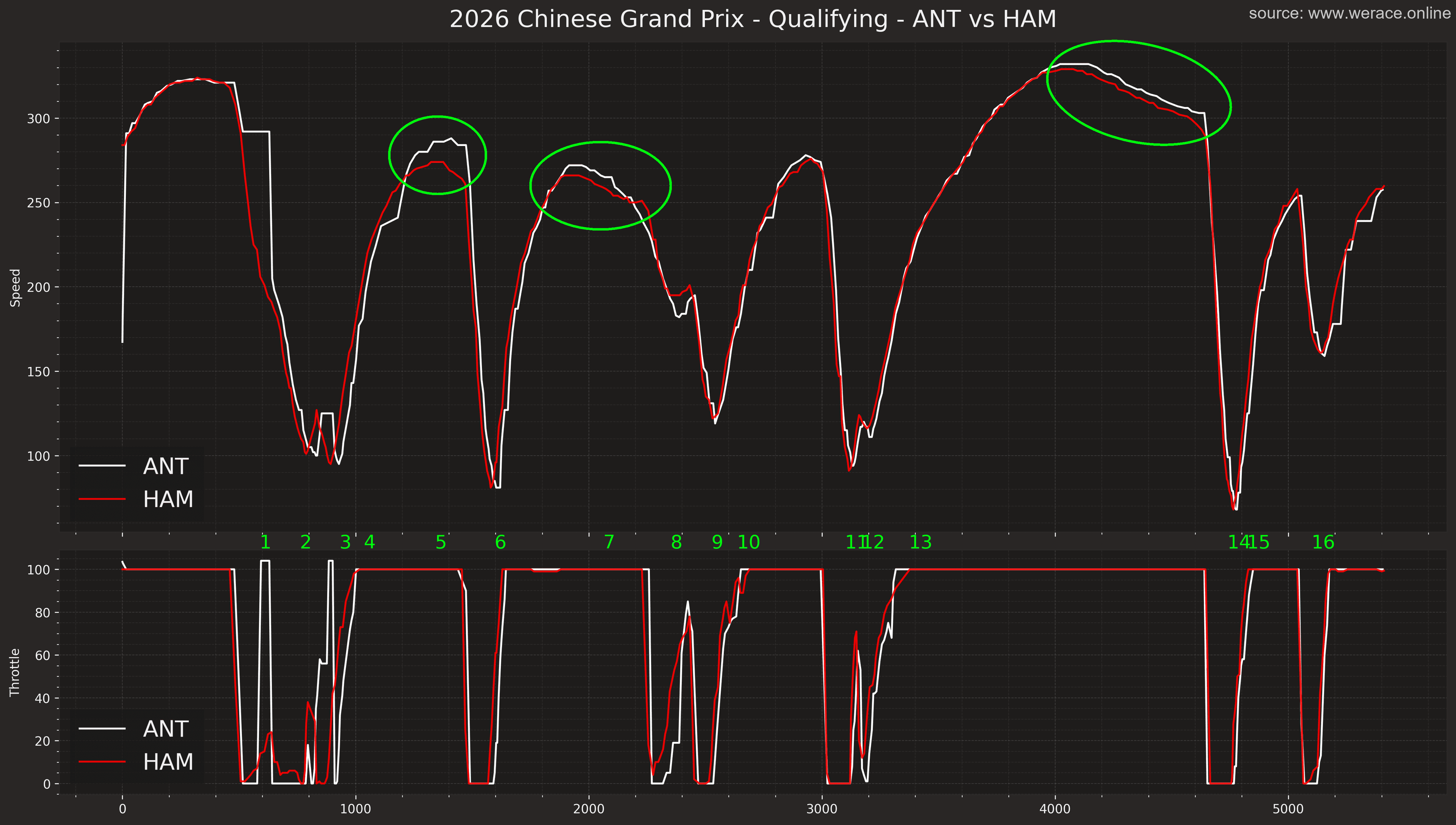
Antonelli's pole-winning lap showcases Ferrari's new driver executing under maximum pressure. The throttle application in high-speed corners shows veteran precision—delayed apex philosophy that maximizes exit speed where it counts. Leclerc's subsequent lap demonstrates similar technique but with marginally less confidence in the new aggressive setup Ferrari attempted.
Three-Way Ferrari Telemetry Comparison
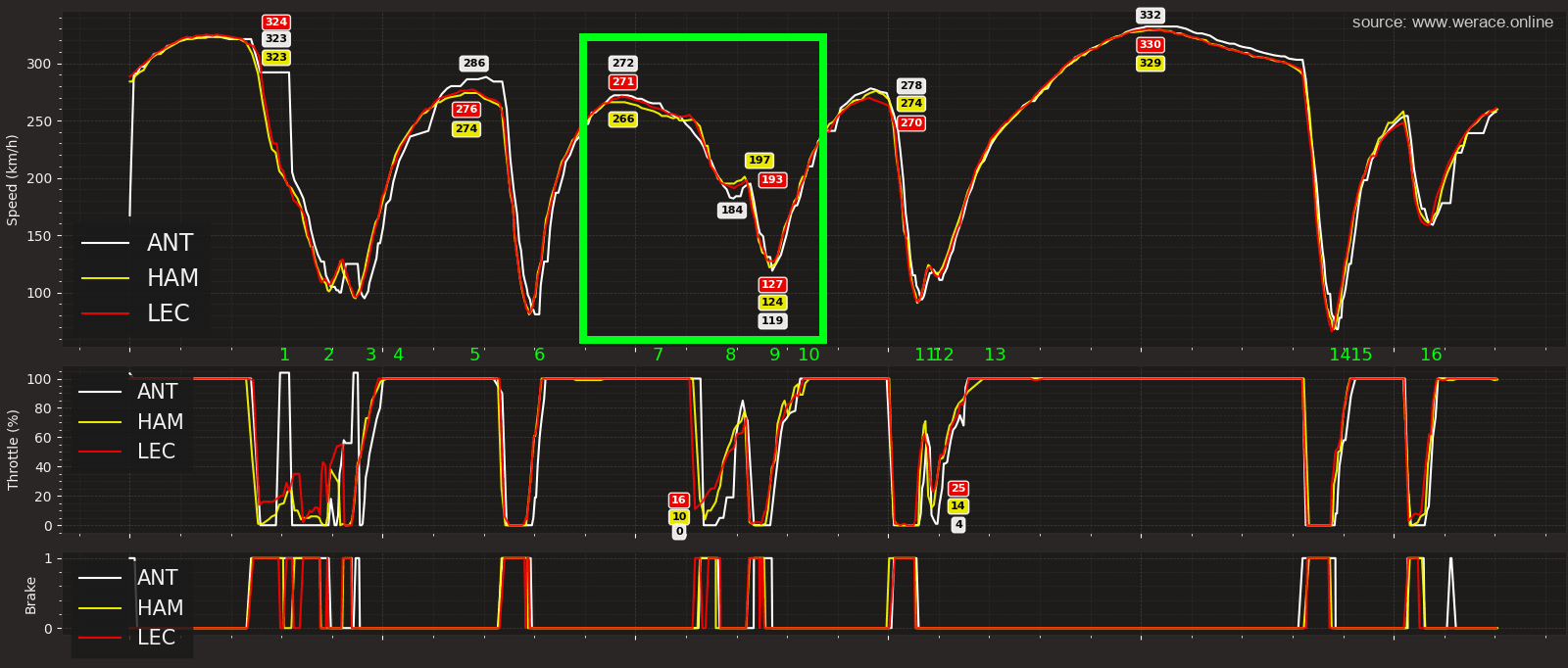
Expanding the comparison to include Hamilton reveals why Mercedes drivers consistently extract maximum from mid-range setups while Ferrari drivers sometimes struggle with extremes. Hamilton's line is more conservative but faster—classic Mercedes strategy. Antonelli's willingness to trail-brake deeper and earlier reveals the generational difference: younger drivers push harder, but whether that converts to consistency is the question defining 2026.
Deep Telemetry: Hamilton vs. Leclerc Head-to-Head
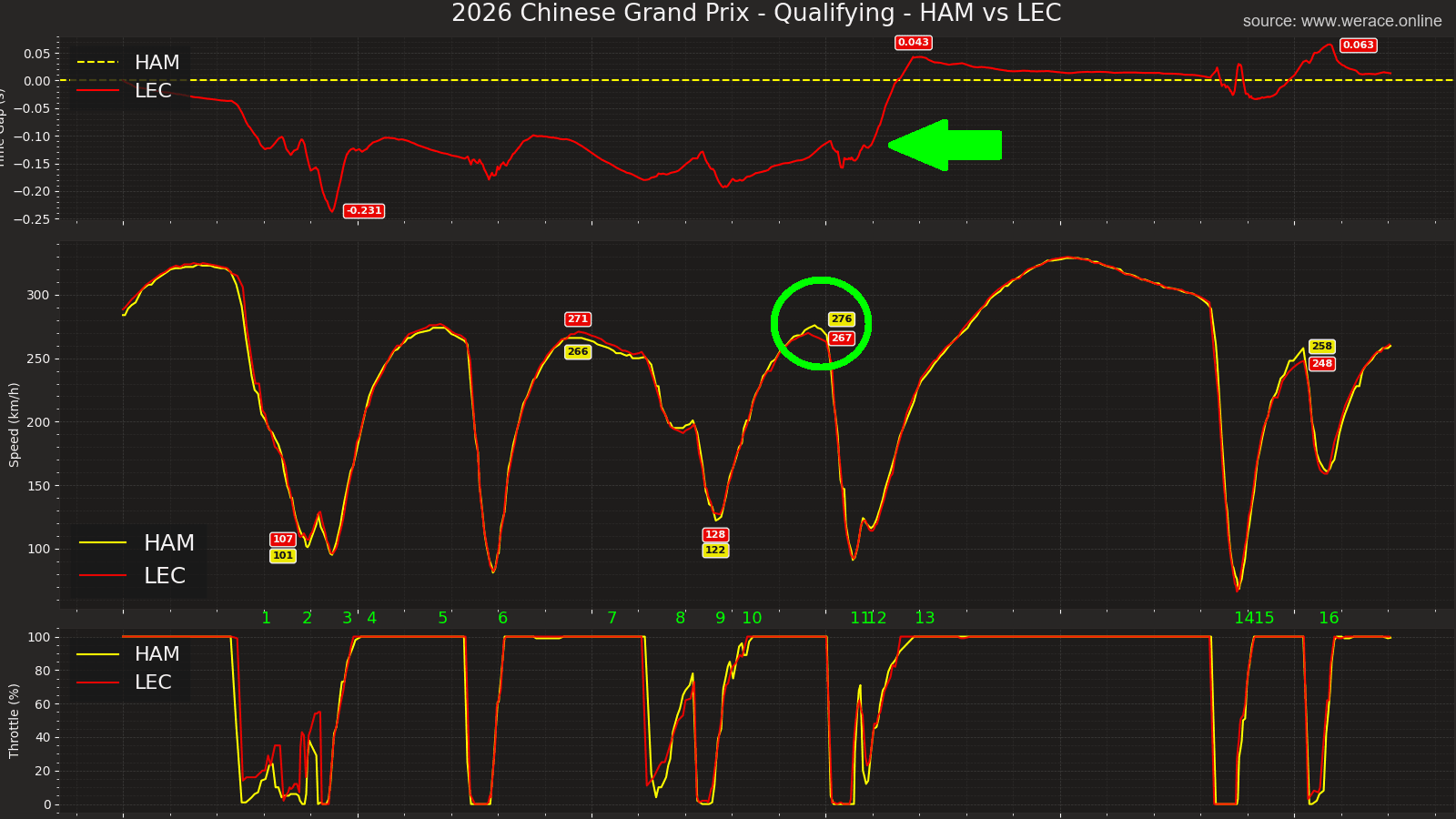
In the high-downforce sections, Leclerc attempts aggressive mid-corner throttle application that Hamilton deliberately avoids. The data suggests Leclerc is carrying more fuel (post-session analysis required to confirm), explaining both the pace loss and the different driving approach. Hamilton's smoother delivery with later, harder throttle application is the Mercedes blueprint—and it's yielding results.
Intra-Team Battle: Fastest Teammate Lap Comparison
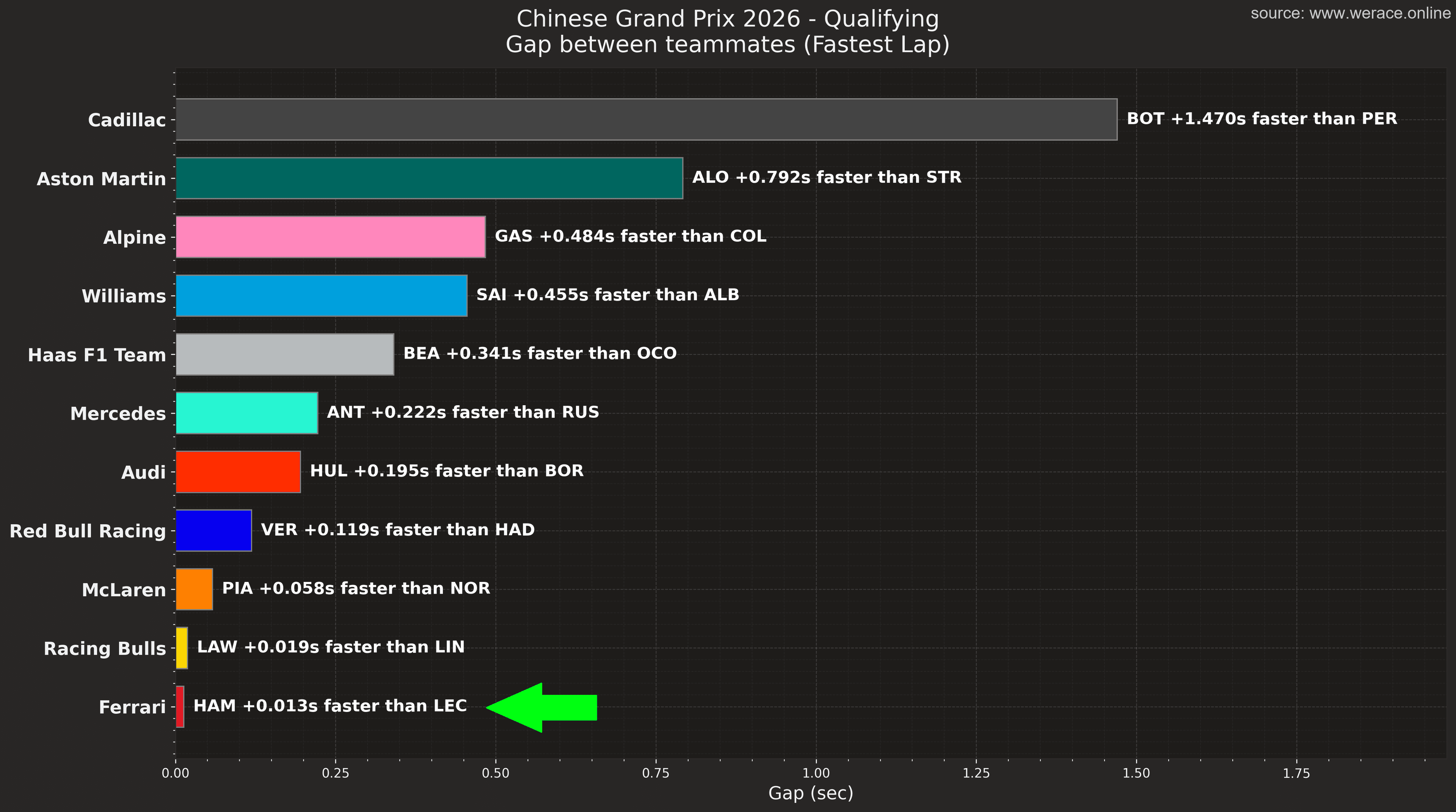
The intra-team battle shows Ferrari's internal struggle continues. Antonelli outqualified Leclerc by just 0.013 seconds—statistically zero margin. Yet the telemetry suggests different confidence levels. Mercedes internal pace was even tighter, with Russell ultimately faster despite the electronic issue complications. Red Bull's teammate gap (visible in broader data) remains concerning from a setup perspective.
Qualifying vs. Sprint: Driver Progression Analysis
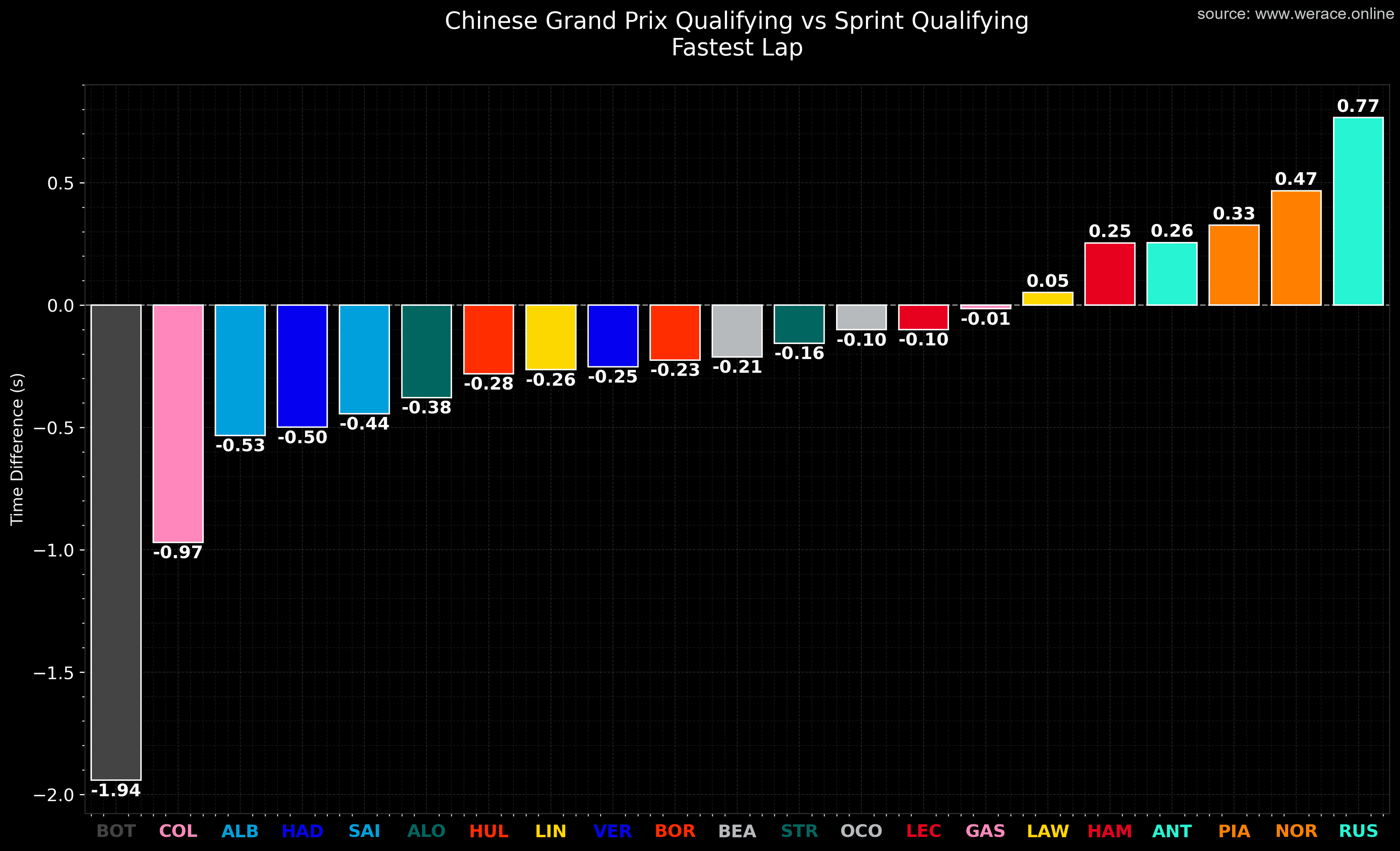
Comparing individual driver performance between Sprint Qualifying and Saturday's final session reveals who adapted best to overnight setup changes. Russell's improvement is dramatic—likely due to both setup fixes and system debugging. Antonelli's consistency (improving lap-by-lap) contrasts with yesterday's more erratic performance. This data pattern suggests tomorrow's race will be close: drivers who adapted well have momentum, but tire graining will be the great equalizer.
Post-Qualifying Analysis: Race Strategy Implications
As pole-sitter, Antonelli carries the favorite tag for Sunday, but that pole came via a structural detail (wing angle differential) that scrutineers should examine. Mercedes lock the second row (Hamilton third, Russell fourth), giving them track position advantage if anything disrupts the leading Ferrari. Ferrari's tire graining data from qualifying sessions suggests medium-compound management will be critical—Antonelli's qualify-lap aggression may cost stint longevity if replicated in race conditions.
The setup window in Shanghai is narrow: too much wing angle and you lose straight-line speed; too little and you're unstable through turn 2. Antonelli found that edge on Saturday. Mercedes calibrated for race fuel, not qualifying trim. Tomorrow will reveal which philosophy works when 56 laps of fuel matter more than one perfect qualifying lap.