
F1 2026 Shanghai: Ferrari's "Macarena" Wing & The End of Superclipping? Technical Secrets of the Chinese GP
Welcome back, tech nerds! As we head into the second round of the season, the Chinese Grand Prix promises a radically different technical challenge compared to Melbourne. If Australia felt like a "wall" for fans due to the strict new regulations, Shanghai might just allow for more balanced racing and milder technical considerations. Let's dive into the telemetry and the secrets you won't see on the TV broadcast.
Shanghai Circuit Overview
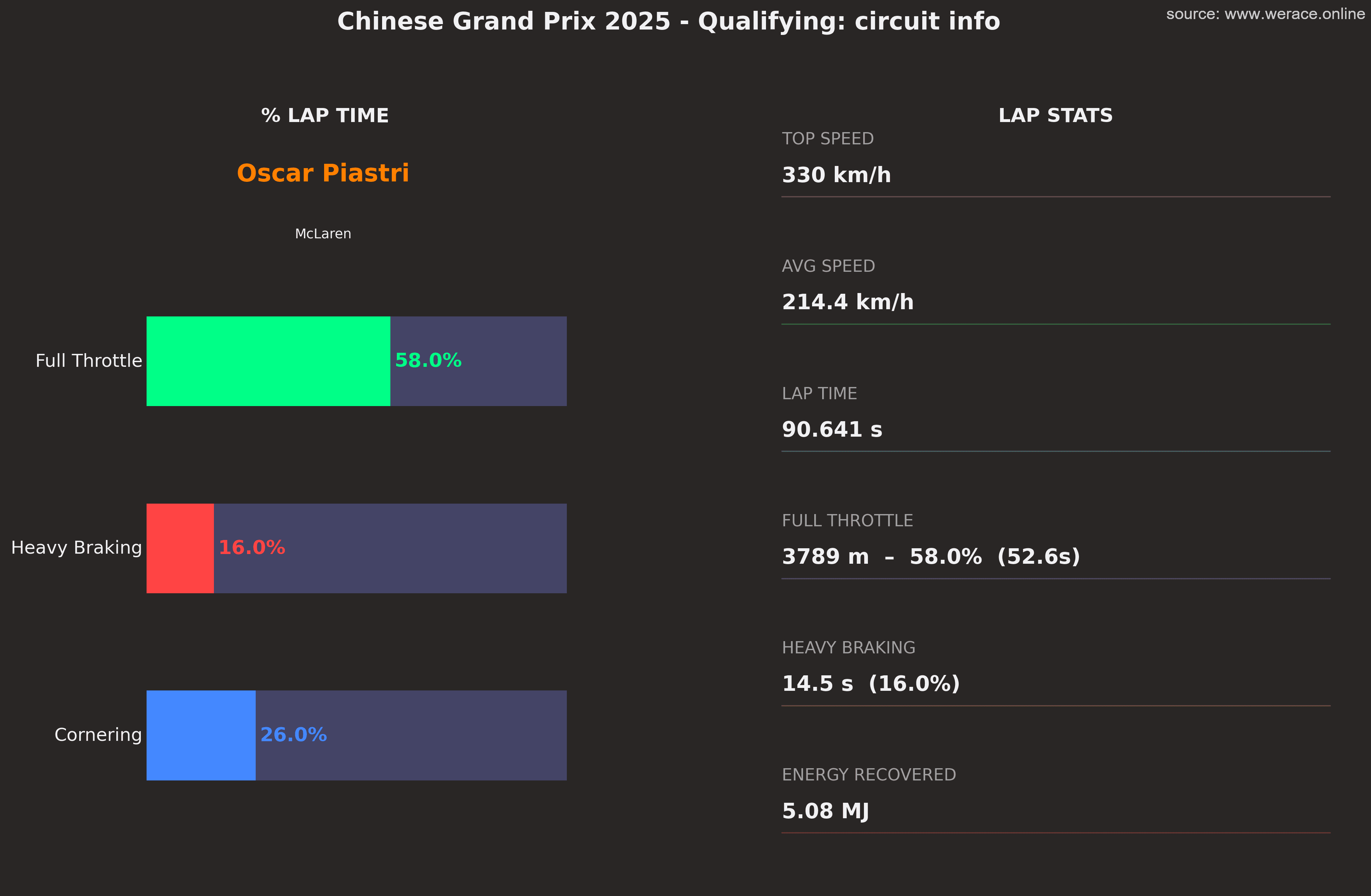
The first data points speak volumes. Looking at the 2025 qualifying simulations, Shanghai features an average speed of 214 km/h, compared to the blistering 237 km/h we saw in Australia. More importantly, the percentage of time spent at full throttle drops from 62% in Melbourne down to 58% here, which translates to about 400 meters less of flat-out running per lap.
This drop sensibly helps both fuel and energy consumption. While the mega-straight in Sector 2 demands the throttle be pinned for a massive 15 seconds, these long straights are actually interspersed with heavy braking zones. Unlike Melbourne, where light braking limited energy harvesting to roughly 3 MJ per lap, my simulations show we'll be recovering around 5 MJ in China, resulting in a much higher energy recovery.
Energy Recovery: A Whole New Game
The increase in energy harvesting represents a fundamental shift in how teams approach the entire race strategy. With 67% more energy available per lap compared to Melbourne, the extreme "superclipping" strategy that Mercedes exploited so effectively becomes less critical. Teams no longer need to sacrifice lap time on straights to maintain electrical reserves—the heavy braking zones provide enough regeneration to keep batteries topped up.
This development is particularly significant because it theoretically reduces the advantage of larger, more powerful turbochargers. Instead, teams with smaller turbos that provide better low-speed traction could see their performance improve relative to their Melbourne baseline.
The Monsters: Turn 14 and Heavy Braking Zones
Shanghai is an incredibly severe circuit on the brakes, featuring three heavy deceleration zones like Turn 6 (4G max deceleration) and Turn 11. But the most brutal is undoubtedly Turn 14, where drivers arrive at 314 km/h and must decelerate to 75 km/h in just 150 meters, smashing the brake pedal with 110 kg of force.
Why does this matter? Because this track layout could trigger a major leveling of the field, effectively downsizing the dominance Mercedes showed in Australia. The mighty Mercedes Power Unit previously showed not only raw thermal power but incredible efficiency—staying on power longer and recharging the battery without sacrificing speed. But with more severe braking zones and a jump from 3 to 5 MJ of harvested energy, the reliance on extreme "superclipping" is reduced. Assuming Mercedes isn't hiding even more power, their engine advantage should be noticeably smaller here.
Hidden Elevations & Ferrari's Turbo Advantage
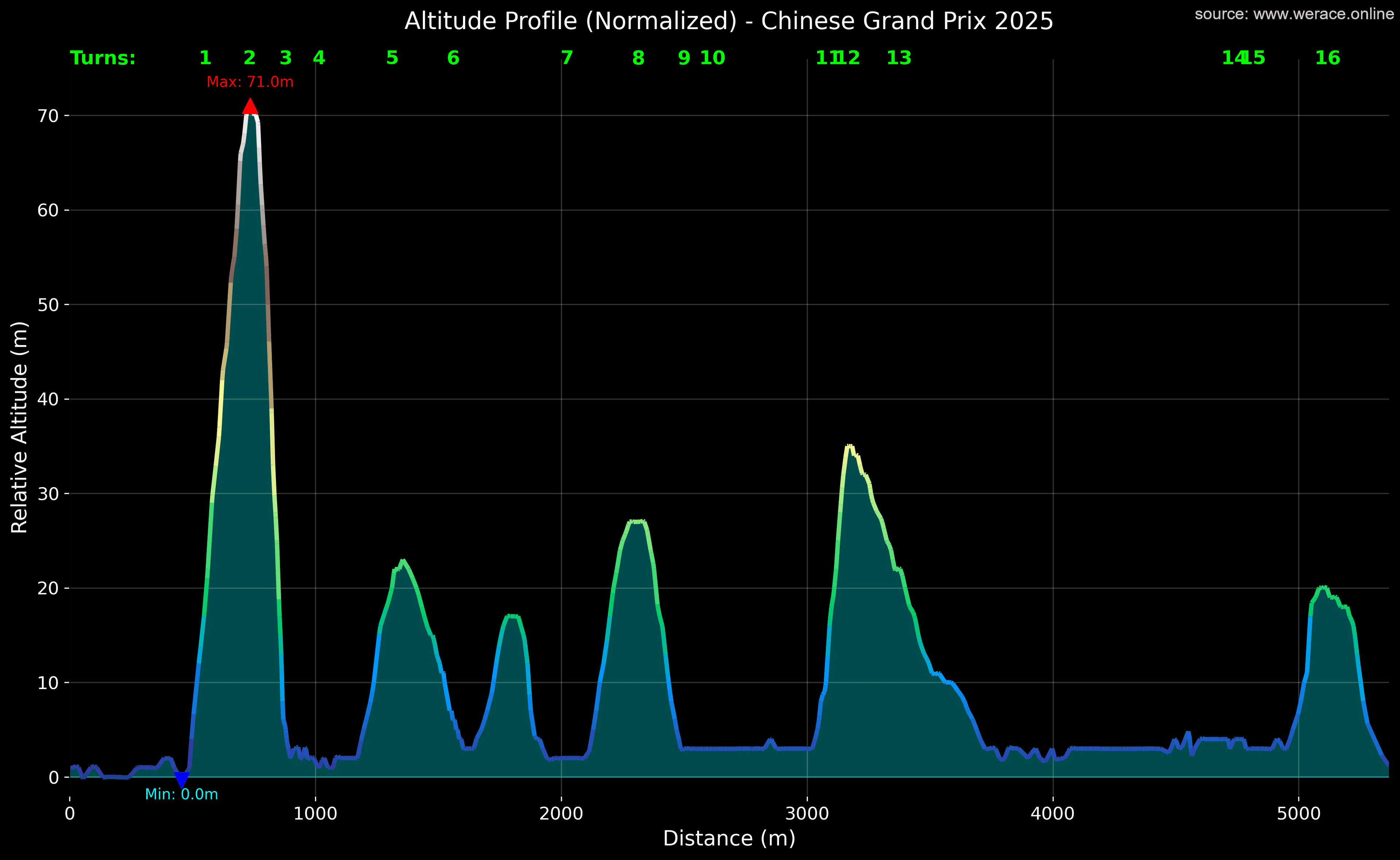
When looking at the track layout, there's a massive detail that TV cameras completely flatten out: the altitude change. The famous opening "snail" sequence isn't just a long corner; it actually features a dramatic 71-meter elevation spike at Turn 2 before plunging back down to almost zero meters by the end of Turn 3.
This long snail curve will be incredibly helpful for charging the battery early in the lap through gravitational potential energy recovery. Furthermore, the circuit is surrounded by tight corners requiring explosive micro-accelerations on the exits. This specific layout could play right into Ferrari's hands, as having a smaller turbocharger could be a great advantage here—excellent for low-speed corner exit aggression, where energy management allows more power deployment compared to Melbourne's constraints.
Ferrari's "Macarena" Wing Arrives
Speaking of Ferrari, Maranello is bringing out the big guns. According to the latest rumors, the Italian car will mount the highly anticipated "Macarena" rear wing, which features an active flap rotation system. This is undoubtedly a great show of strength from Ferrari, who anticipated its release to try and close the gap to Mercedes. The new wing will sensibly reduce drag on that mega straight before Turn 14, bringing aerodynamic, speed, and hybrid benefits.
The name "Macarena" allegedly comes from the wing's characteristic rotation and flip motion—a clever design that maximizes efficiency by adjusting wing geometry based on track conditions and energy requirements. While the exact performance gain remains theoretical until we see it on track, simulations suggest a 5+ km/h advantage on the main straight while maintaining downforce through the corners.
Sprint Weekend: A Crucial Testing Ground
Another point of difference is the weekend format: it's a Sprint weekend. In this era of F1, AI-driven ECUs and autolearning software are constantly evolving from previous laps to modify and improve the entire hybrid management system. Having two qualifying sessions provides a double chance to improve lap times, and a real Sprint race acts as a crucial test simulation. For once, a Sprint weekend is actually great because we'll get a good look at how these systems evolve throughout the weekend.
Teams will also need this data to understand the tires. The track was resurfaced in 2024, which increased grip but also generated significant graining on the front tyres last year. Expect to see this graining rear its head again, though it will likely appear more during the Sprint than the main race due to track evolution. This is definitely a factor to keep an eye on for those waking up in the middle of the night to watch FP1.
Final Verdict: A Leveling of the Field?
Shanghai represents the first real test of whether Mercedes' Melbourne dominance was primarily due to their superior engine or superior overall package design. The increased energy recovery should reduce their power advantage, while Ferrari's smaller turbo philosophy and new aerodynamic innovations could prove particularly effective here.
Add in the unexpected variable of increased tire graining from the resurfaced surface, and we could be looking at a weekend where strategic pit stop timing and tire management become as important as raw pace. The AI learning systems will work overtime, and the automotive equivalent of a "format war" will play out between Mercedes' established energy management protocols and Ferrari's aggressive new approach.
Shanghai doesn't just promise closer racing—it promises a fascinating insight into the true pecking order of these new regulations. Let's see what comes out of it. See you on Friday for the analysis of the first qualifying!