
F1 2026 Bahrain Test 2, Day 2: Ferrari's 270° Wing, McLaren's Statement, and Hamilton's Missing 8th Gear
We are officially at the penultimate day of 2026 pre-season testing, and the masks are finally coming off. While the first few days were heavily focused on aerodynamic mapping, flow-viz paint, and setup validation, today the top teams shifted their focus to the ultimate truth-teller in Formula 1: full race simulations.
But before we dive into the race pace data and the telemetry secrets, we have to talk about the absolute aerodynamic bombshell Ferrari dropped in the pitlane this morning.
Tech Focus: Ferrari's "Upside-Down" 270° Rear Wing
For the second day in a row, Maranello brought a completely unprecedented piece of aerodynamics to the track. We are used to seeing clever interpretations of the rules, but this is on another level.
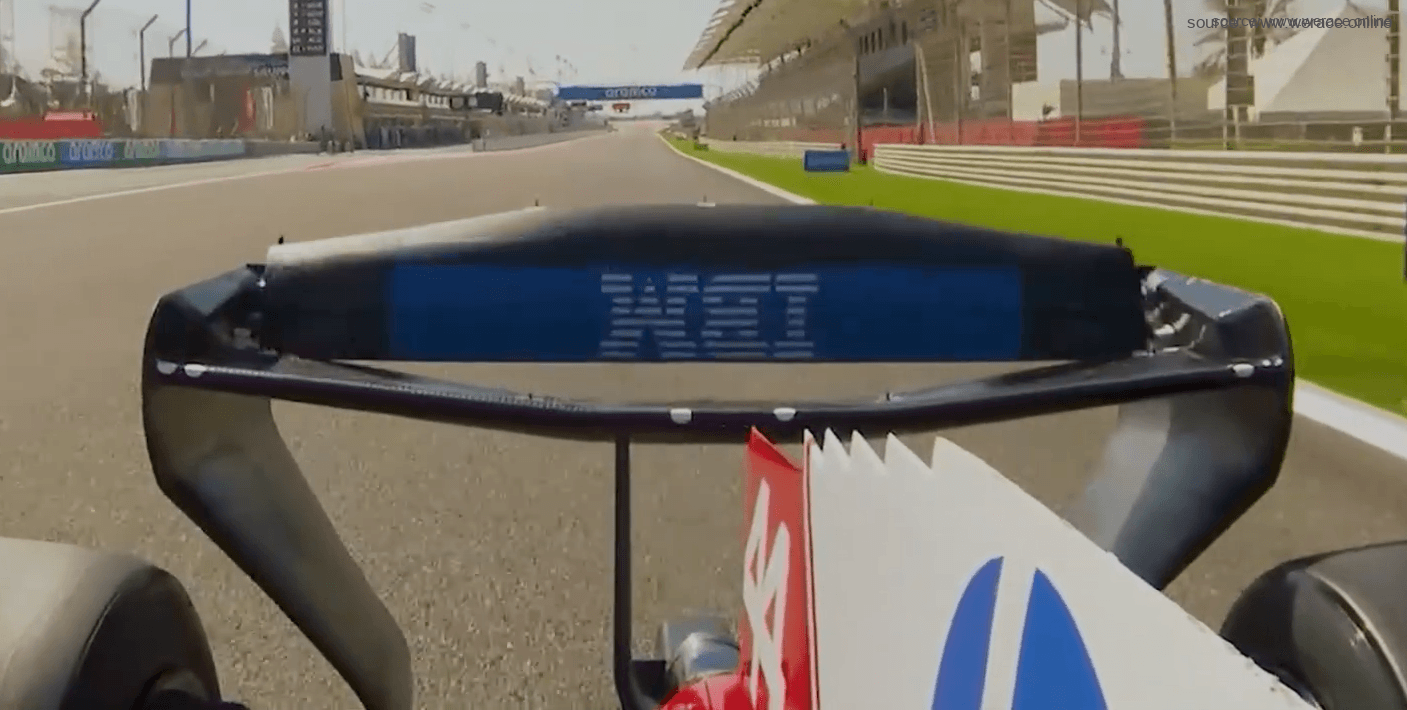
Ferrari rolled out a rear wing with no central DRS actuator. Instead, the flap is controlled by two lateral mechanisms integrated into the endplates. These allow the upper element to rotate backward by nearly 270 degrees. Visually, it's wild: when the flap is closed, you see the HP logos facing forward. When it opens, it rotates so much that the IBM logos from the back end up facing the sky.
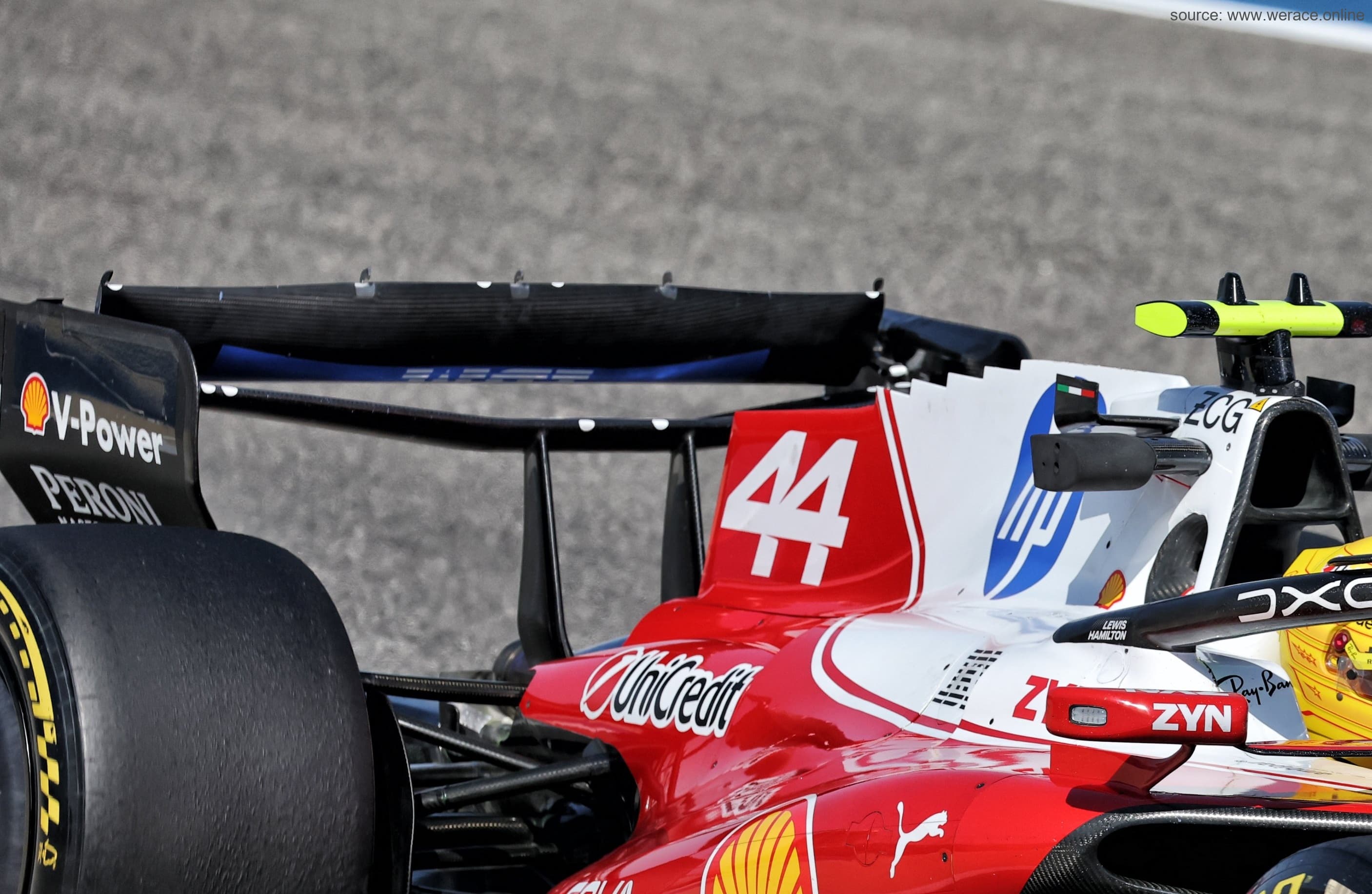
Why do this? In 2026, without the traditional DRS, teams need to shed drag structurally. By rotating the flap past its neutral position, Ferrari effectively "turns off" the multi-element system. The pressure distribution collapses, and the wing stalls. This doesn't just cut drag from the wing itself; by decreasing the depression downstream, it also reduces the extraction power of the floor diffuser. You are shedding load and drag from the entire rear end of the car in straight lines.
Many thought this would be illegal due to the "fail-safe" volume rules, but the genius minds at Maranello found a gray area. In fact, the FIA's Nikolas Tombazis officially gave it the green light, stating: "We encourage solutions that reduce drag... for us, the Ferrari solution is OK!".
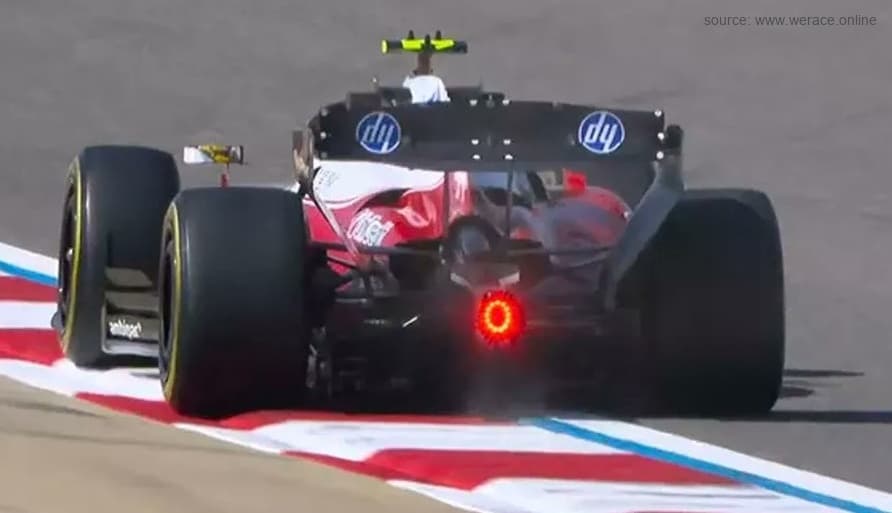
Unfortunately, we didn't get to see much of it in action. Lewis Hamilton only completed 5 laps in the morning (4 with the new wing) before a gearbox sensor issue confined him to the garage for almost three hours, ruining his morning program.
Mercedes Flies: Antonelli Sets the Benchmark
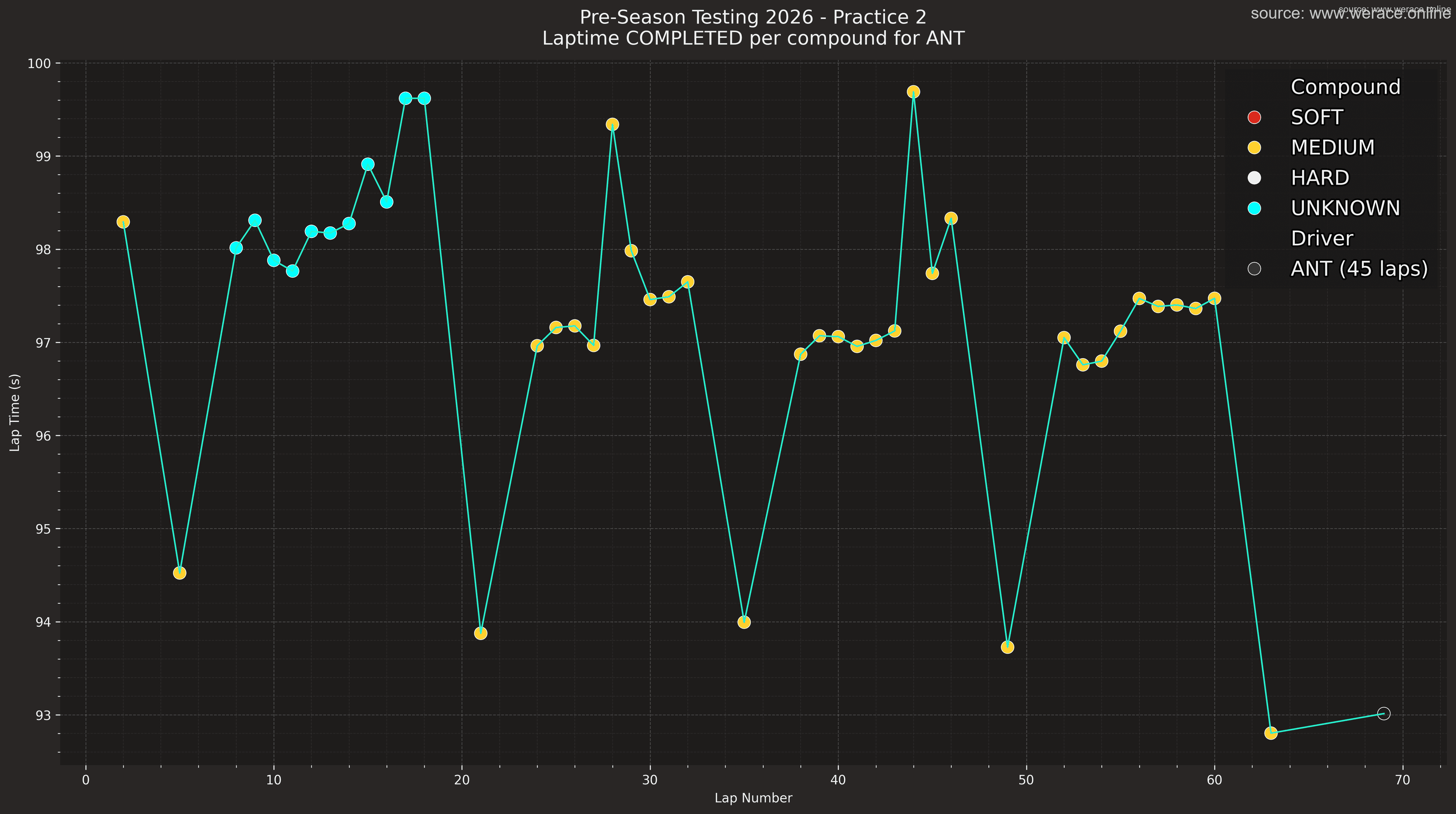
While Ferrari was dealing with sensors, Mercedes reminded everyone of their raw, undeniable pace. Kimi Antonelli put together a stunning lap to set the fastest time of the entire week: a 1:32.803.
The W17 looks incredibly stable, fast, and beautifully balanced through both low-speed and high-speed sections. Antonelli also completed some shorter race pace simulations in the afternoon, which, while featuring a few minor mistakes, showed a car that responds perfectly to the driver's inputs.
Antonelli's lap was enough to edge out McLaren and Red Bull. Here is the general classification for Day 2, which gives us a great snapshot of the single-lap pecking order right now.
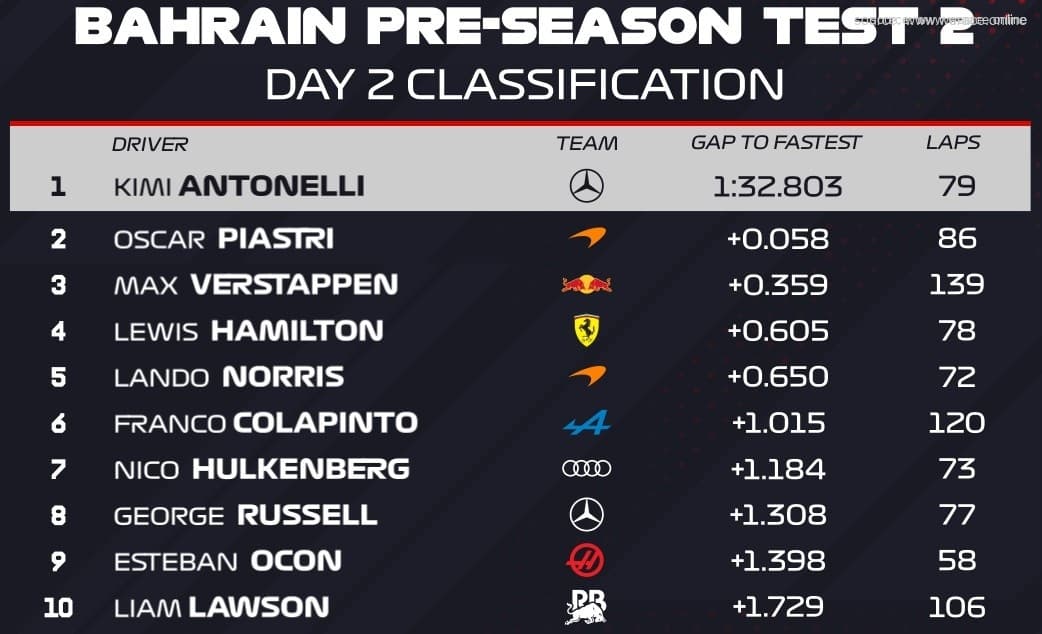
Notice the tiny 0.058s gap between Antonelli and Piastri, showing just how tight the battle at the front might be.
The Heavyweights: Verstappen vs. Piastri Race Pace
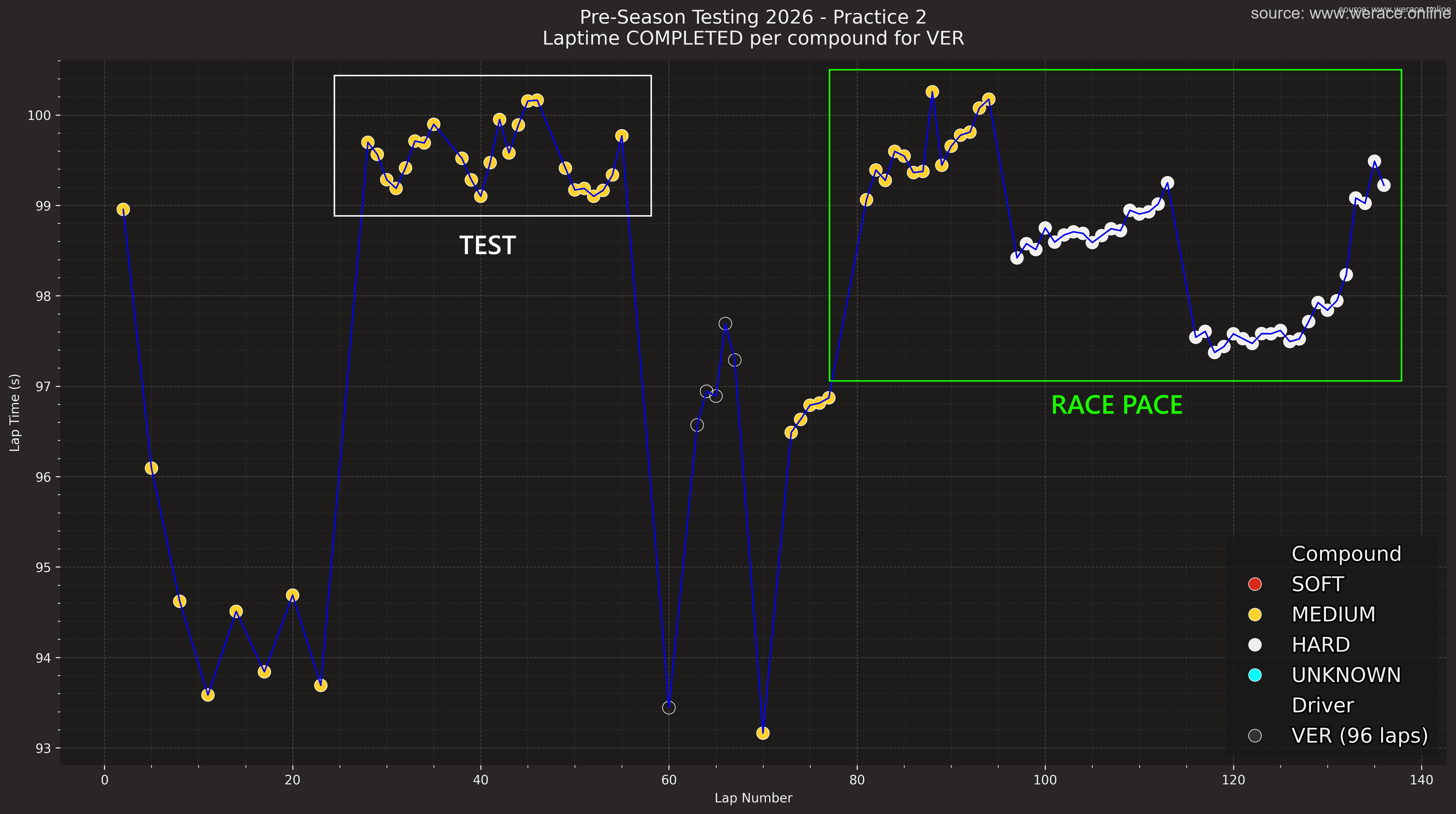
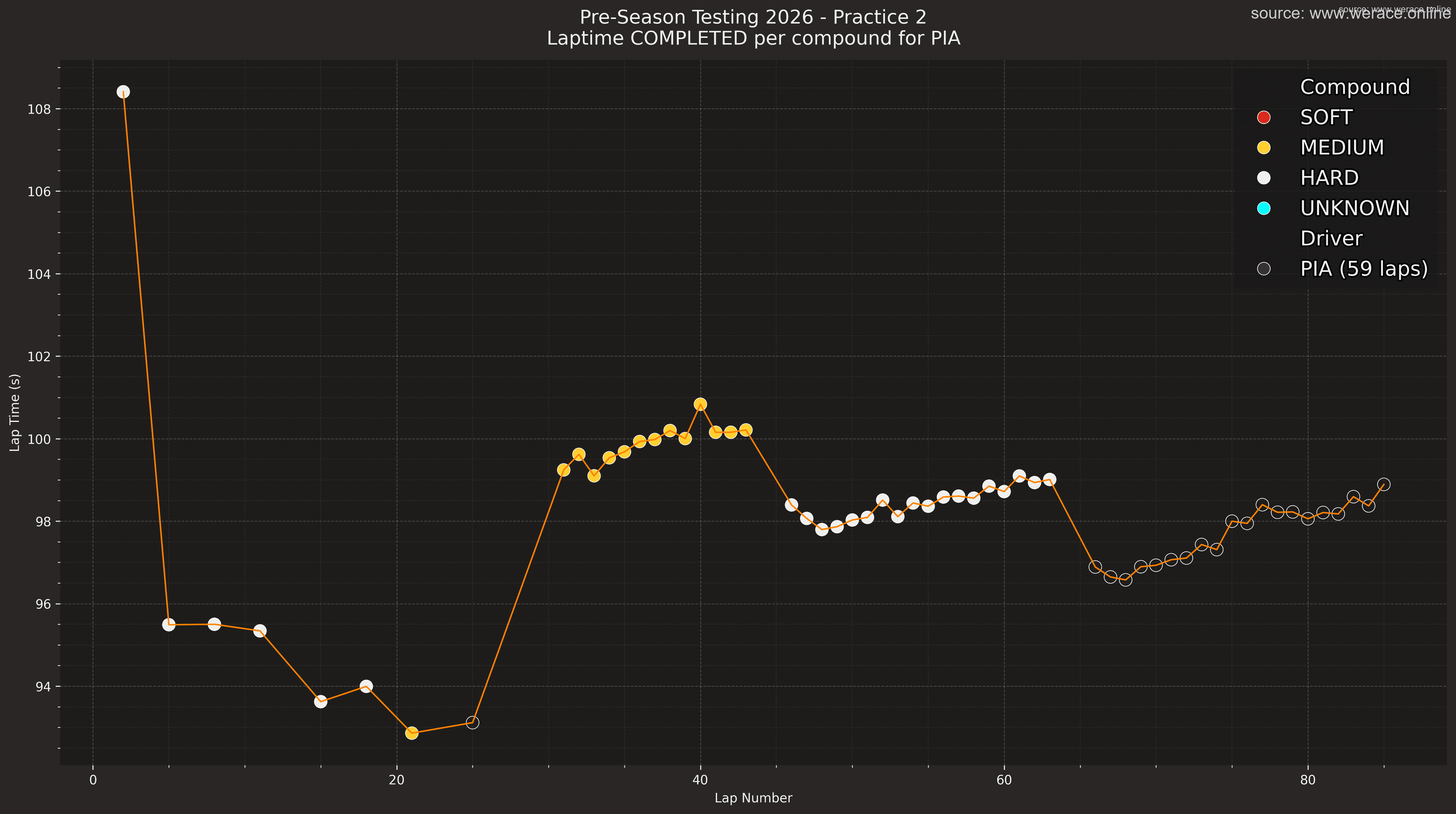
In the afternoon, we finally got the ultimate showdown: Max Verstappen and Oscar Piastri doing full, 50-lap race simulations at the exact same time, with the exact same track conditions and fuel loads.
First, let's look at Verstappen's run. Max was incredibly consistent. His degradation profile was flat, meaning the Red Bull manages the tires beautifully over a stint.
However, when we look at Piastri, the story changes. The McLaren might have a steeper degradation curve, but the raw pace is frightening.
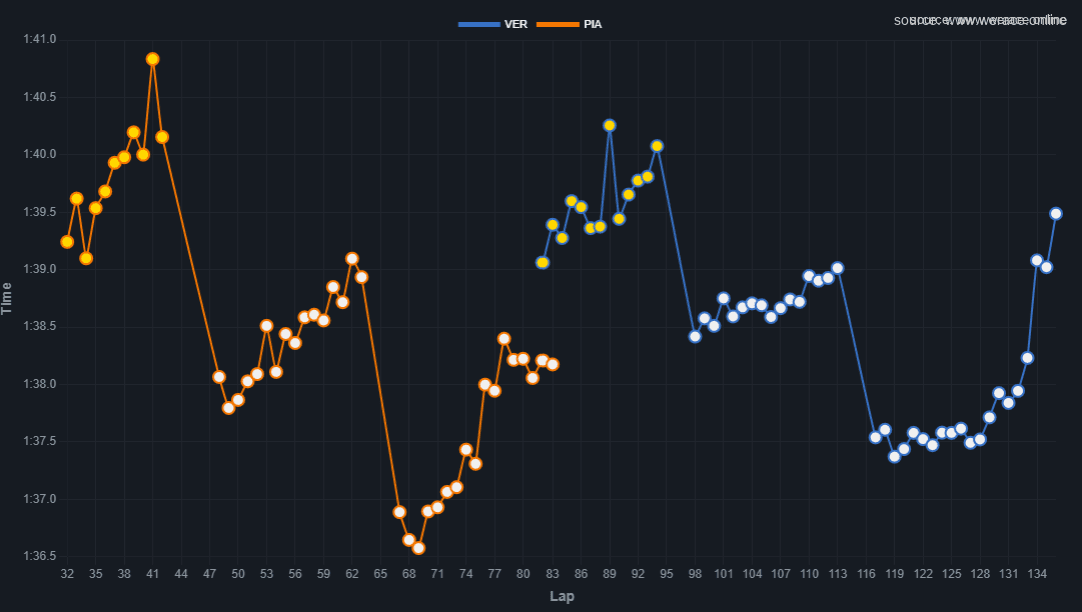
When we overlay the two, the verdict is clear: McLaren won the head-to-head. Over the full 50 laps, Piastri built a massive 7.1-second advantage over Verstappen. Max was slightly faster in the first stint on the softest C3 tire. However, once they switched to the harder C2 and C1 compounds for the second and third stints, the McLaren came alive. Piastri was lapping on average 4 to 8 tenths quicker than the Red Bull, and on some specific laps, he was pulling a full 1 second per lap on Verstappen.
Hamilton's Afternoon: The Mystery of the Missing 8th Gear
With his morning lost, Ferrari dedicated the entire afternoon to Lewis Hamilton for a race simulation. From the onboard cameras, the SF-26 looked like a handful. The rear end was snapping, and he was lifting heavily through high-speed corners like Turn 7 and Turn 12.
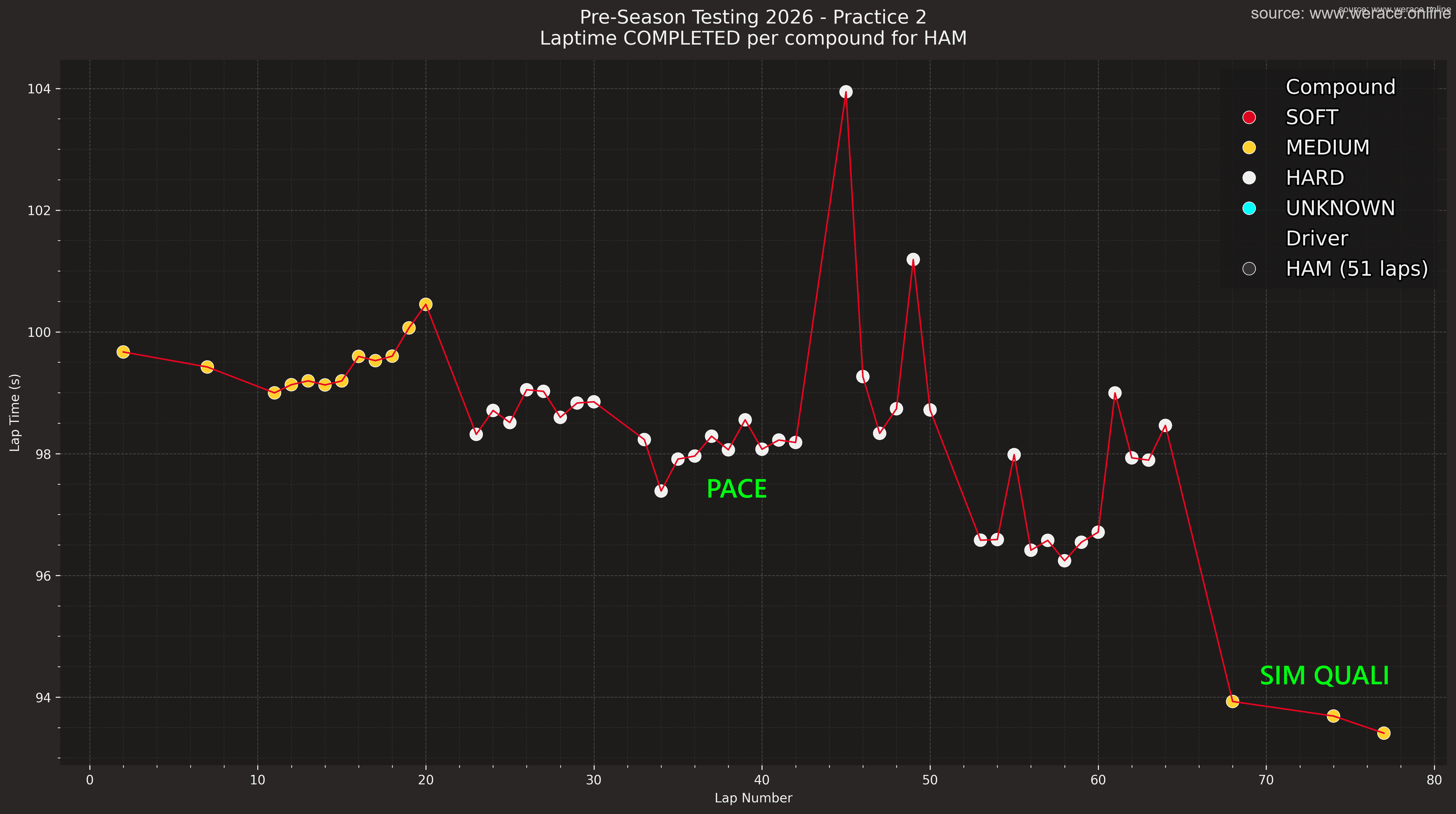
Looking at the lap times, it was hard to find 5 consecutive clean laps without a small mistake or a correction. But before we panic about Ferrari's pace, my telemetry software revealed a mind-blowing detail: Hamilton never engaged 8th gear on the straights.
Throughout his entire run, he stayed in 7th gear, artificially capping his top speed at exactly 322 km/h. This means Ferrari was running ultra-conservative engine mappings, likely testing extreme high-RPM battery harvesting techniques. This aggressive harvesting on the rear axle would explain why the rear end was so nervous and difficult to manage on corner entry.
Let's break down his telemetry across the three stints to see this in action:
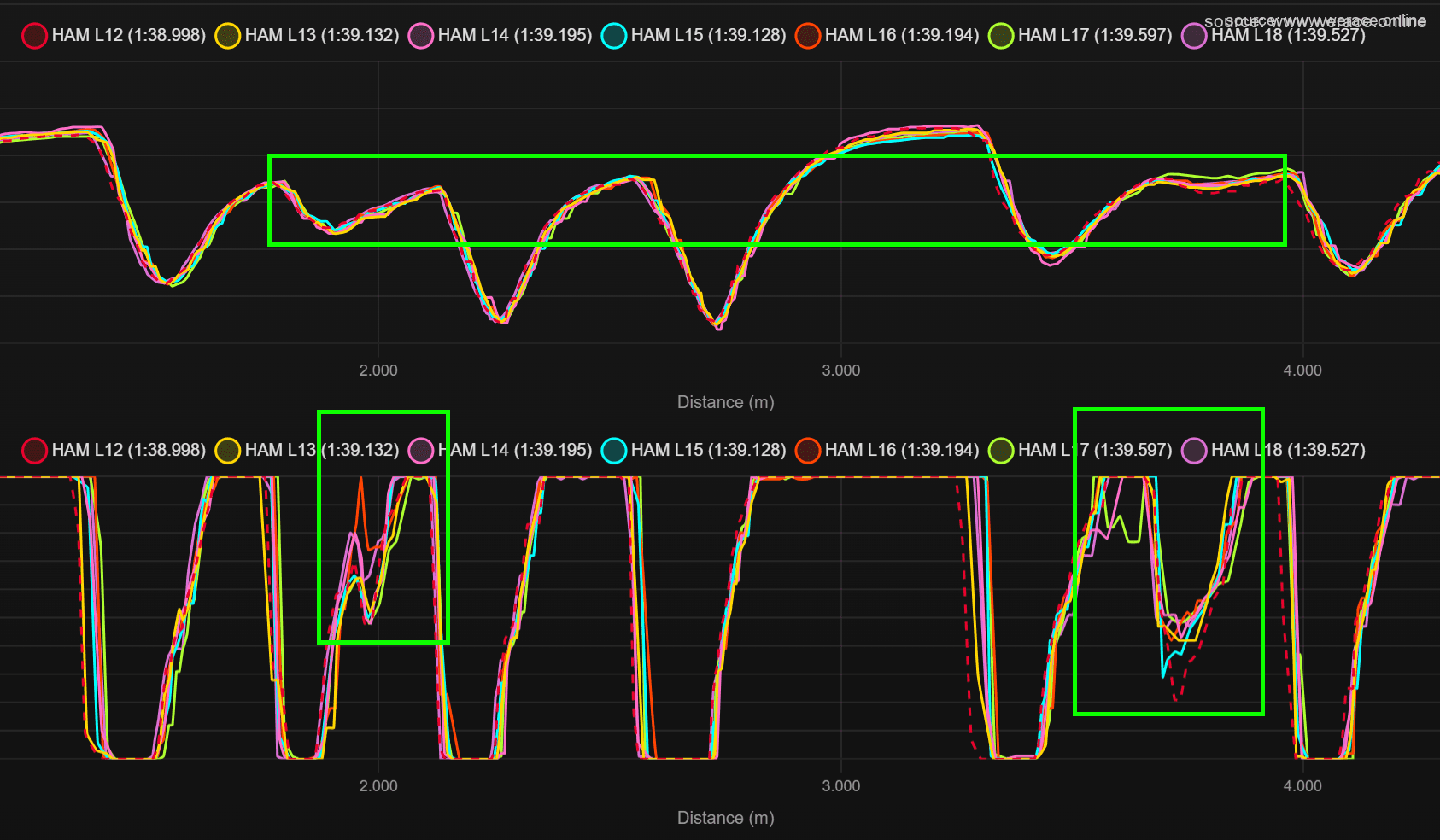
Notice the speed trace at the top of this graph. It looks like a flat table. He accelerates and then hits a solid brick wall at 322 km/h, clipping the electric deployment entirely while his rivals kept accelerating.
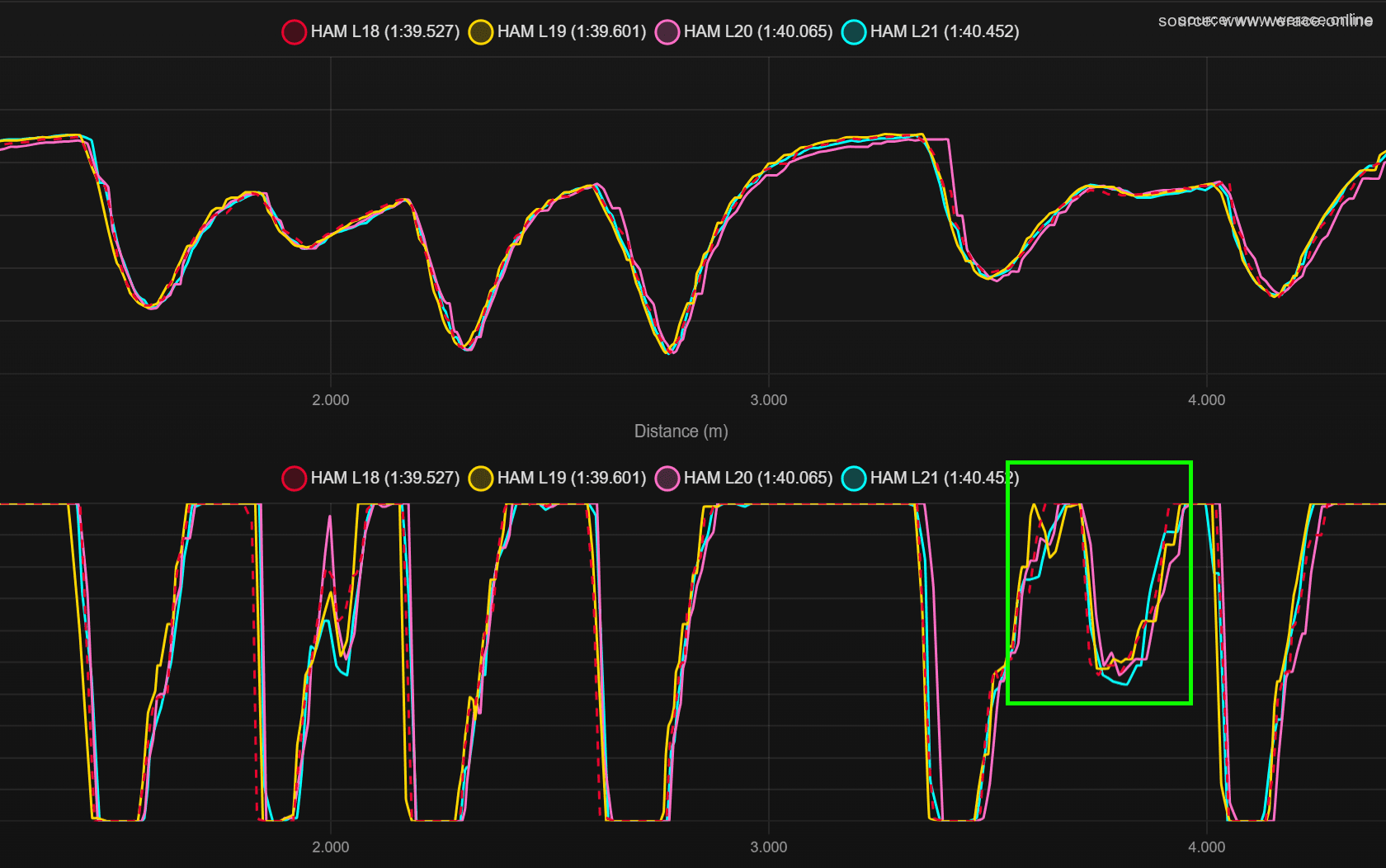
In this second stint, look at the throttle trace (bottom line). Approaching Turn 12, Hamilton has to lift the throttle massively compared to the McLaren. The car was struggling with rear grip, forcing him into a very conservative driving style in the mid-high speed sectors.
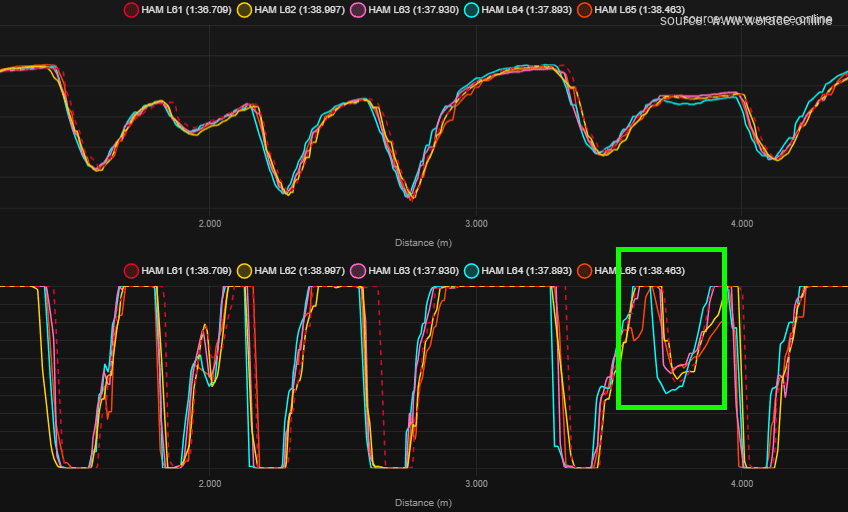
Even on the final stint with lighter fuel and fresh Hard tires, the approach didn't change. The 322 km/h cap remained, and the micro-corrections in the corners continued. Ferrari was clearly hiding something, or rigorously testing a specific engine mode rather than chasing pure lap time.
To put Hamilton's 322 km/h cap into perspective, look at the top speeds achieved today by the rest of the grid. Nico Hulkenberg's Audi, for example, reached a blistering 341 km/h, showing just how much Ferrari was holding back.
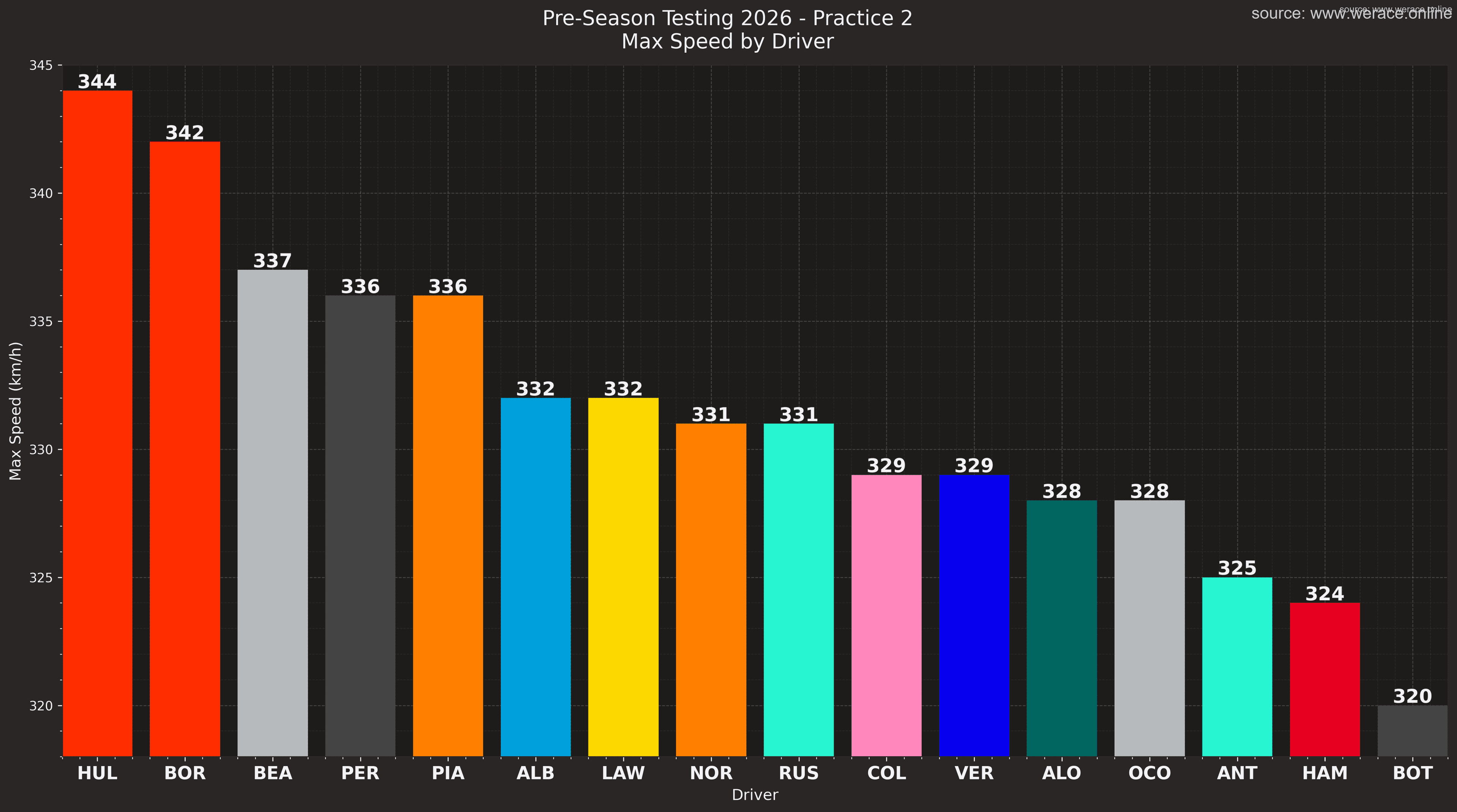
The Mileage Championship: Who is surviving?
Finally, testing isn't just about lap times; it's about reliability. You can't win a championship if your car is stuck in the garage. Let's look at the data to see which teams are actually ready for Melbourne.
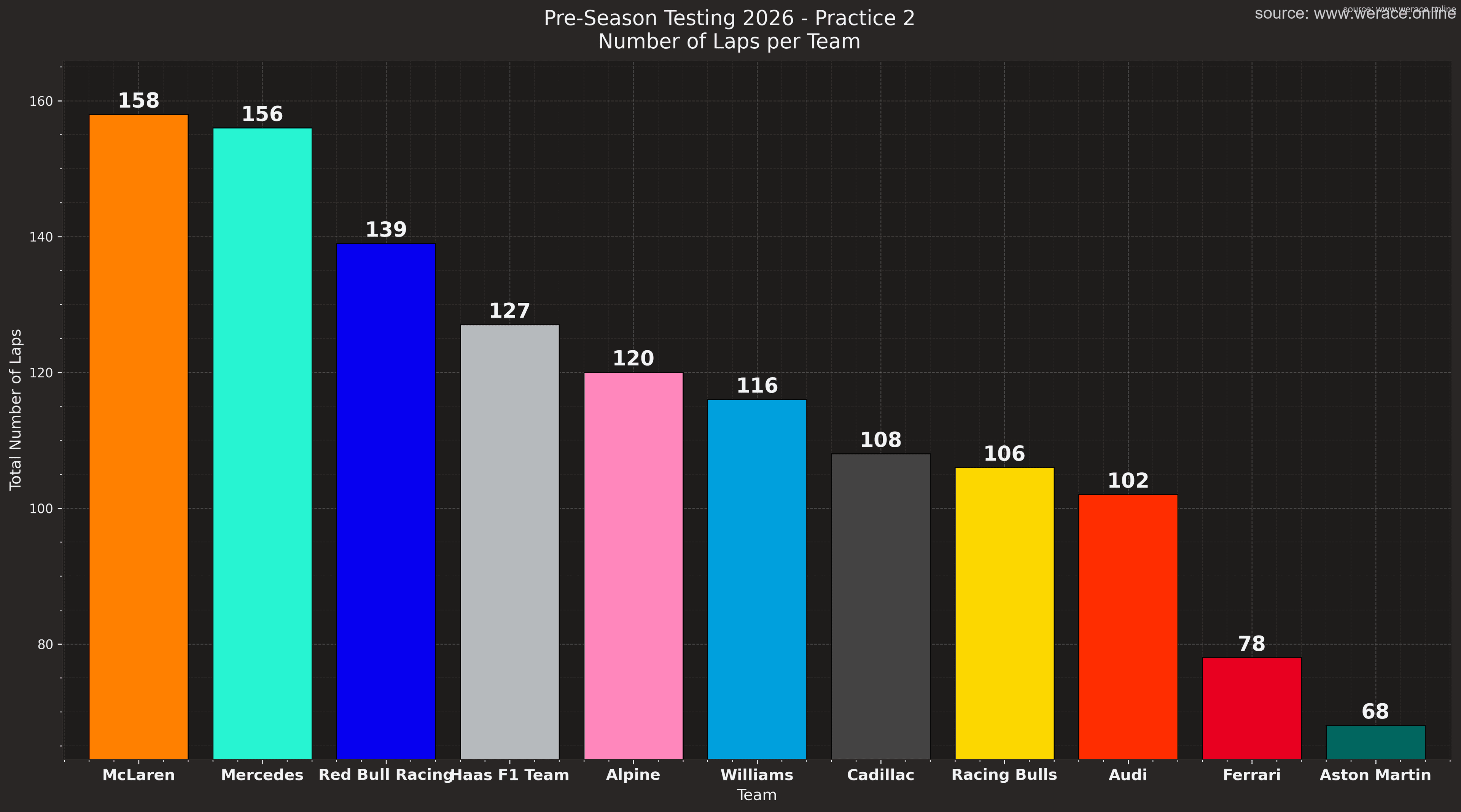
This graph tells a fascinating story. McLaren (704 total laps) and Williams (649 total laps) are the absolute workhorses of 2026. They are gathering mountains of data. On the completely opposite end is Aston Martin. Fernando Alonso suffered a catastrophic Honda PU failure today, stopping on track with a horrific noise. The mechanics had to use special rubber gloves to avoid electrocution. With only 328 laps completed over 5 days, Aston is in deep, deep trouble.
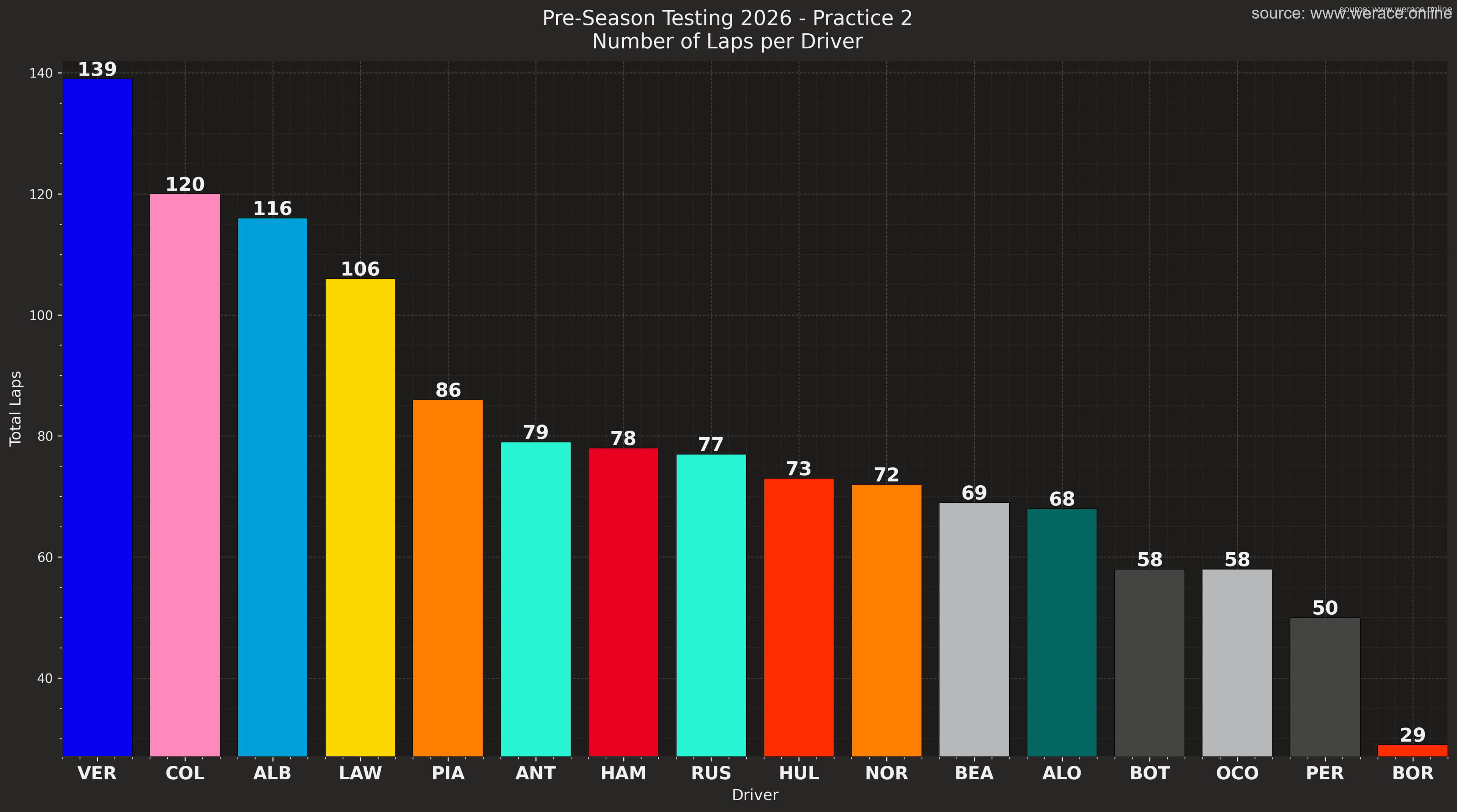
Looking at the individual drivers, Alex Albon leads the charge. Max Verstappen is also putting in marathon shifts, compensating for Red Bull's slightly delayed start to their program.
Tomorrow is the final day of testing. Charles Leclerc will be back in the Ferrari, and we will see if Maranello finally unleashes that 8th gear to show their true hand against McLaren and Mercedes. Stay tuned!