
F1 2026 Bahrain Testing Finale: Electric Panic, Ferrari's Drivability, and the Art of Sandbagging
The 2026 pre-season testing is officially in the history books. Six days of running have given us terabytes of data, but this final day in Sakhir was arguably the most revealing—and confusing—of them all.
Between last-minute FIA interventions on engine power, Ferrari flexing its muscles, McLaren playing an extreme game of hide-and-seek, and Aston Martin hitting rock bottom, there is a massive amount of technical telemetry to unpack.
Let's dive deep into the data, the graphs, and the real story behind the lap times.
The "Electric Panic": Testing with Clipped Wings
Before we even look at the lap times, we have to address the elephant in the room: the late-night directive from the FIA regarding the MGU-K.
The 2026 regulations doubled the electric power output to 350kW, but the harsh reality has hit the paddock: the batteries simply cannot sustain this over a full lap. The energy drains instantly on the straights, forcing drivers into massive, unnatural "lift and coast" phases hundreds of meters before the braking zones.
Realizing they might have bitten off more than they can chew, the FIA asked teams today to test drastically reduced electric power modes: 300kW, 250kW, and even down to 200kW. The goal was to see if spreading less peak power over the entire lap would reduce the extreme clipping. Alongside this, McLaren proposed testing a "Super Clipping" mode, allowing the MGU-K to harvest energy under braking at a full 350kW (instead of the regulated 250kW limit) to refill the battery faster.
Tell me, where have we ended up with these regulations? Because of these tests, the top speeds and lap times from today are heavily skewed. However, by digging into the telemetry, we can still separate the truth from the fiction.
Ferrari: Unlocking Drivability and Raw Pace
After a somewhat nervous Day 5, Ferrari and Charles Leclerc completely flipped the script today. Leclerc drove the entire day and left a highly positive impression, both on the stopwatch and, crucially, on the onboard cameras.
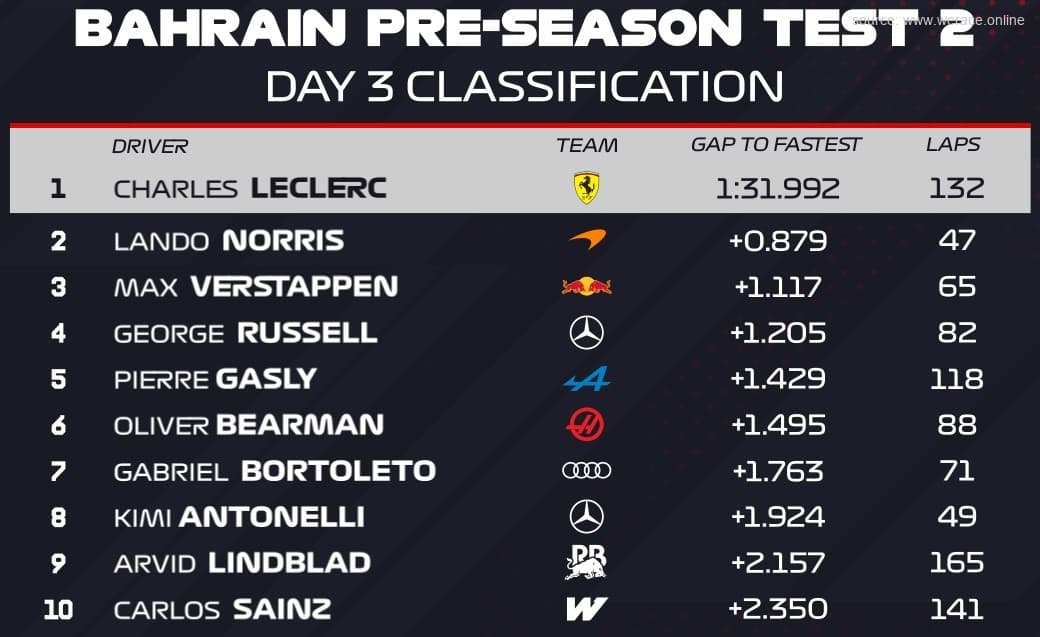
Looking at the final classification, Leclerc not only broke the 1m32s barrier with a blistering 1:31.992 on the C4 tire, but he also topped the charts on the standard C3 compound (1:32.655), two-tenths clear of Norris.
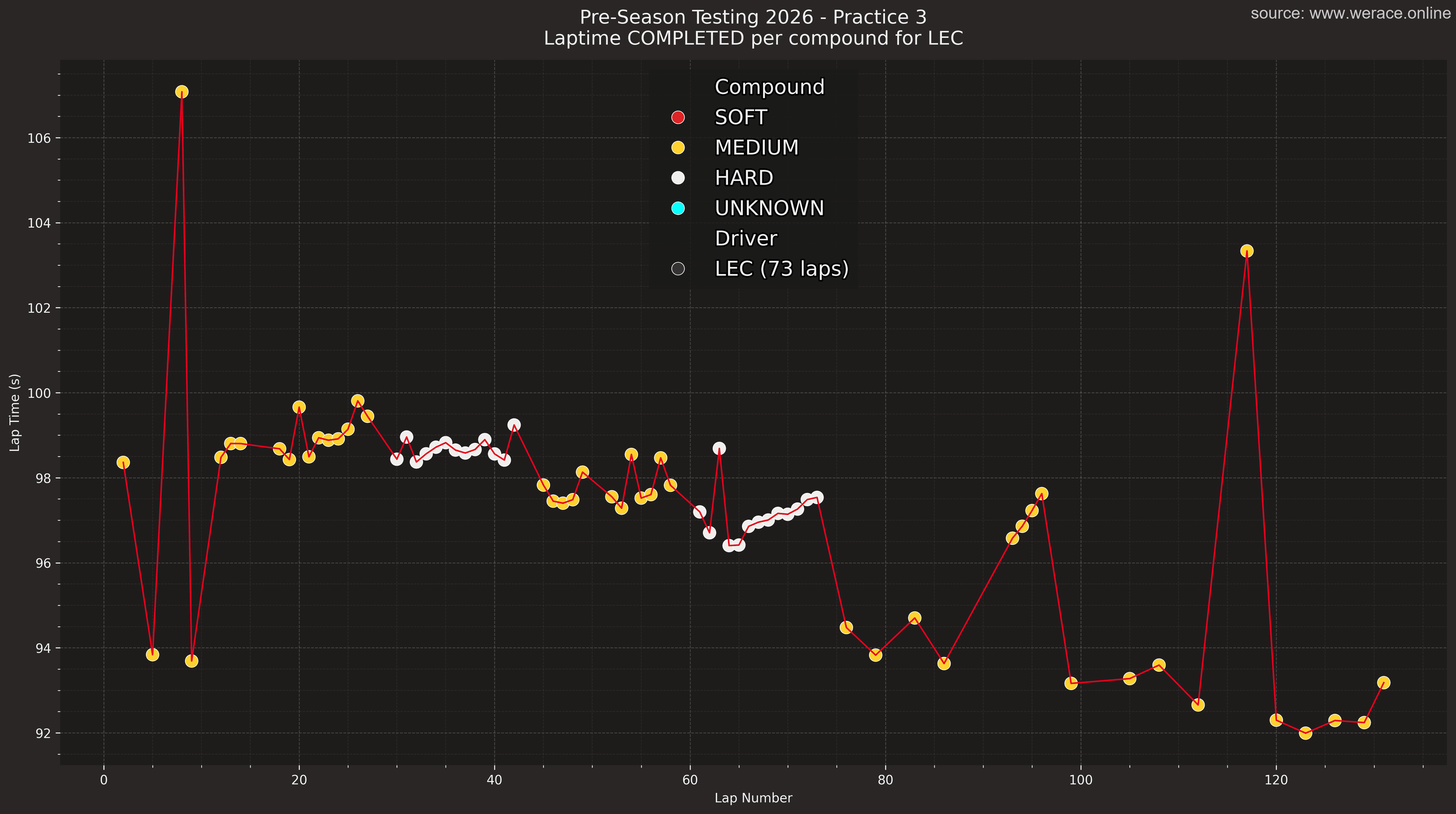
But the real story is the race pace. While others did short bursts, Leclerc committed to a full race simulation alternating between the Medium and Hard compounds (C3-C2-C3-C2). Despite the track temperature soaring over 46°C in the morning, the SF-26 looked enormously more stable and balanced compared to yesterday.
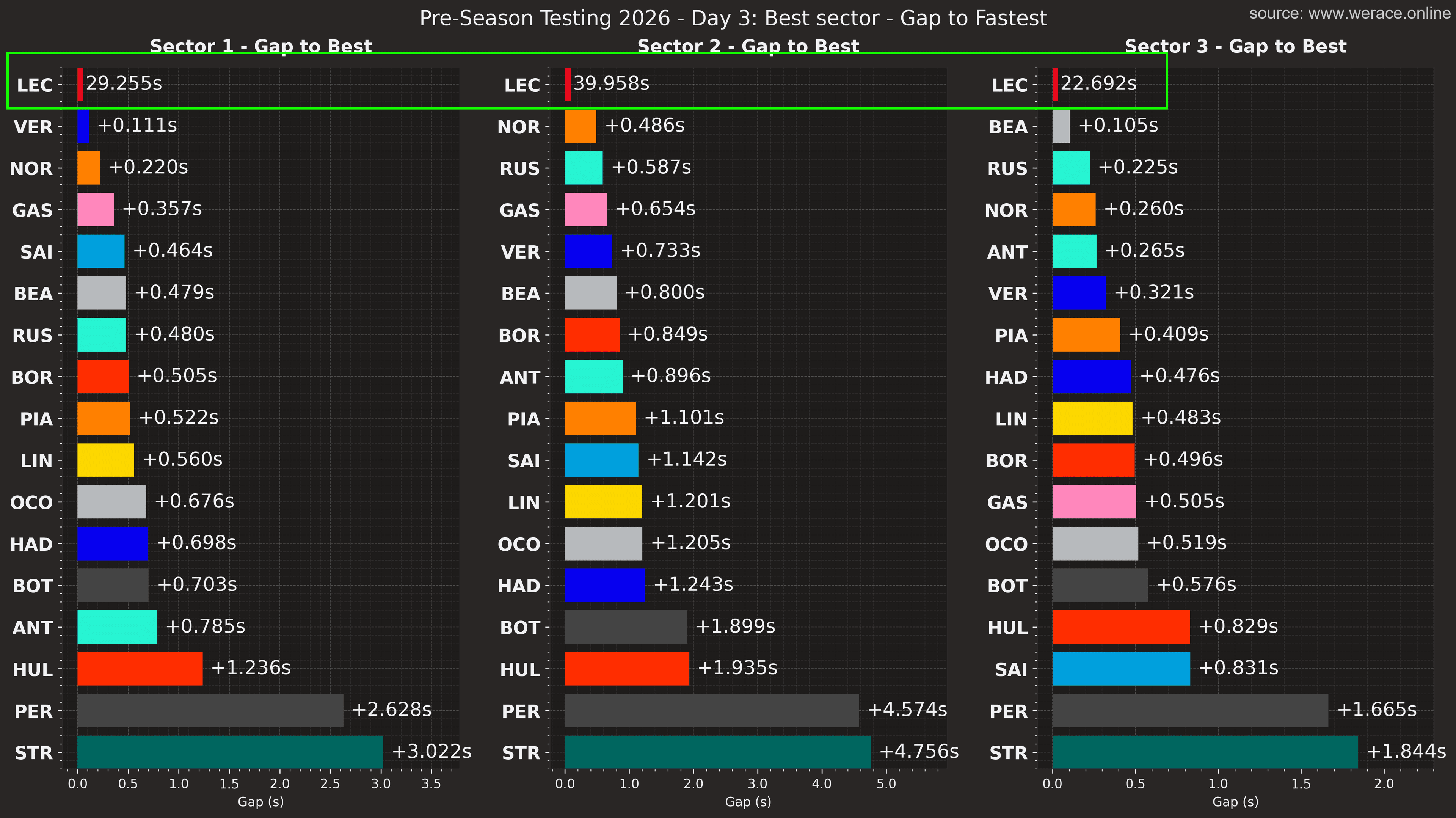
When it was time to push in the afternoon, Leclerc was unleashed. He aggressively attacked the curbs and optimized every single corner. He made micro-adjustments to the setup, including tweaking the front wing Gurney flap, and the results were devastating. He claimed all three purple sectors, pulling a massive half-second gap on Norris in Sector 2 alone. Ferrari looks fast, stable, and ready.
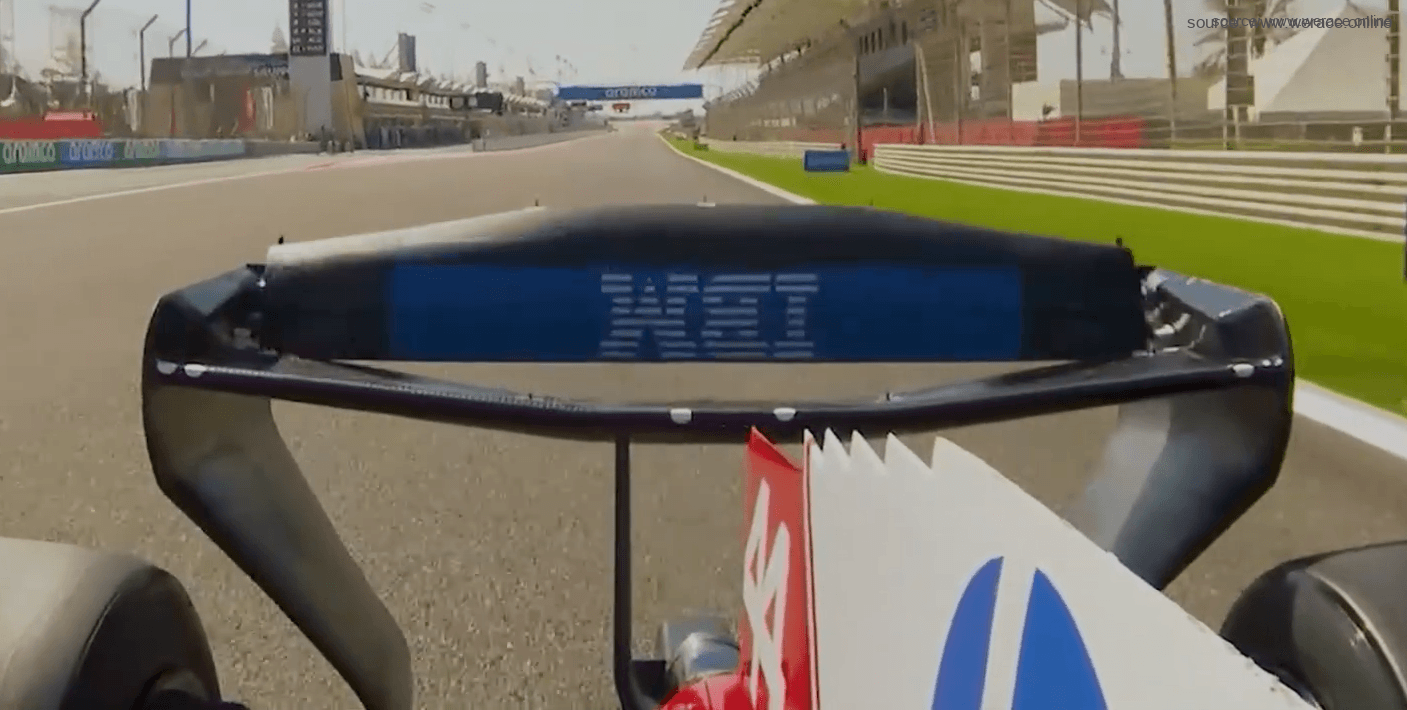
Furthermore, the 270-degree "upside-down" rear wing they tested yesterday is a stroke of pure engineering genius. It needs refinement, but it proves Maranello is pushing the boundaries of the rulebook.
McLaren's Masterclass in Sandbagging
If Ferrari was showing its hand, McLaren was doing the exact opposite. I followed both Lando Norris and Oscar Piastri closely today, and I am entirely convinced that Woking is playing a massive game of pretattica (sandbagging).
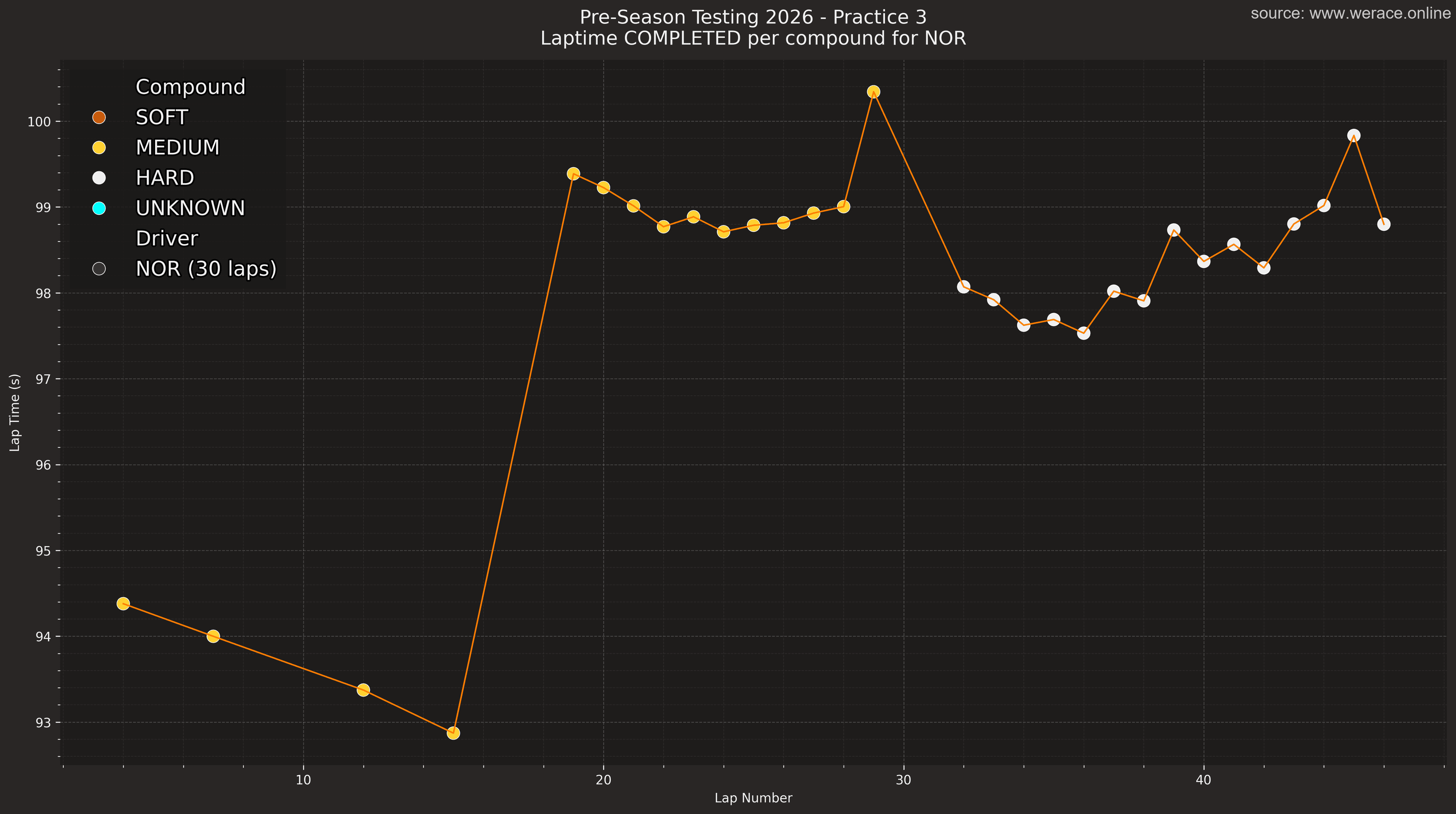
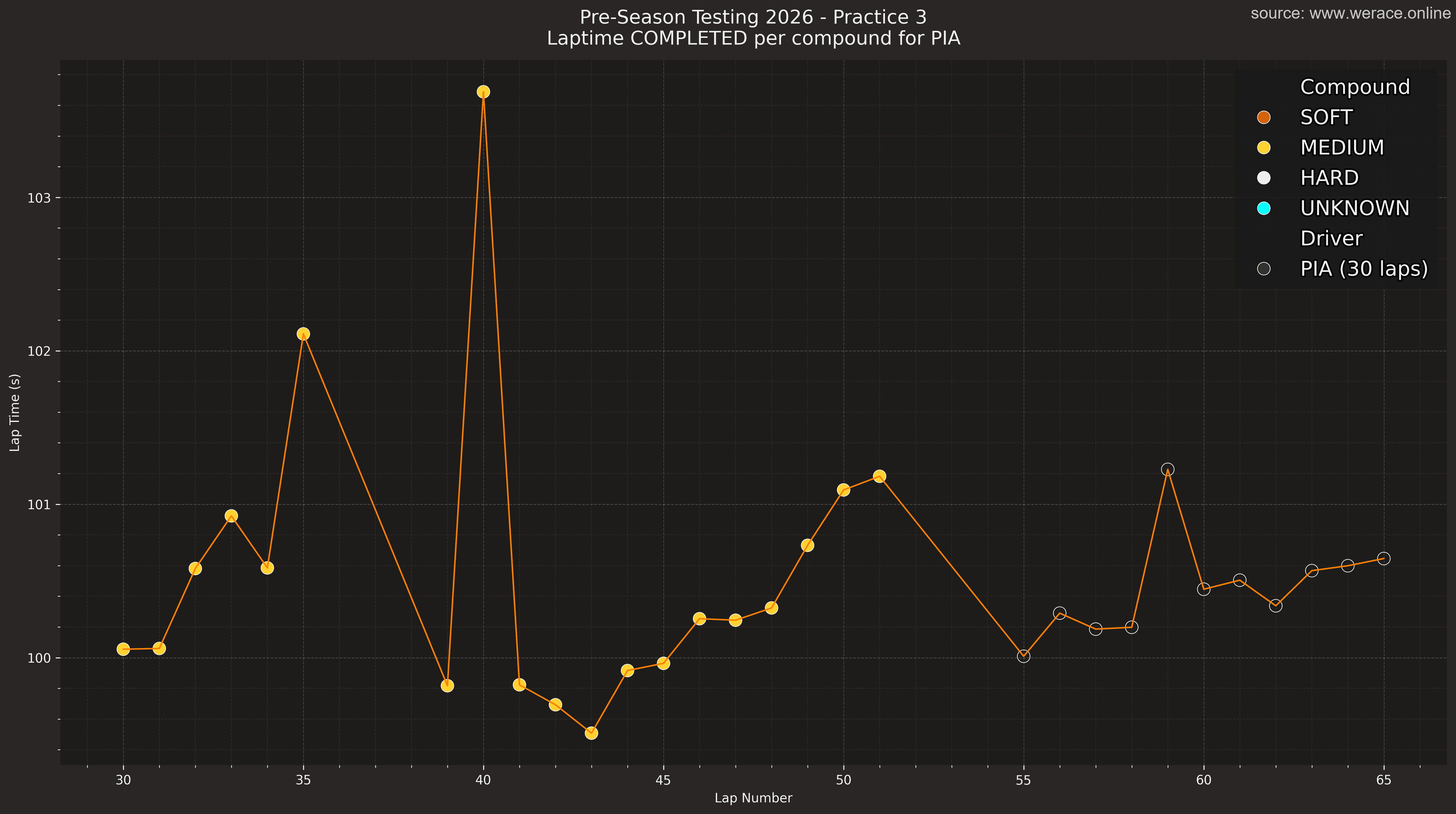
Let's look at the stint graphs for both drivers. Unlike Ferrari or Red Bull, neither McLaren driver completed a full race distance. They focused heavily on long runs, but constantly interrupted them. Norris, for example, only did two stints (one of 10 laps on C3, and one of 15 laps on C2) before stopping. You don't just abandon a race sim unless you are hiding your true degradation curve.
But the definitive proof comes from the telemetry. I refuse to believe the MCL38 is as slow as it looked today. From the live telemetry, it was painfully obvious that Norris was never taking the corners at full throttle.
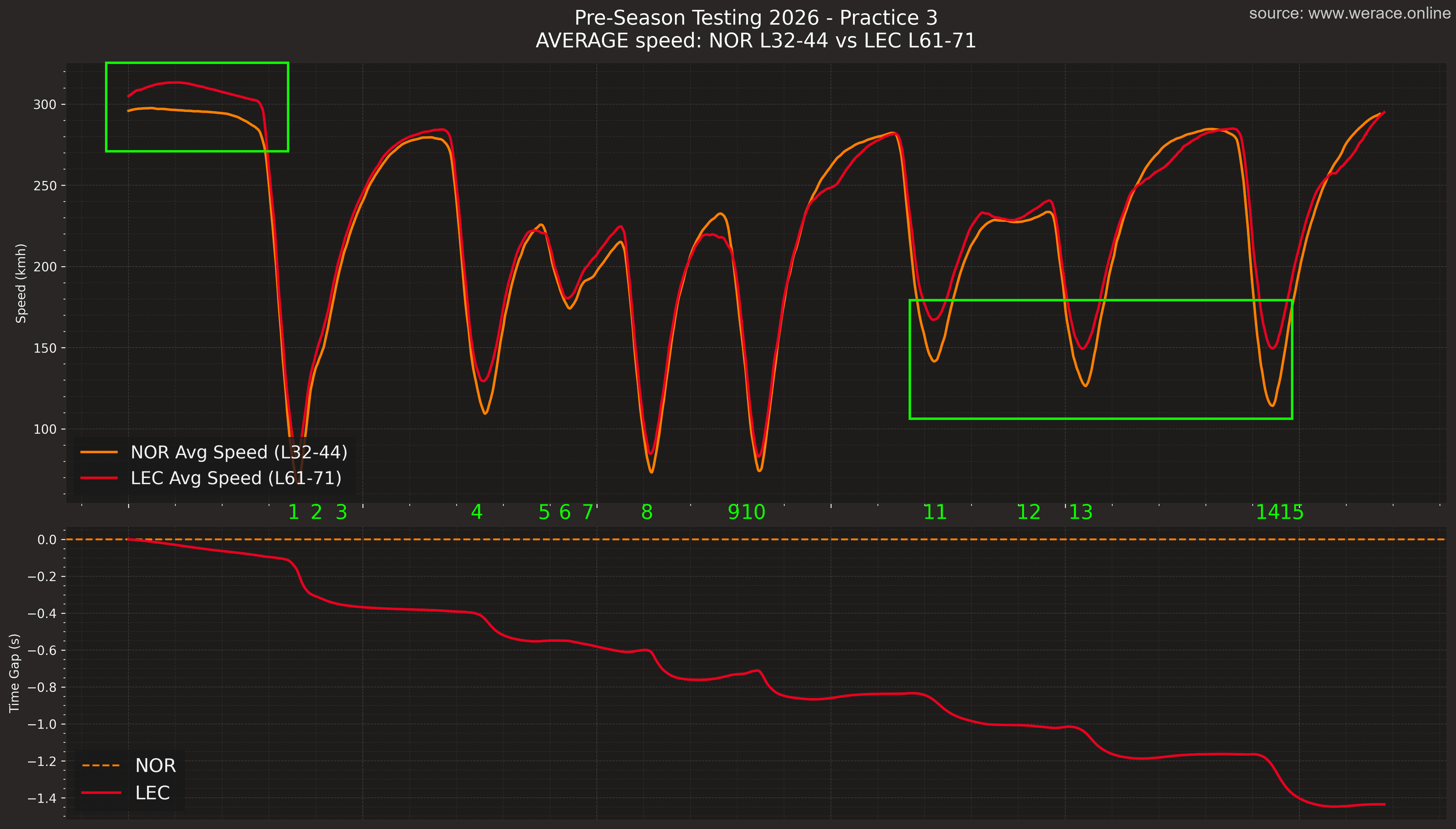
I averaged the speed between a Hard tire stint from Norris and one from Leclerc. Look at this graph. Ferrari has a massive advantage on the main straight, but look at the mid-corner speeds: Ferrari is carrying 20 to 30 km/h more speed through the apexes! That is not a performance deficit; that is a driver deliberately lifting off the throttle.
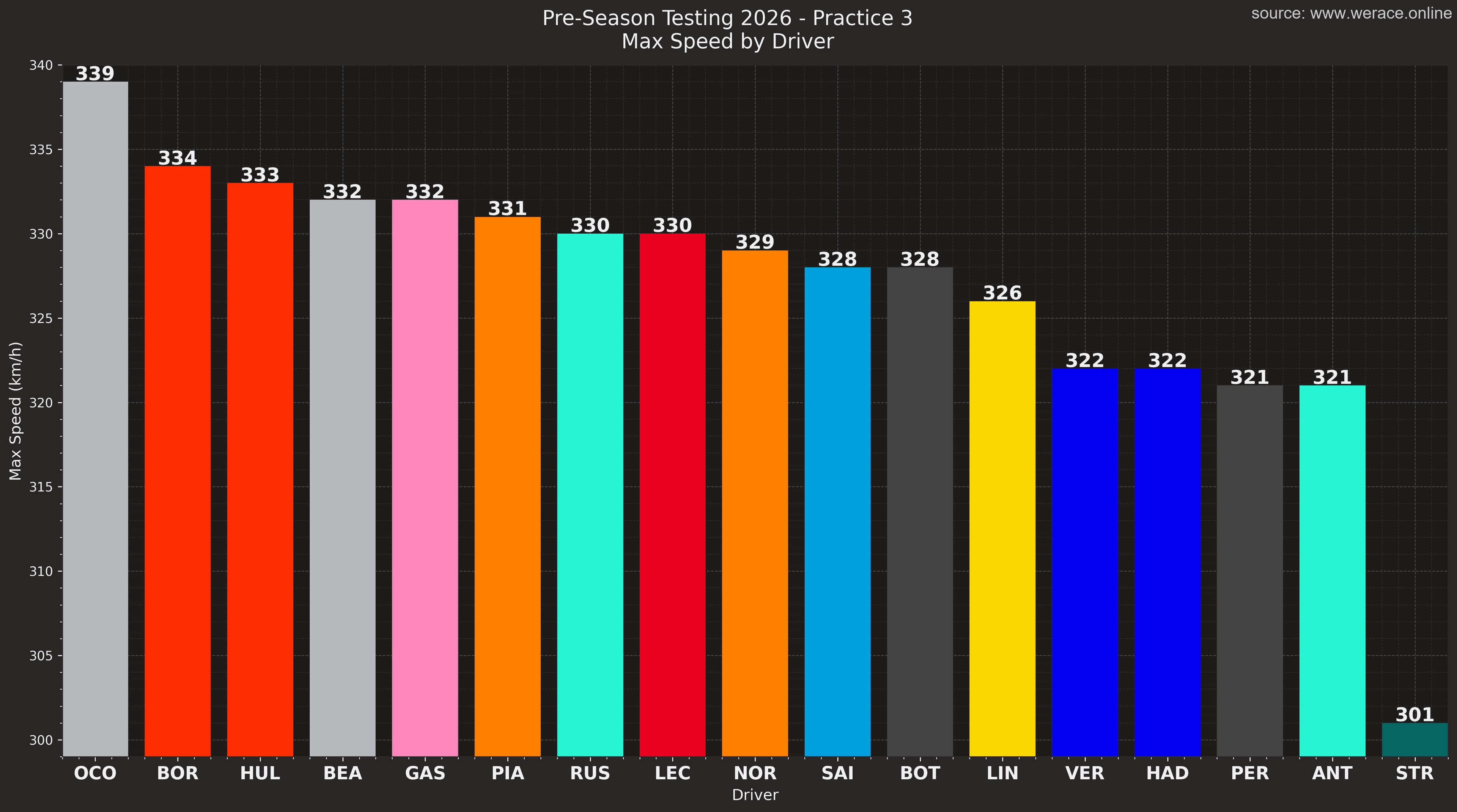
This is backed up by the top speeds graph, where McLaren is sitting suspiciously low. They are hiding a tremendous amount of potential. Do not expect this gap to exist in Melbourne.
Mercedes: Flashes of Speed, Shadows of Fragility
Mercedes had a very disjointed day that leaves more questions than answers.
During his morning long run, Kimi Antonelli was entering his third stint when disaster struck. Coming out of a corner, he tried to progressively apply the throttle, but the car simply wouldn't respond, forcing him to park it and cause a red flag. While it sounded like a gearbox crunch, the team officially confirmed it was a Power Unit failure.
This is a massive headache. Kimi leaves Bahrain with only 291 total laps under his belt—one of the lowest tallies on the grid. He will have to build his F1 experience directly during official race weekends.
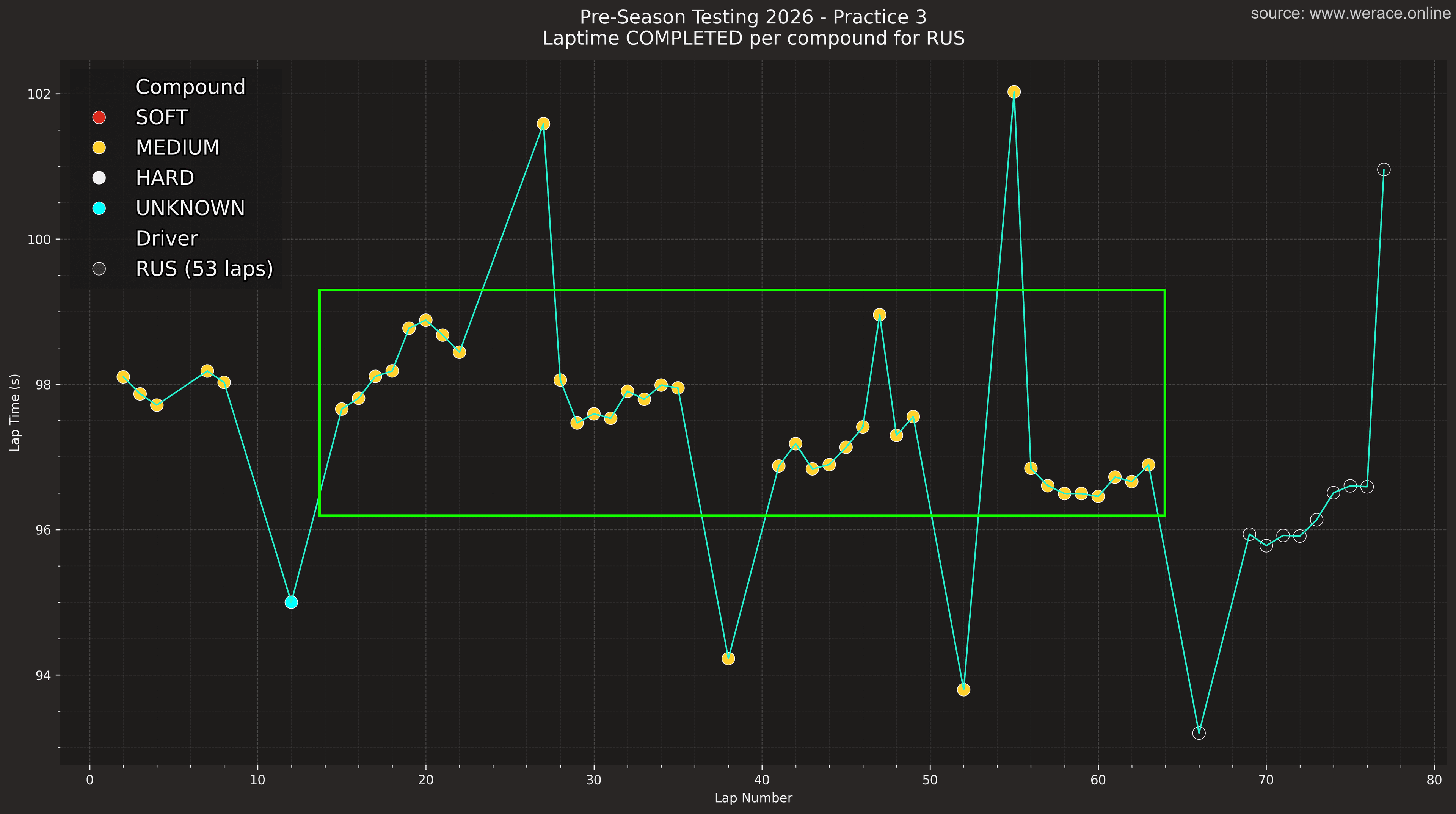
In the afternoon, after a PU and gearbox change, George Russell took over. As his pace graph shows, his mini race simulations were brief but incredibly consistent. The W17 has the pace, but their total avoidance of a full, uninterrupted race simulation is slightly concerning.
Aston Martin's Total Collapse
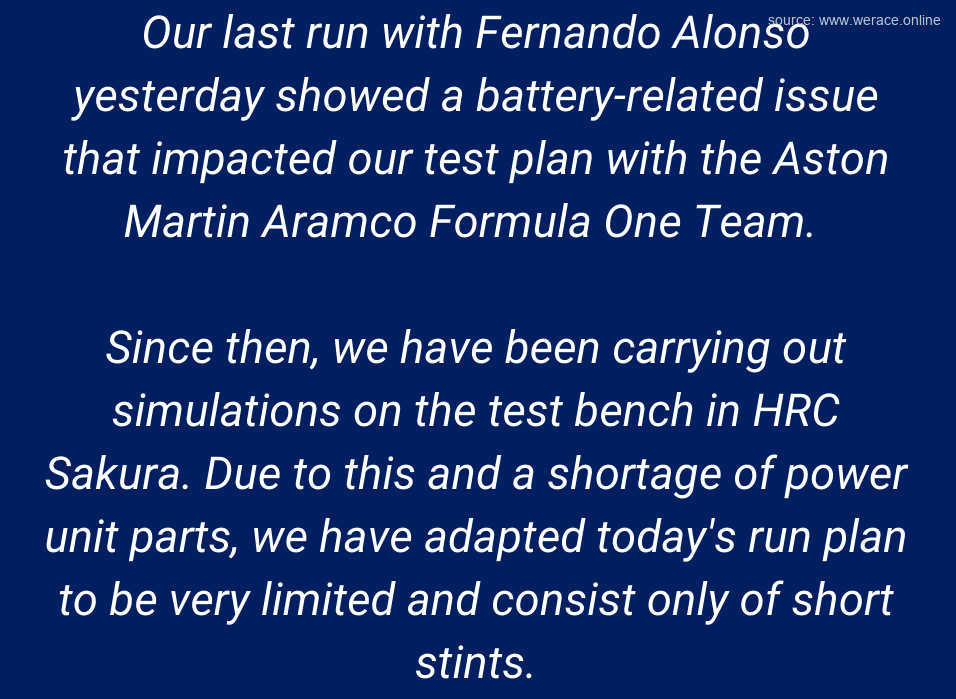
This Honda press release was the tragic comedy of the day. Honda officially stated they had to limit Aston Martin's running due to a "lack of spare parts." The reality whispered in the paddock? The parts were there initially, but Aston Martin has suffered so many breakages and PU failures over the last six days that they have literally run out of inventory.
Lance Stroll completed just 6 agonizing laps today before the team packed up two hours early. Alonso's longest stint yesterday was 26 laps before the engine blew. Not only does the AMR26 lack performance, but it is highly unlikely they currently have the reliability to finish a full Grand Prix. If they do finish in Melbourne, it will likely be because they are running with several horsepower heavily detuned.
The Midfield Marathon: Lindblad and Bearman
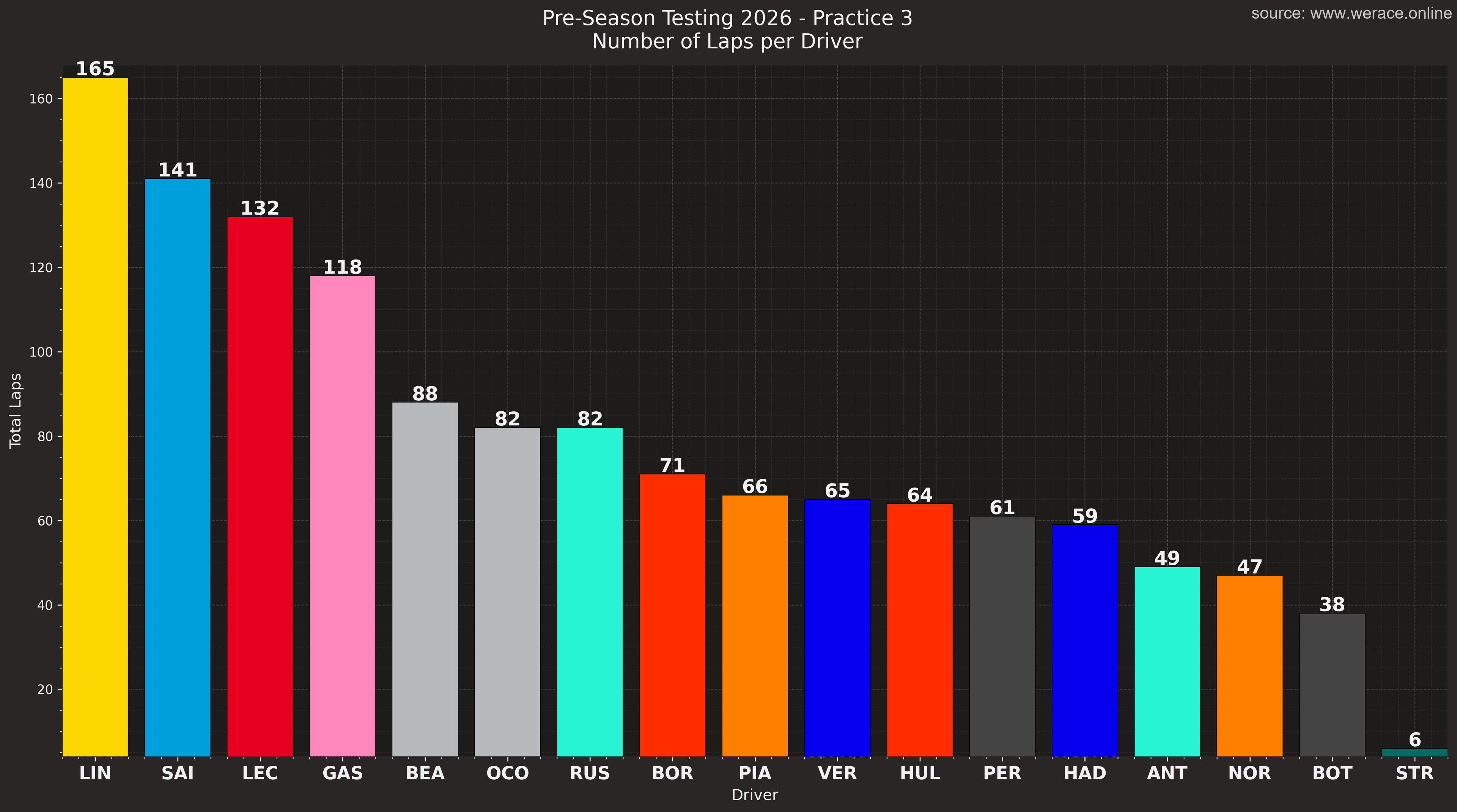
While Aston Martin sat in the garage, Arvid Lindblad (VCARB/Racing Bulls) became the ultimate ironman of testing. He completed a staggering 165 laps today—the highest single-day mileage for any driver.
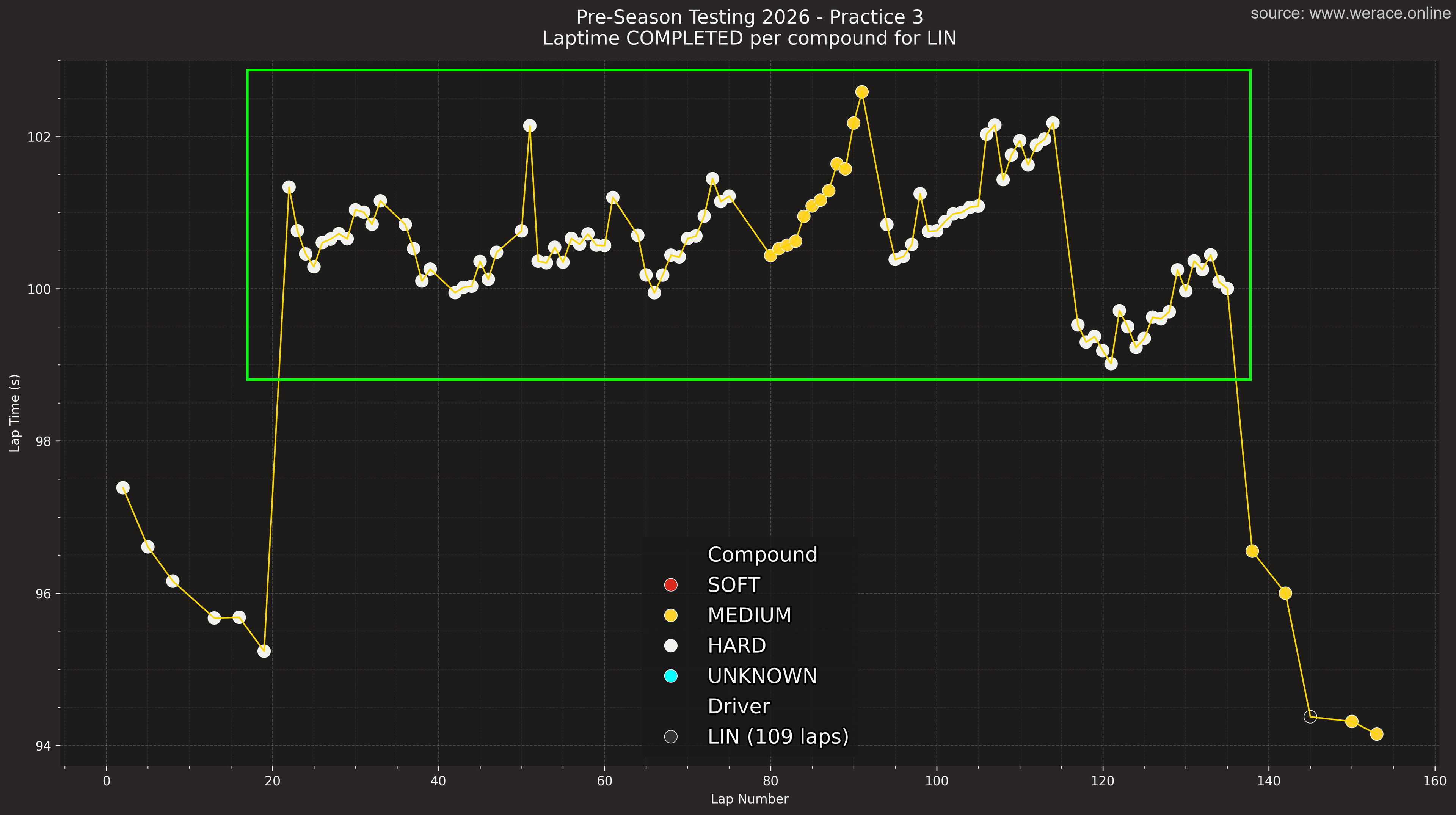
Look at his lap time chart: from lap 20 to 140, it's 120 laps of pure race simulations. He effectively drove two full Grand Prix distances. His times were quite high (often in the 1m41s), suggesting he was testing something very specific or running a heavily detuned engine, especially since his final laps suddenly dropped by a full second.
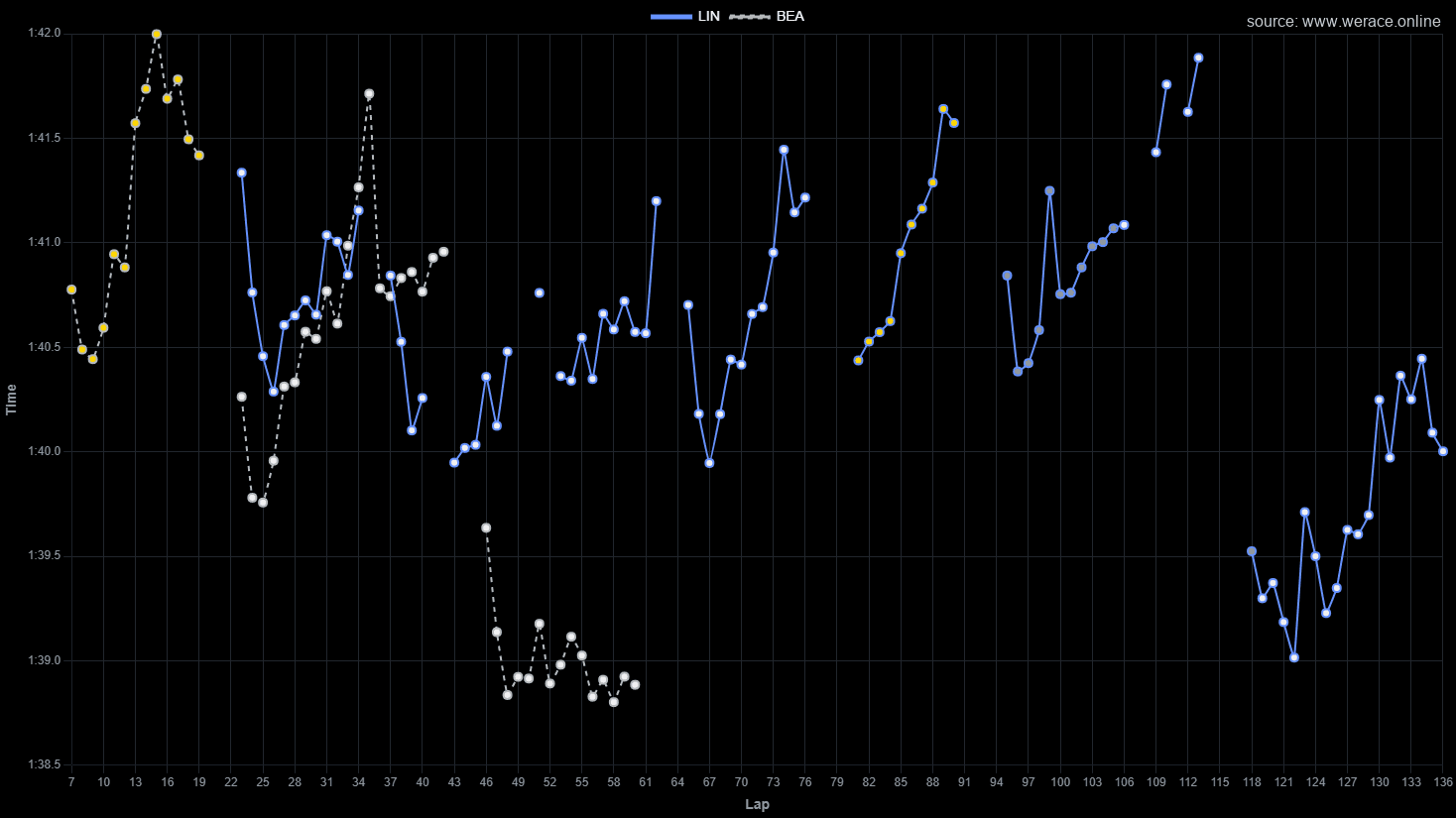
When we compare Lindblad's pace to Ollie Bearman in the Haas, the picture of the midfield becomes clearer. Bearman's afternoon race simulation was incredibly convincing. Haas looks like a very serious contender for the 5th fastest team, alongside a surprisingly solid Audi. Williams, on the other hand, seems to be struggling slightly more with their race pace compared to the others.
Final Mileage and Top 3 Impressions
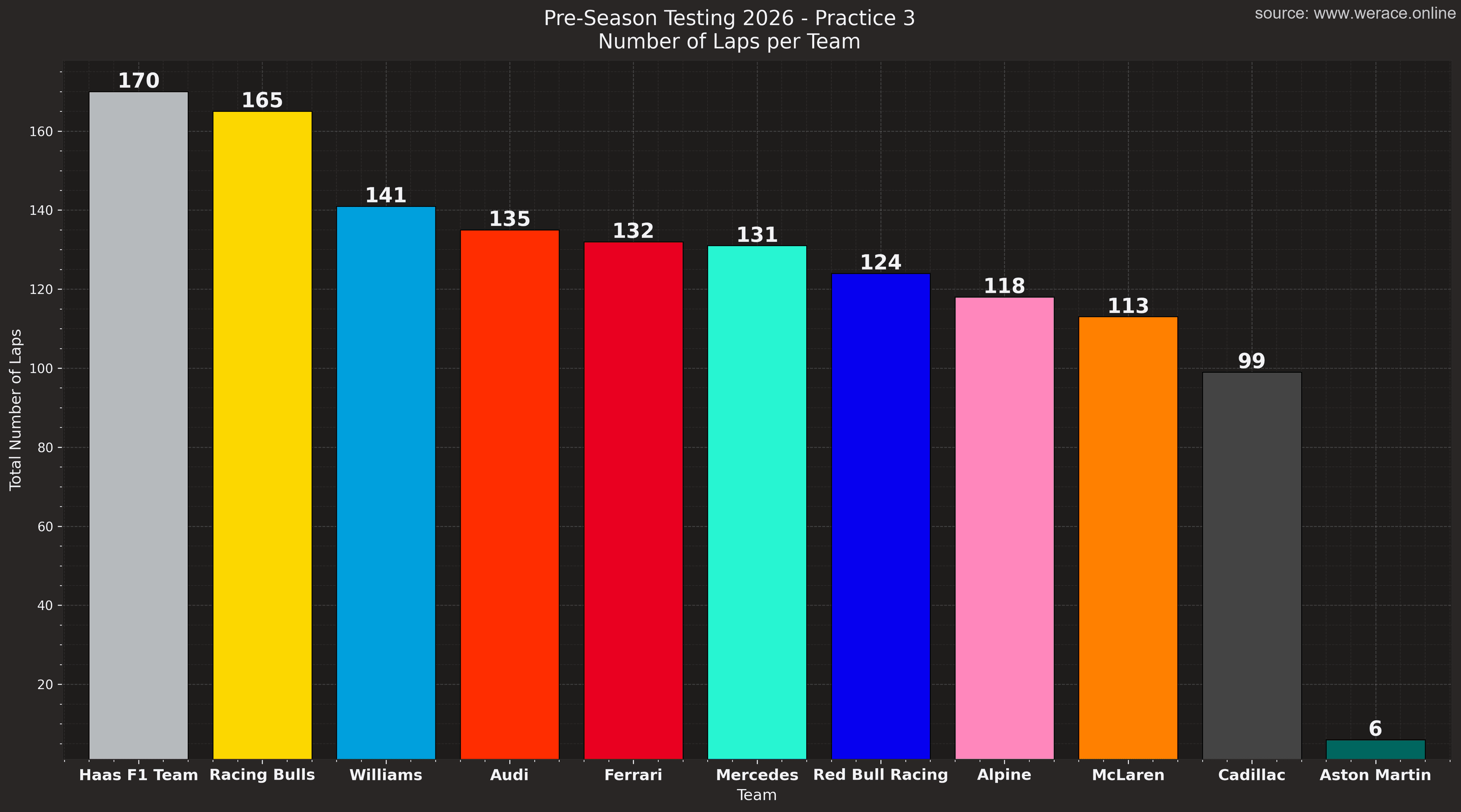
Looking at the final lap counts, McLaren (817) and Williams (790) proved to be absolute tanks, while Red Bull Powertrains surpassed 2000 combined laps, proving their bespoke engine is highly reliable.
To conclude these testing days, here are my final impressions on the Top 3 teams fighting for the championship:
1. McLaren is hiding: They ran the most laps but showed the least of their true hand. The telemetry proves they are lifting in corners and not completing full race distances. They have a massive amount of performance in the pocket.
2. Mercedes is fast, but fragile: The W17 looks planted and Russell's consistency is great, but Antonelli's PU failures and their lack of a full 50-lap race simulation raise serious reliability alarms.
3. Ferrari is innovative, drivable, and fast: The SF-26 looks enormously better than last year. The drivability today was excellent, responding perfectly to setup changes. Furthermore, the 270-degree "upside-down" rear wing is a stroke of pure engineering genius.
The talking is over. We will find out who is really the fastest in two weeks in Melbourne. See you there!