
F1 2026 Bahrain Test 2, Day 1: The "Real" Cars Arrive, Titanium Tricks, and the 18-Second Wait
Welcome back to Bahrain. If last week was the appetizer, today was the main course. The "flow-viz" paint was everywhere, the aero rakes were out in force, and finally, the teams showed us their hand.
The "real" upgrades have arrived, and with them came a fascinating mix of technical ingenuity, reliability nightmares, and some bizarre new FIA procedures.
Here is the breakdown of the first day of the second test week.
Tech Deep Dive: Ferrari's "Magic Wing" & The Mercedes Spec-B
The biggest talking point in the pitlane wasn't a lap time; it was a small piece of titanium on the back of the Ferrari SF-26. Ferrari revealed a previously unseen vane positioned right in front of the exhaust exit.
What is it? Essentially a "mini beam wing" (a part that is technically banned).
The Trick: Ferrari found a gray area in the regulations (between 390mm and 400mm from the axle) to mount this. It's made of titanium to withstand the heat and helps guide the energetic exhaust gases to interact with the rear wing and diffuser.
The Drama: Rumor has it the FIA only approved this late Tuesday night after a fierce political battle. That's why Ferrari changed their run plan, putting both Leclerc and Hamilton in the car today to get back-to-back feedback on the new part.
Mercedes didn't sit still either. The W17 rolled out looking like a "Spec-B" car. We saw a new front wing endplate (horizontal vane), smaller brake ducts, and—crucially—completely revised sidepods with a more extreme undercut and a compact "Coca-Cola" area. The cooling seems to be working so well that they could shrink the bodywork significantly.
Red Bull? They joined the party with an even more extreme undercut on the sidepods and their own version of the exhaust vane (though larger than Ferrari's).
The Track Action: Russell Tops, Red Bull Stumbles
On paper, George Russell had a perfect day, topping the timesheets with a 1:33.459. But the timesheet hides the reliability divergence between the top teams.
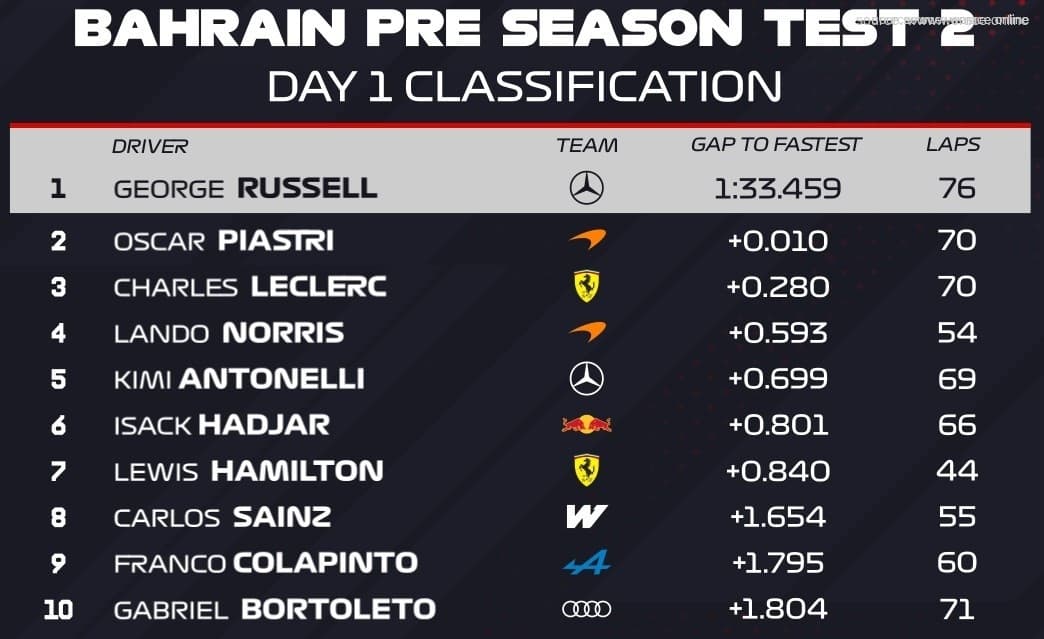
While Mercedes and McLaren (Piastri was P2, just 0.010s behind) ran smoothly, Red Bull had a headache. Isack Hadjar managed only 13 laps in the morning due to a suspected hydraulic/gearbox issue caused by excessive vibrations from the Honda engine. They are struggling to synchronize the ICE with the gearbox, leading to reliability scares.
Telemetry Analysis: The Tale of Two Stints
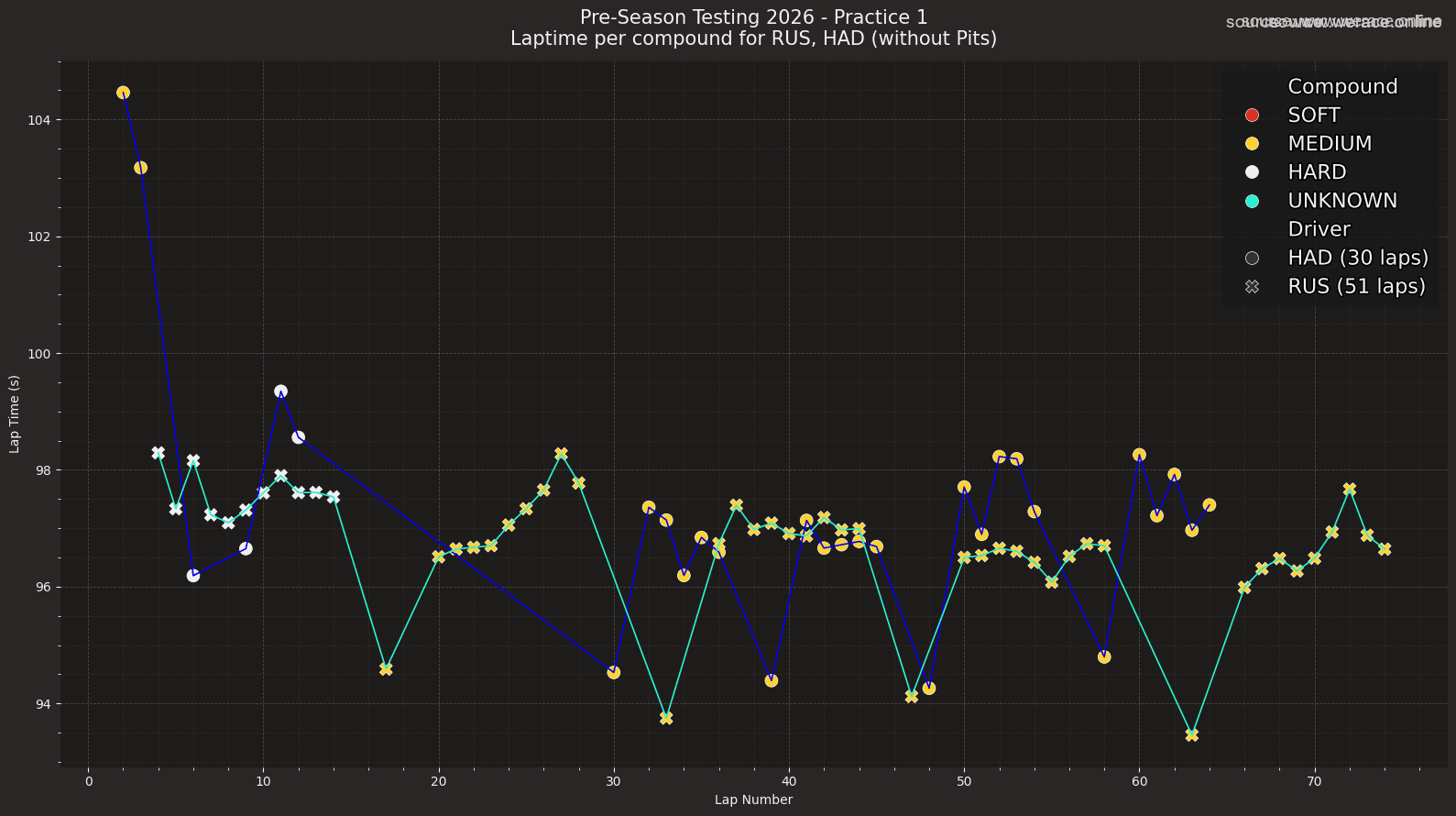
This is where things get interesting. I dove into the real-time telemetry to compare the race simulations.
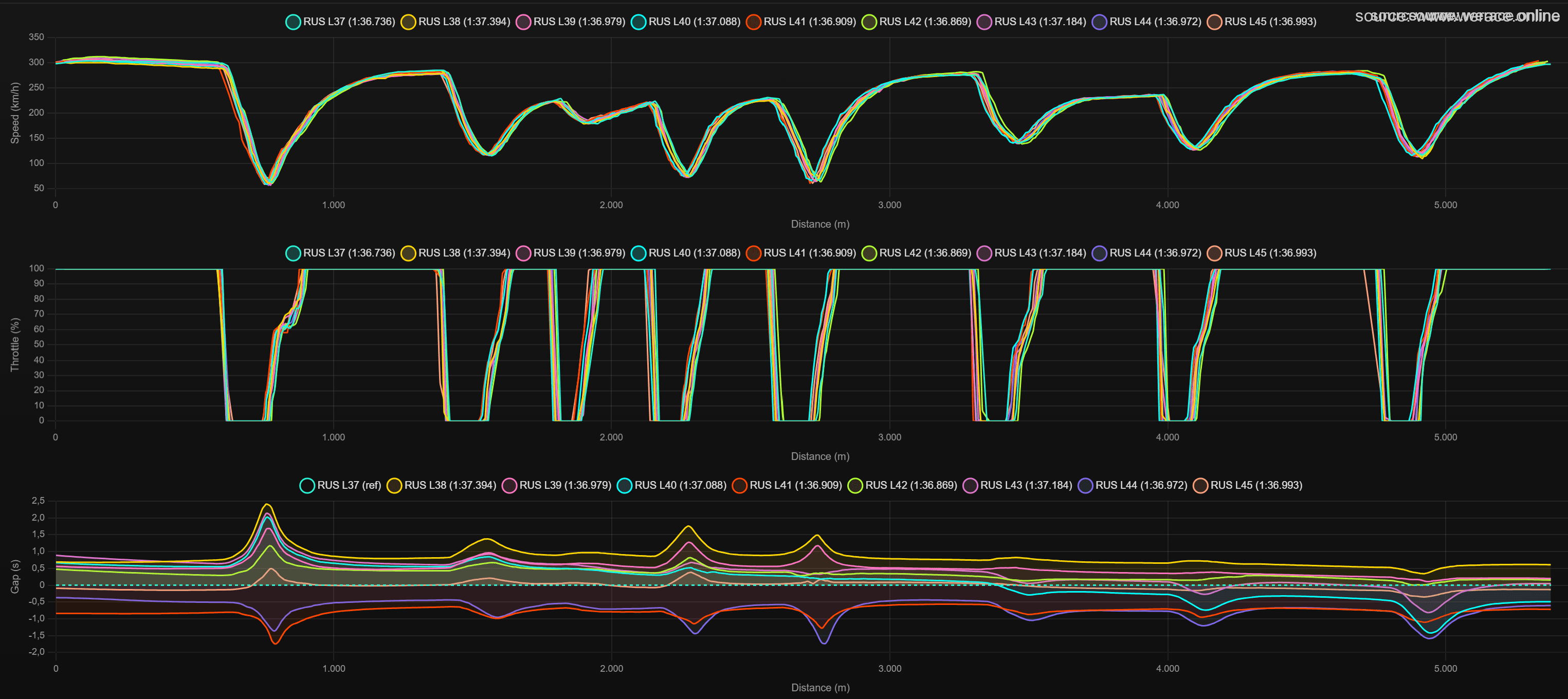
George Russell's Evolution
Russell's race pace was solid, but his driving style had to change as the run progressed.
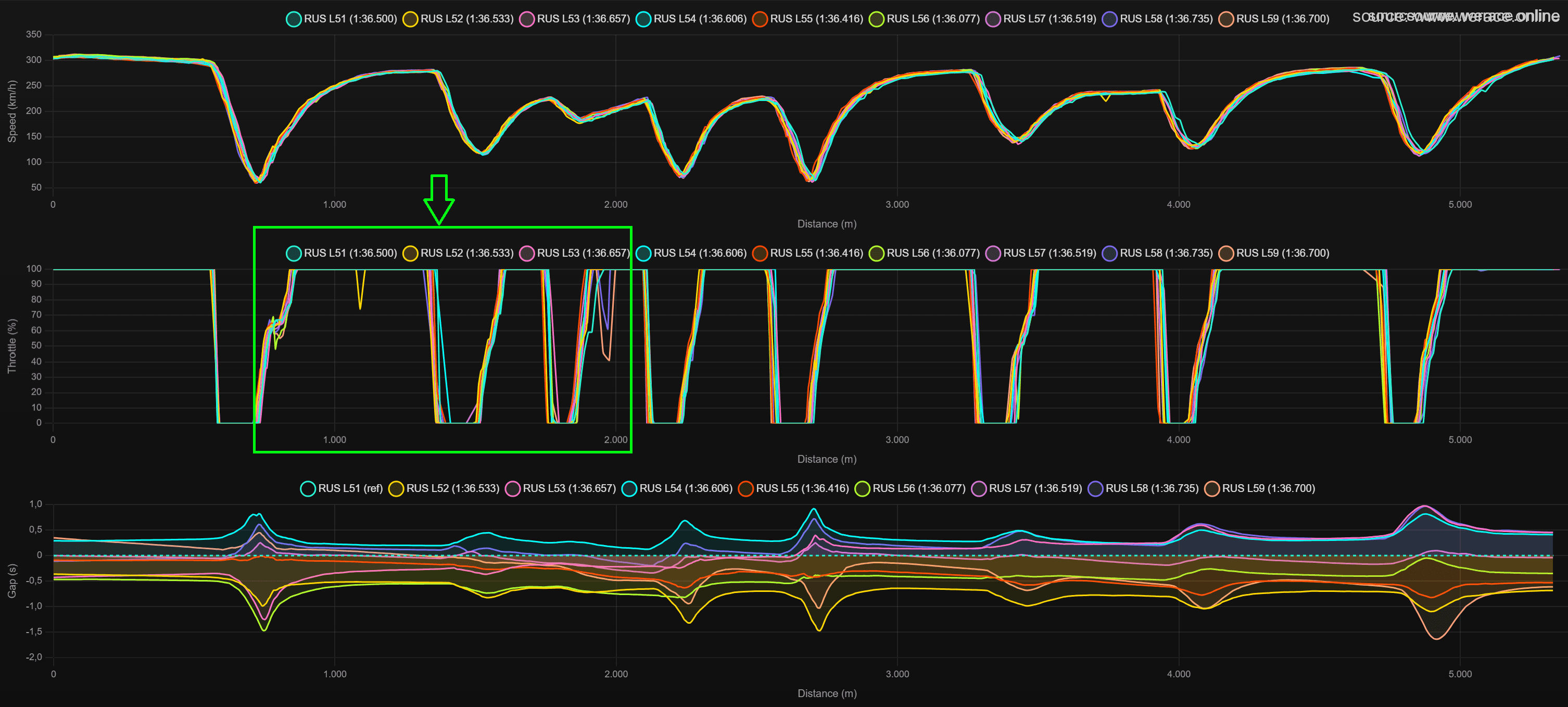
- Stint 1: Look at the throttle trace. It's smooth, identical lap after lap. The car was compliant.
- Stint 2: Even with fresher tires, the trace gets messy. He's fighting the car more, lifting off earlier in some corners and aggressively stabbing the throttle in others. The degradation (or perhaps wind change) forced him to work much harder for the lap time.
Piastri's Consistency
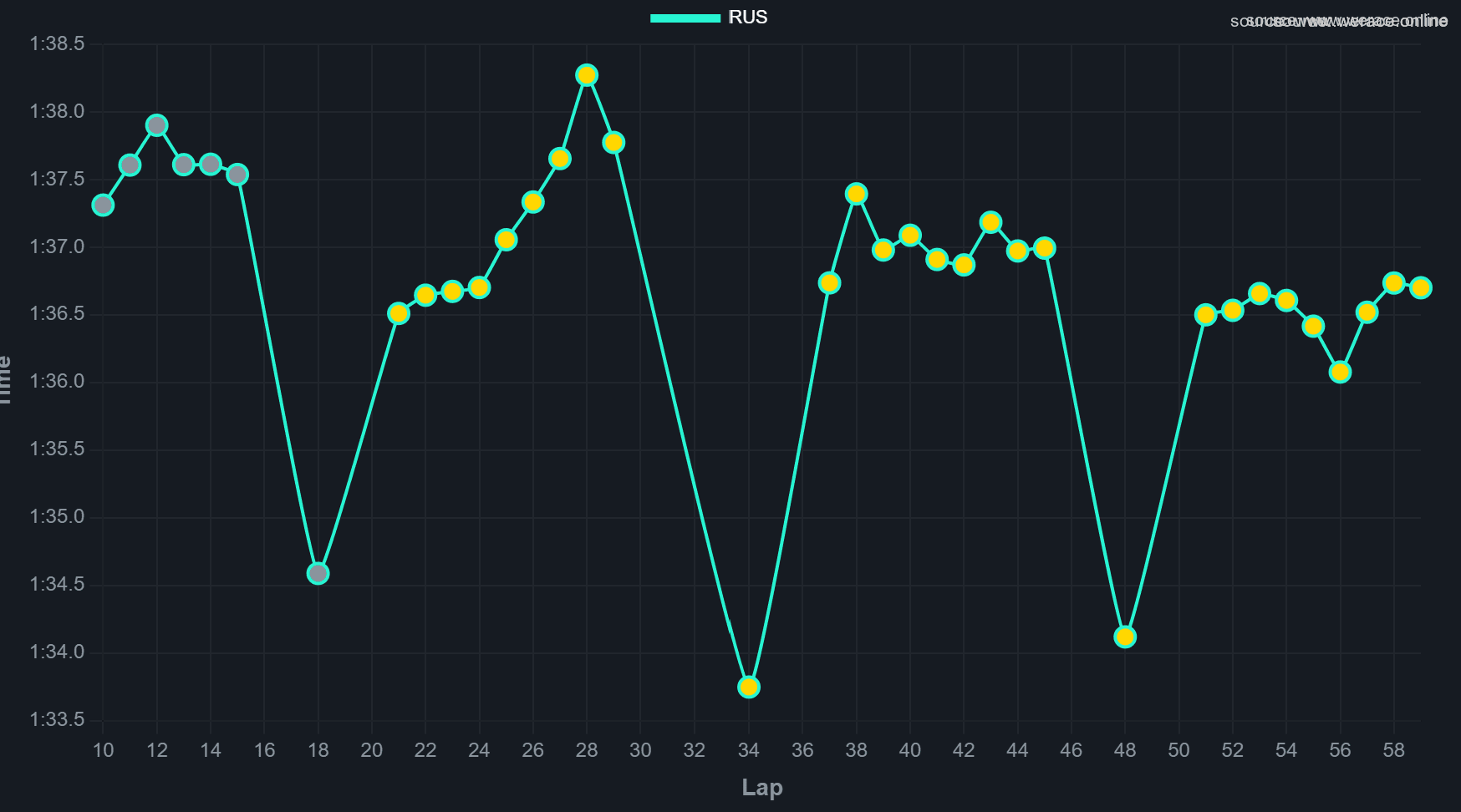
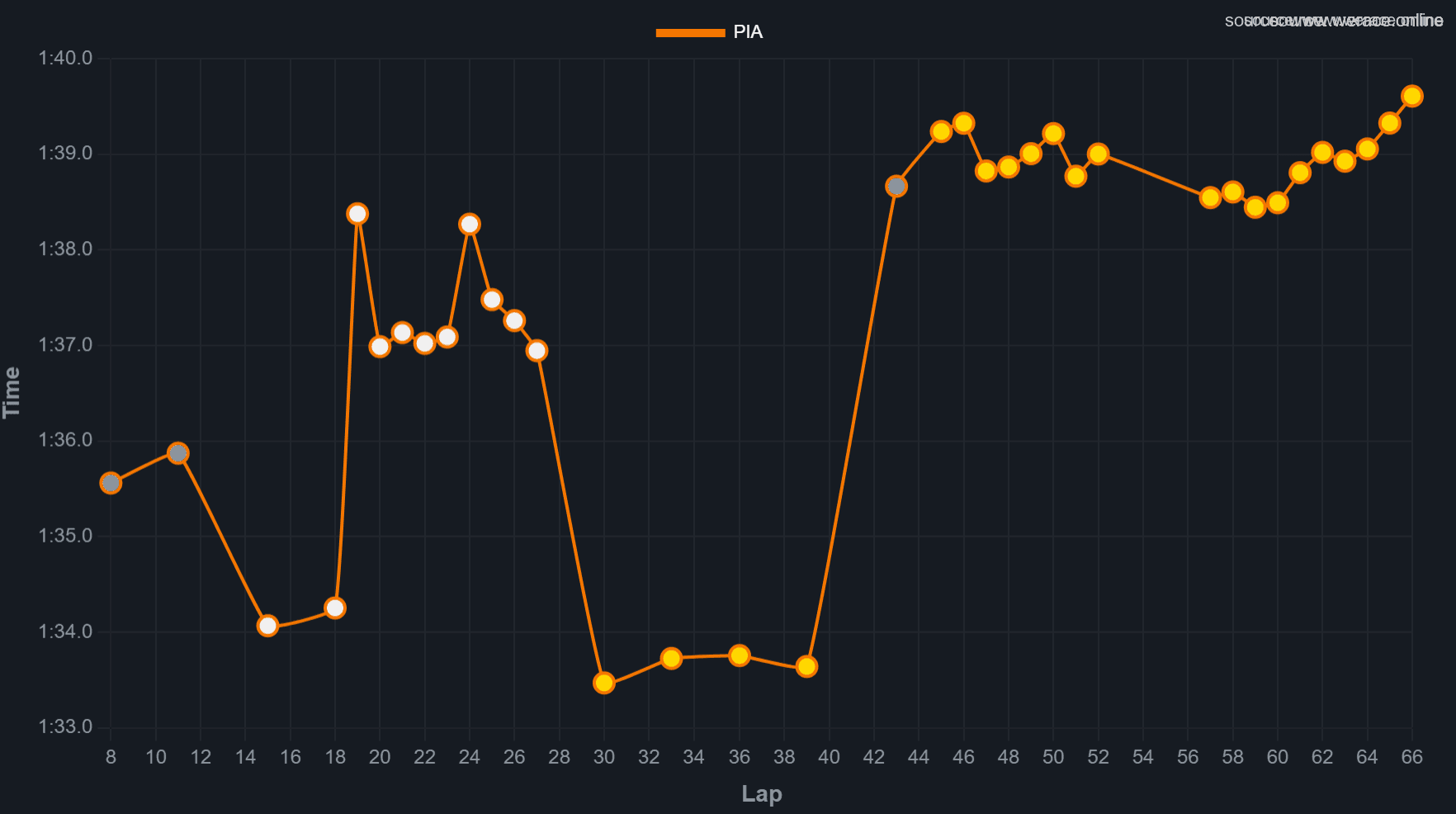
Oscar Piastri was a metronome. His pace on the Mediums was incredibly consistent, validating McLaren's status as a top contender.
Hadjar's Struggle
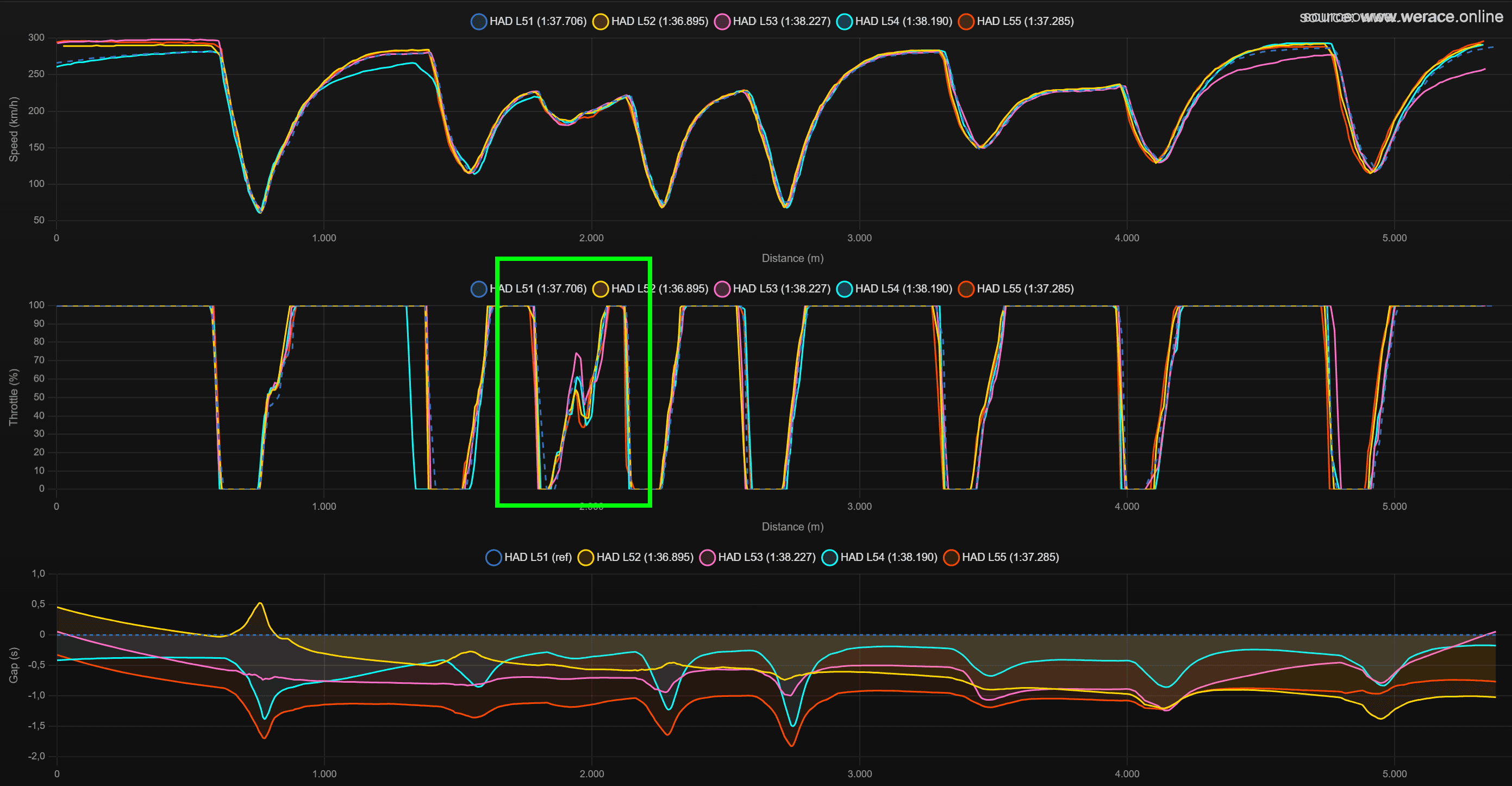
Compare that to Hadjar in the Red Bull. When he finally got running in the afternoon, his telemetry showed severe "clipping." You can see the speed trace flatlining early and the throttle cuts—partly management, partly the car struggling to deploy energy smoothly compared to the Mercedes.
The 18-Second Wait: A New F1 Problem?
We witnessed a bizarre scene during the practice starts. The 2026 Turbos are smaller (for some) and the MGU-H is gone. This means "spooling up" the turbo for a race start now takes forever. Drivers are sitting on the grid at full throttle for 12 to 18 seconds to build boost pressure (the "Time to Boost").
The Issue: If the 22nd car on the grid needs 15 seconds to prep, how long will the Pole Sitter sit there with his engine cooking at 13,000 RPM in the Bahrain heat?
The Danger: Kimi Antonelli described the power delivery as a "kick in the back." When the clutch drops, the electric torque is instantaneous, causing massive wheelspin. It's going to be chaotic.
Politics: The Compression Ratio Verdict
Finally, the FIA meeting result is out regarding the "Mercedes Engine Trick" (the variable compression ratio). The verdict? Nothing changes... yet. There will be a vote to introduce a "hot" check (at 130°C) to catch anyone expanding their engine materials to gain an advantage. But even if it passes, it won't be active until August 1st, 2026. So, if Mercedes has an advantage, they keep it for half the season.
The Bottom Line
Aston Martin is in big trouble (lowest mileage, Stroll causing a Red Flag, "months behind" on development). Mercedes looks genuinely fast and reliable. Ferrari is pushing the boundaries of the rules. Red Bull is fast but fragile.
Day 2 of the second test week is coming up. Stay tuned!