
- Published on
F1 2026 Bahrain Day 3: The "Hat" Effect and Mercedes Wakes Up
- Authors

- Name
- Attimini
- @attiminii
And just like that, the first week of testing is over. If Day 1 was about shock and Day 2 was about technical secrets, Day 3 was all about the grind. We finally saw full race simulations, pit stops included, which gave us the first real data on how these 2026 machines behave over a long distance.
The headline? Mercedes is back from the dead. After two days of leaks and breakdowns, they topped the timesheets with a 1-2 finish. But as always, the real story is hidden in the race pace and the telemetry.
Here is the breakdown of Day 3.
The "Hat" Effect: A New Way of Driving
I spent the day glued to the live telemetry, and I noticed something weird. I'm calling it the "Hat Effect."
In previous years, you'd see a speed trace that peaked sharply at the end of a straight before the driver hit the brakes. With these 2026 cars, the trace looks like a flat-brimmed hat. The cars accelerate furiously, hit around 315-320 km/h, and then... they just stay there. The line goes flat.
The systems are clipping the energy deployment early to save battery for the next lap. It's a horizontal cut. We are no longer seeing the absolute V-max on every lap; we are seeing a managed plateau. It's efficient, but it looks strange on the data.
Race Pace Wars: Hamilton vs. Piastri
We were lucky enough to see Lewis Hamilton (Ferrari) and Oscar Piastri (McLaren) run race simulations almost simultaneously. This was the highlight of the day.
The Strategy:
- Hamilton: C3 (Medium) → C1 (Hard) → C2 (Hard/Medium mix)
- Piastri: C3 (Medium) → C3 (Medium) → C2 (Hard)
The Data:
Looking at the average speeds over a 20-lap stint, a clear difference in philosophy emerged.
- Hamilton had a higher top speed at the end of the main straight.
- Piastri was lifting much earlier, specifically saving energy into Turn 12.
The gap? On average, the difference was about 0.25 seconds per lap in that stint. It shows that even with heavy energy management (lifting and coasting), you can claw back lap time if your efficiency is good.
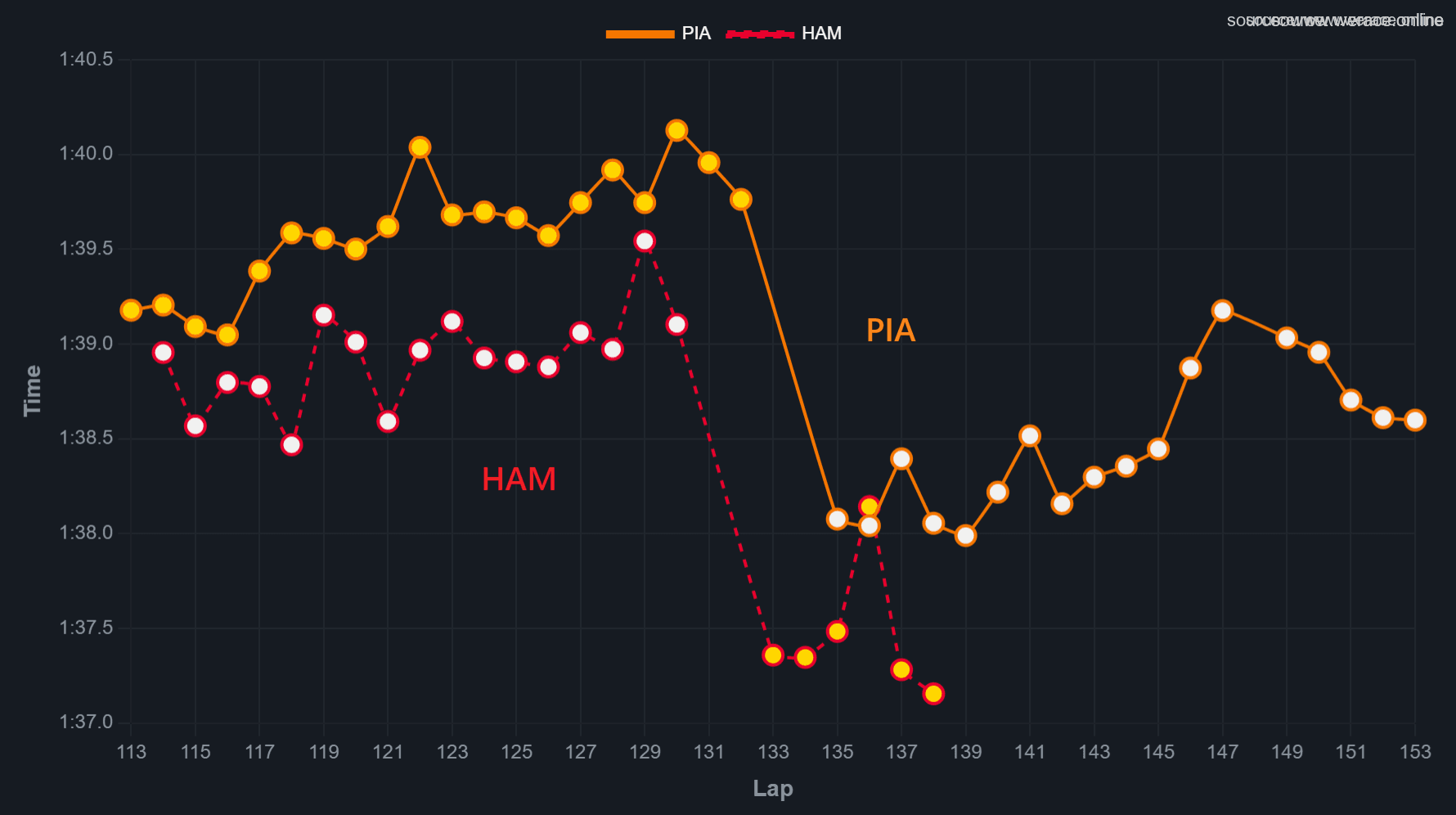
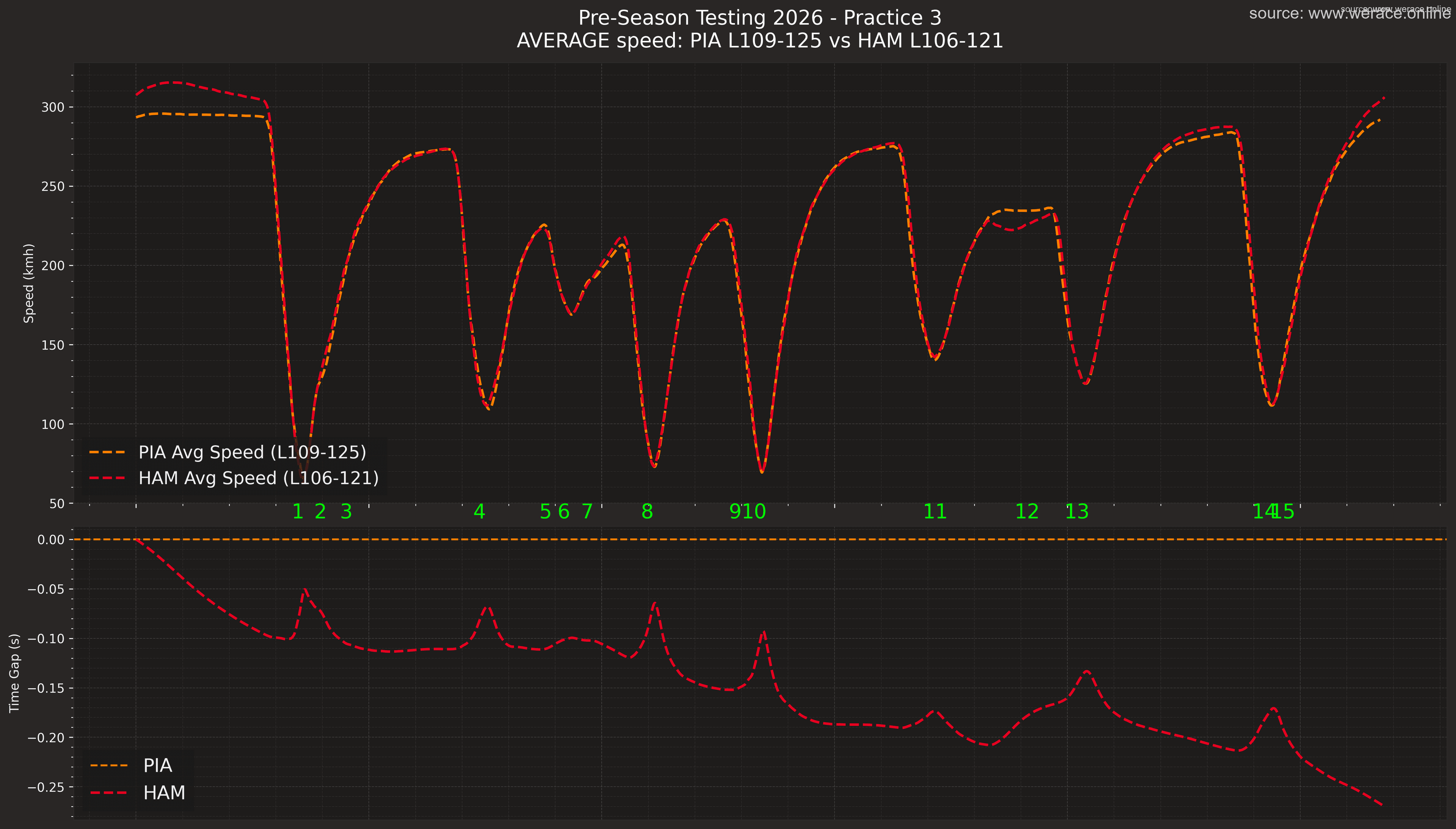
Ferrari seems to have excellent efficiency. They aren't wasting energy. McLaren, on the other hand, is a beast in the slow corners—mechanically, it looks glued to the track—but it lacks top-end speed compared to the red car.
The Hidden Stint: George Russell's Morning Run
While everyone is talking about Kimi Antonelli's P1 lap in the afternoon, we need to talk about George Russell. In the morning session (when the track was significantly hotter, around 41°C), George did a full race simulation that went under the radar.
He ran the C3 (Medium) and C1 (Hard) tires. The consistency was frighteningly good, but the degradation was real.
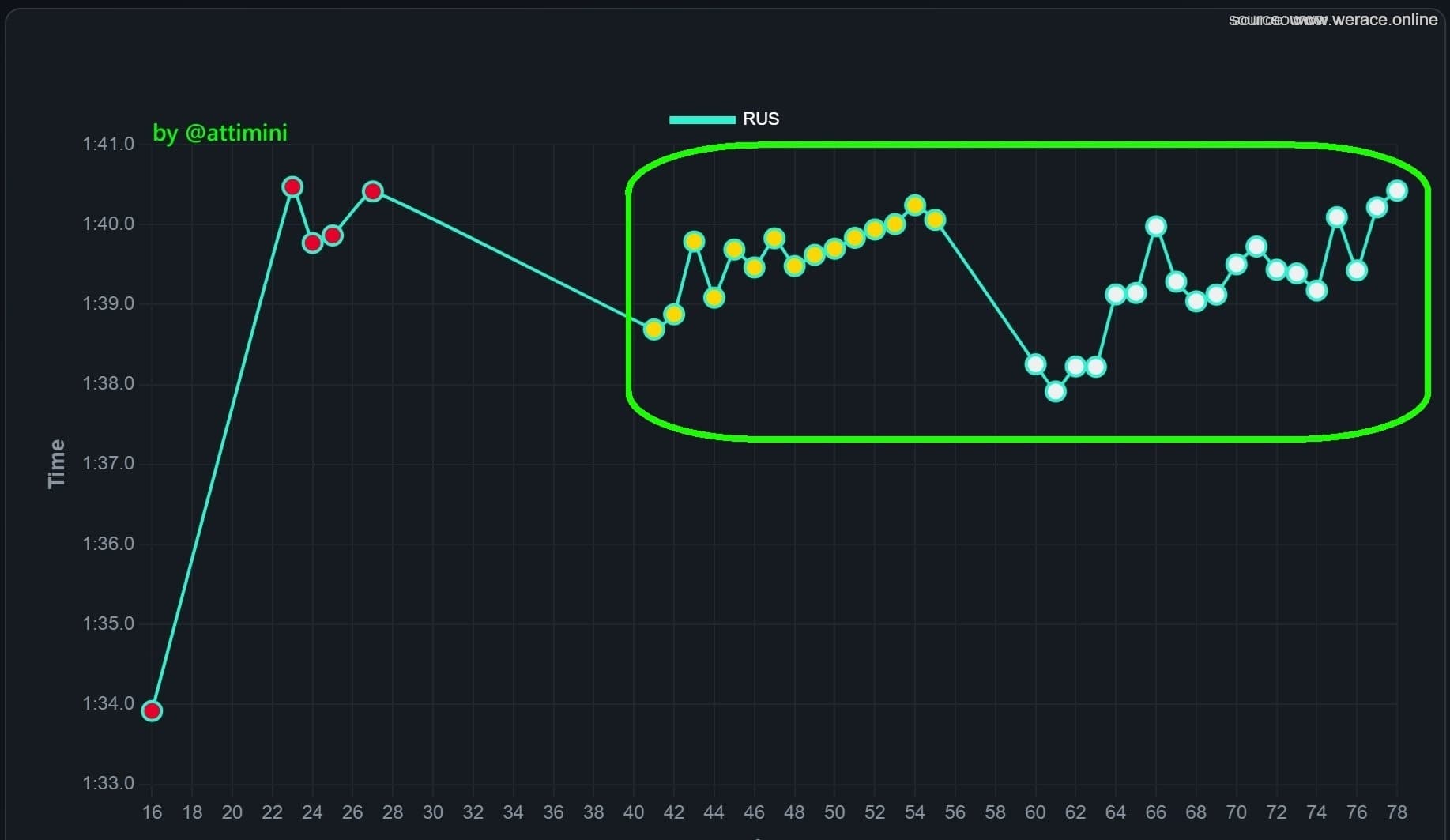
- The Drop-off: There was roughly a 1.0-second degradation from the start of a stint to the end.
- The Pace: He started in the high 1:39s and ended in the high 1:40s.
Considering the track temperature, this was a very solid run. It proves that the Mercedes reliability issues from Day 1 and 2 might just be teething problems, because the pace is definitely there.
Red Bull: The Speed Trap Kings
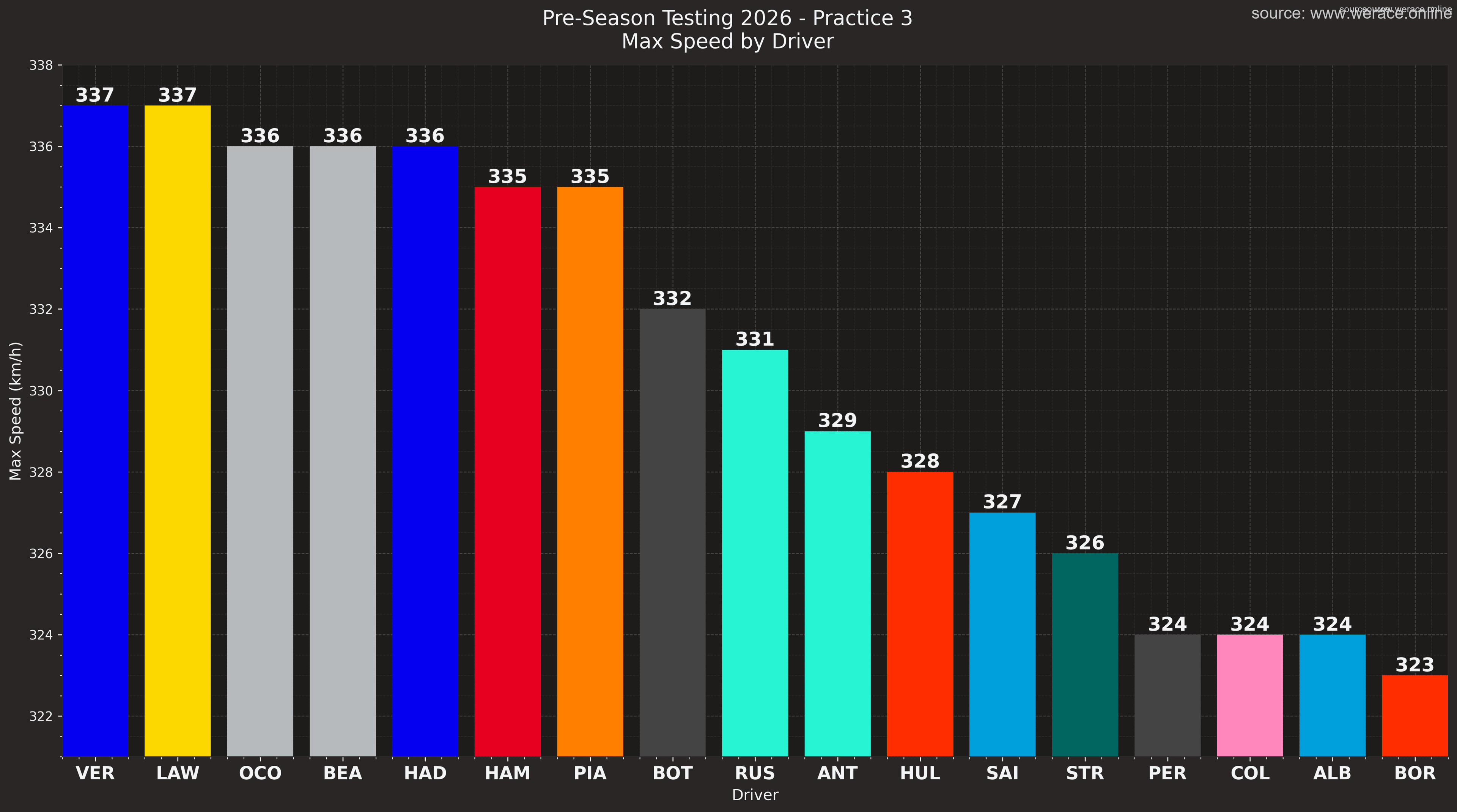
Red Bull split the day between Max Verstappen and Isack Hadjar. They didn't chase lap times, finishing 5th and 6th, but look at the speed trap.
While Ferrari and McLaren are managing the "Hat Effect" at 315 km/h, the Red Bull RB22 clocked 337 km/h. Max wasn't joking when he said the engine was fine. They are flying on the straights.
The Mileage Championship
Reliability is king in testing, and two teams deserve a standing ovation.
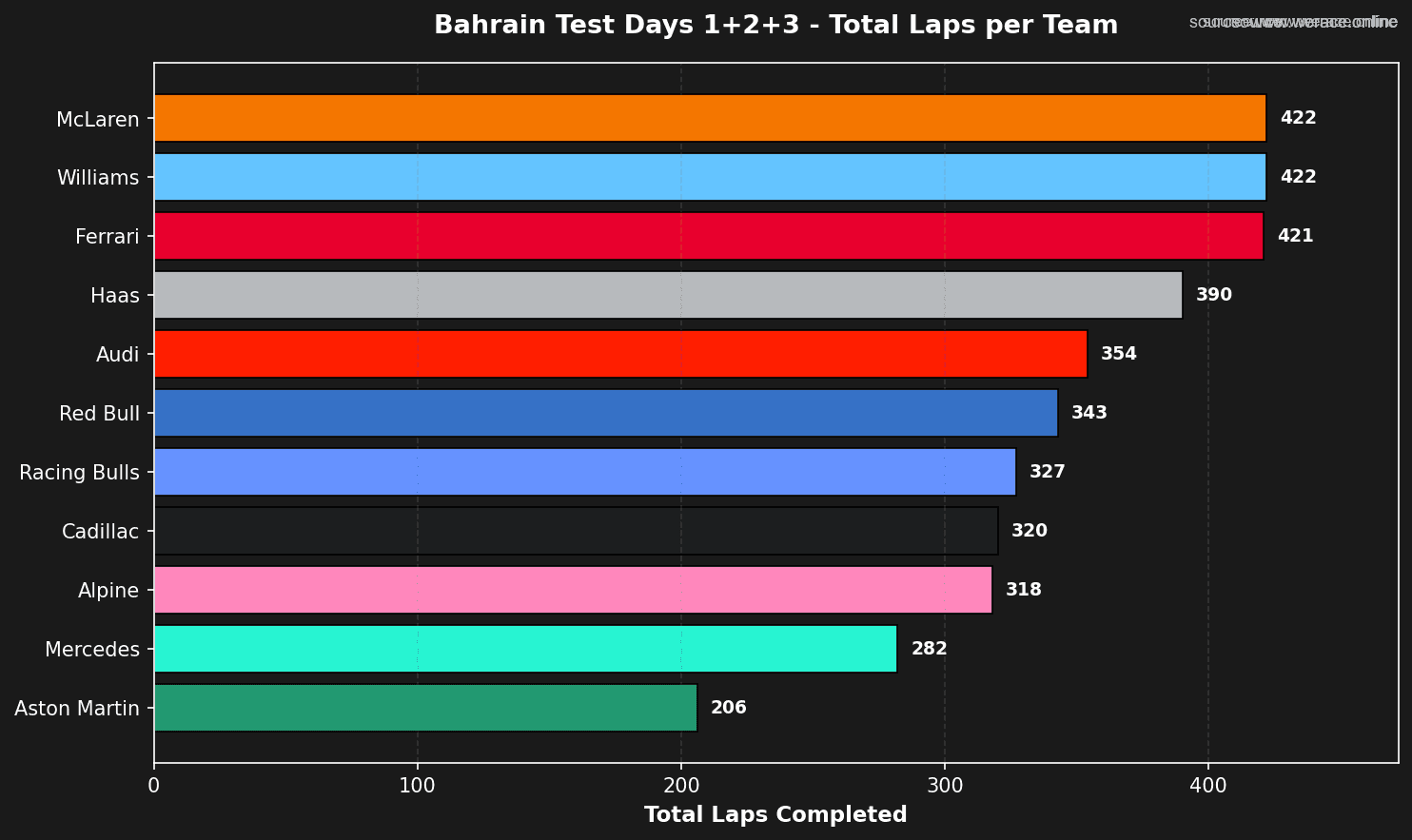
- Williams: The quiet achievers. They have completed 422 laps in three days. The car is overweight, but it's a tank.
- Ferrari: 421 laps total. Rock solid.
- The strugglers: Aston Martin. A disaster. Only 72 laps today and 272 total for the week (last place). The Honda engine is vibrating so much it's allegedly causing issues with the gearbox synchronization. They have a mountain to climb.
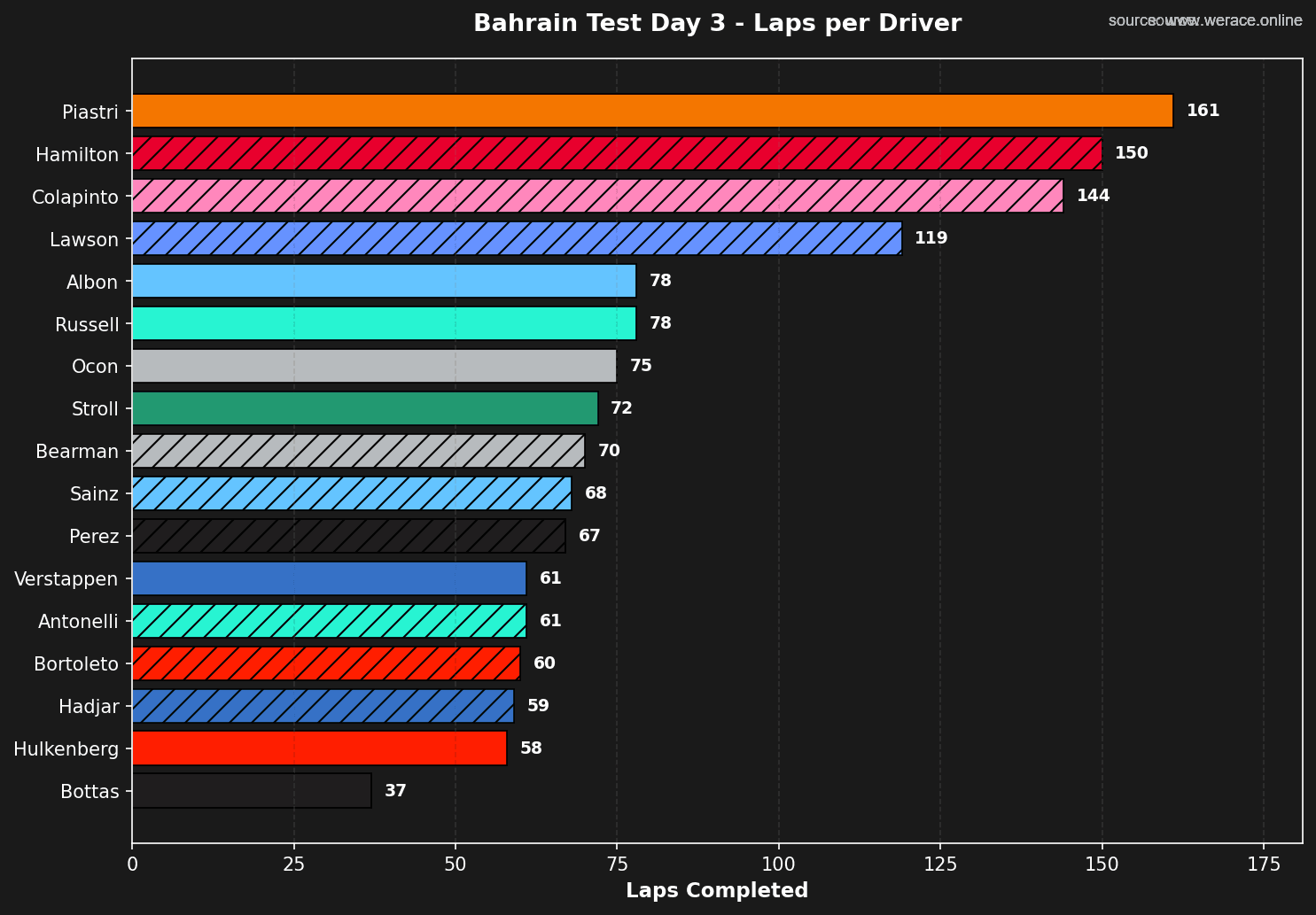
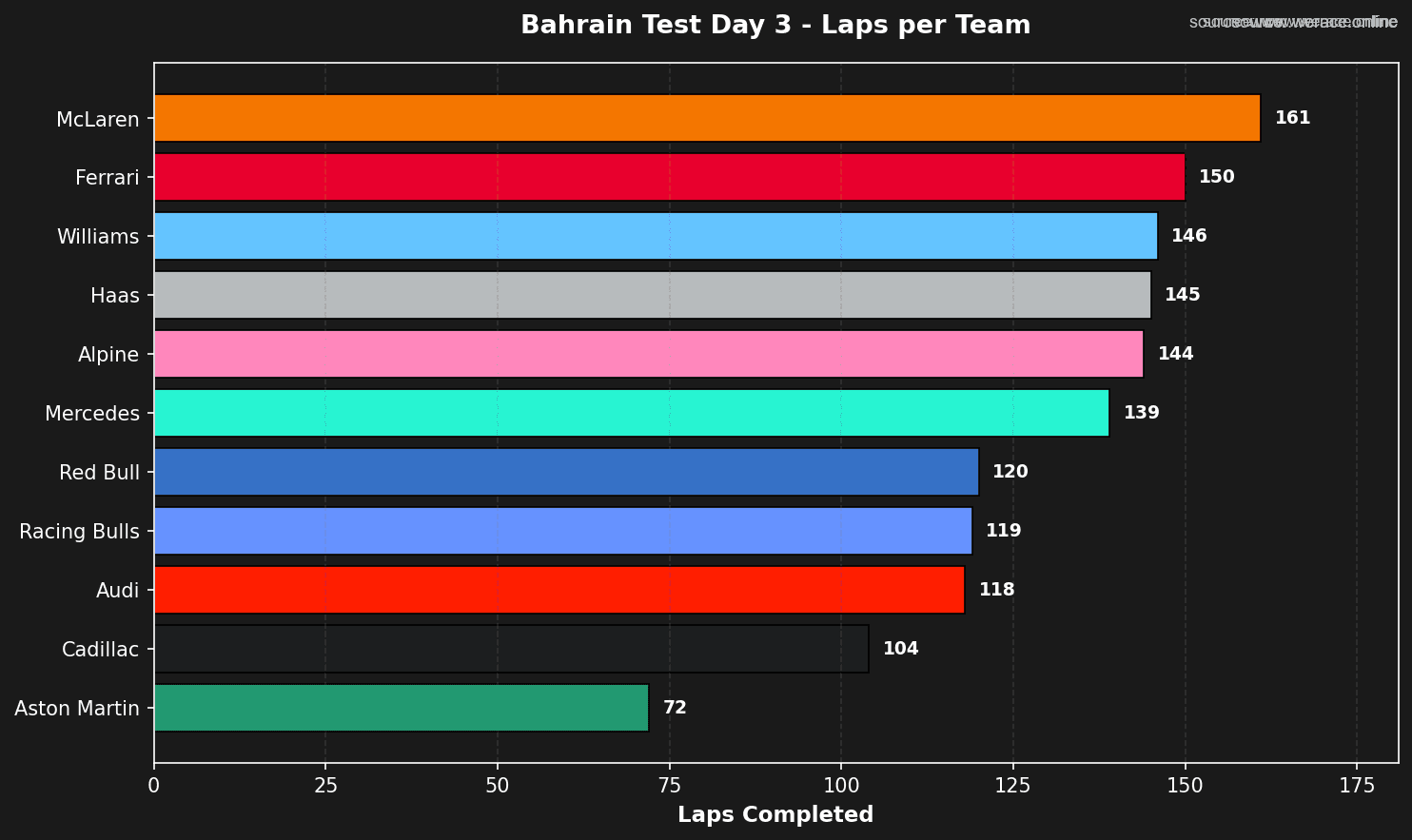
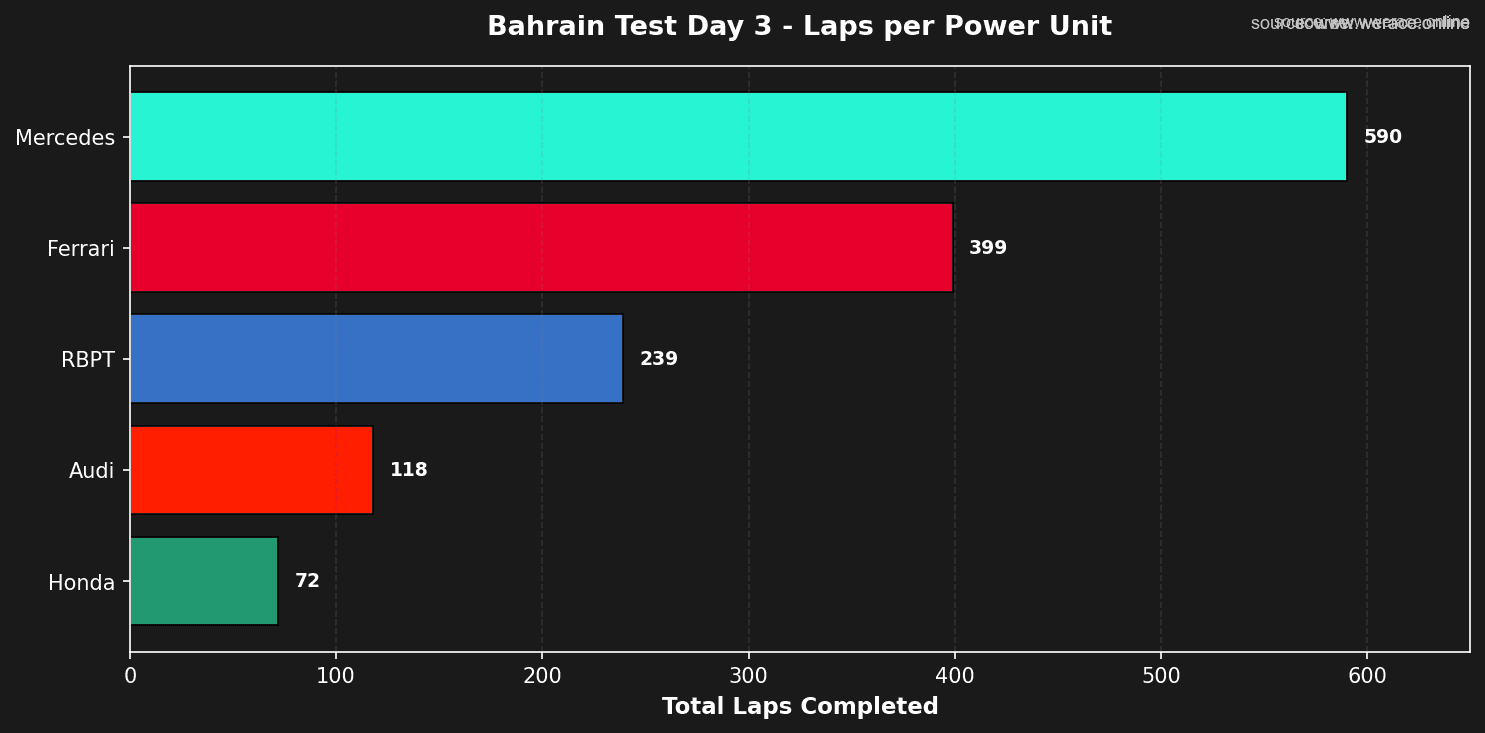
Three-Day Mileage Leaders
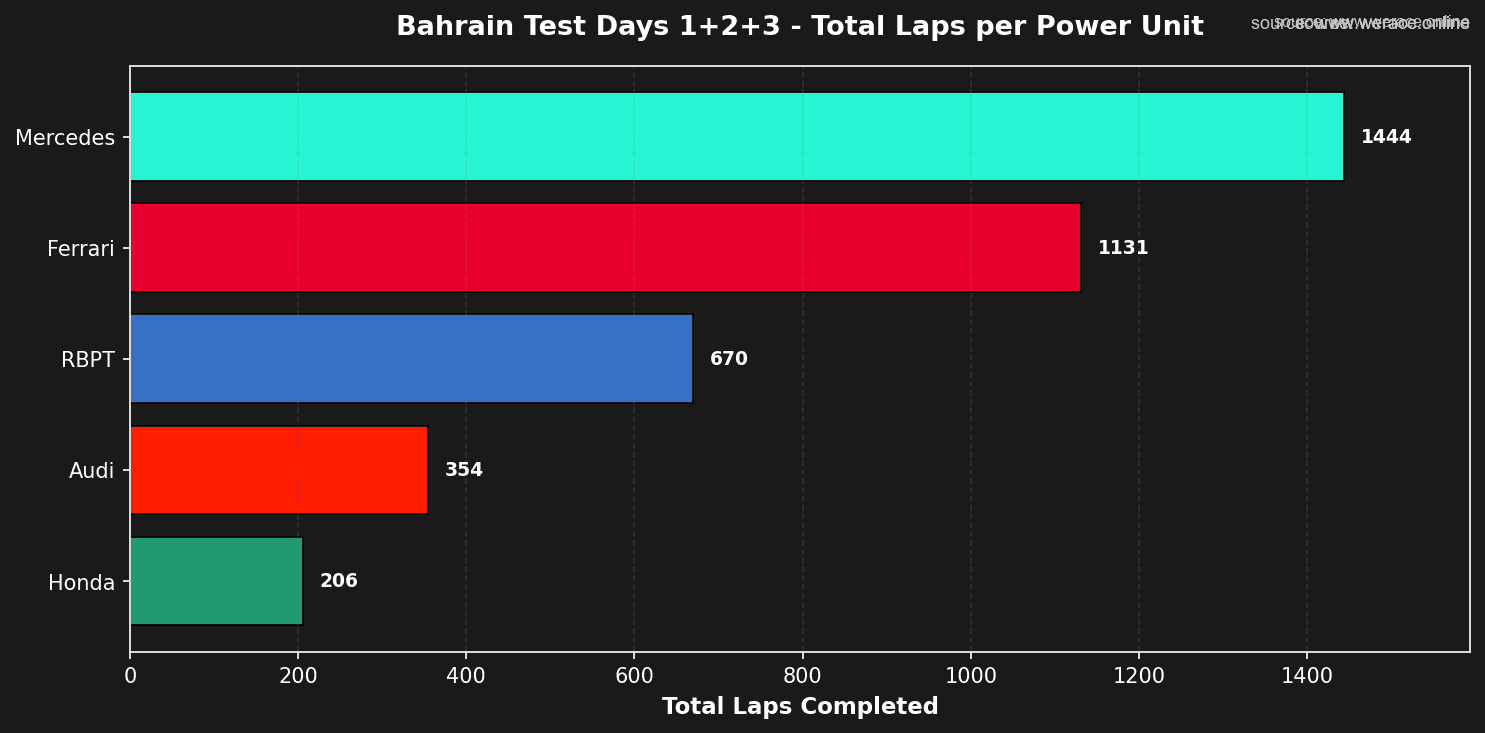
After the full week of testing, the reliability hierarchy is clear. Williams and Ferrari lead the pack, while Mercedes and Aston Martin have serious work to do.
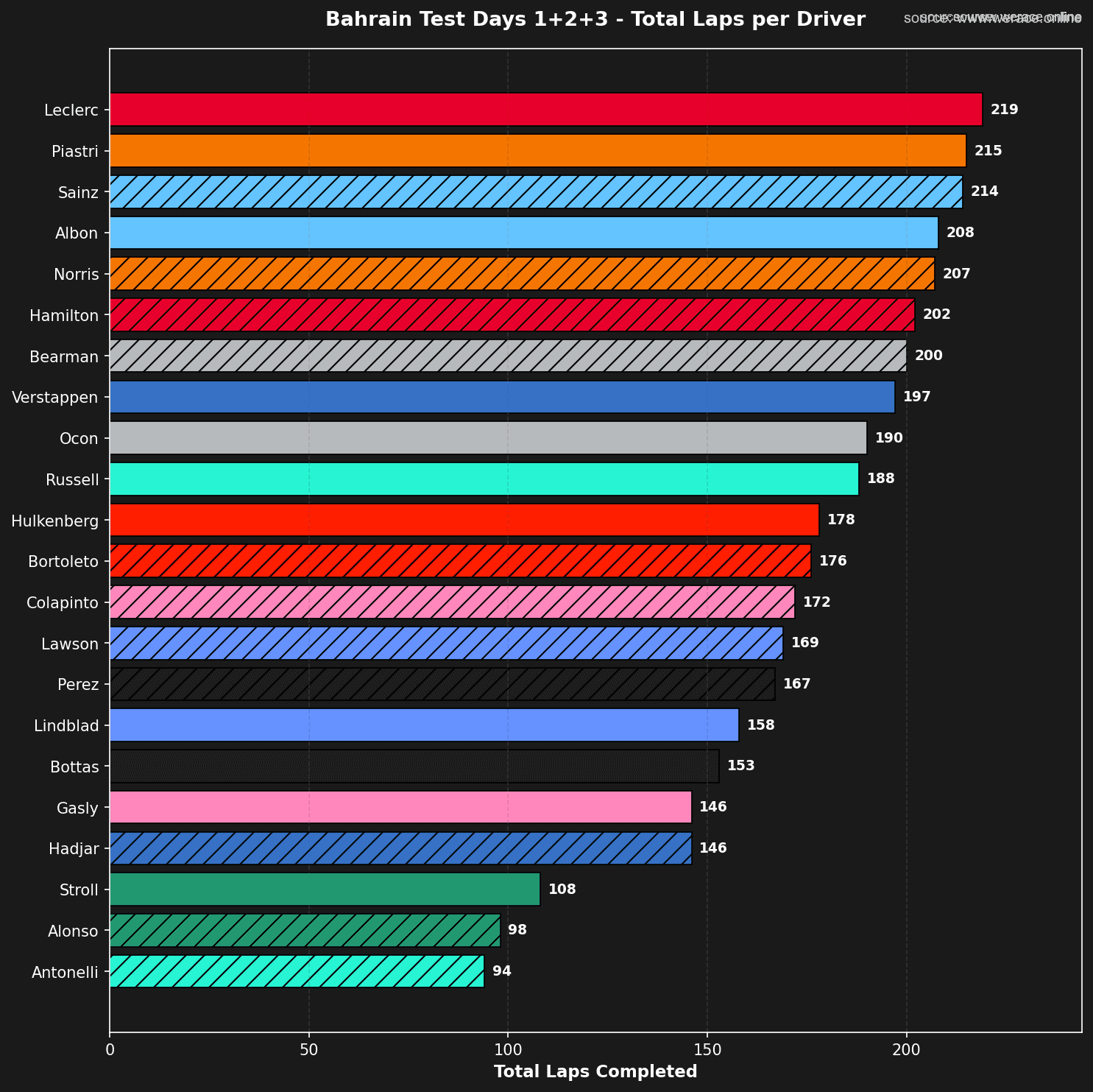
Final Classification
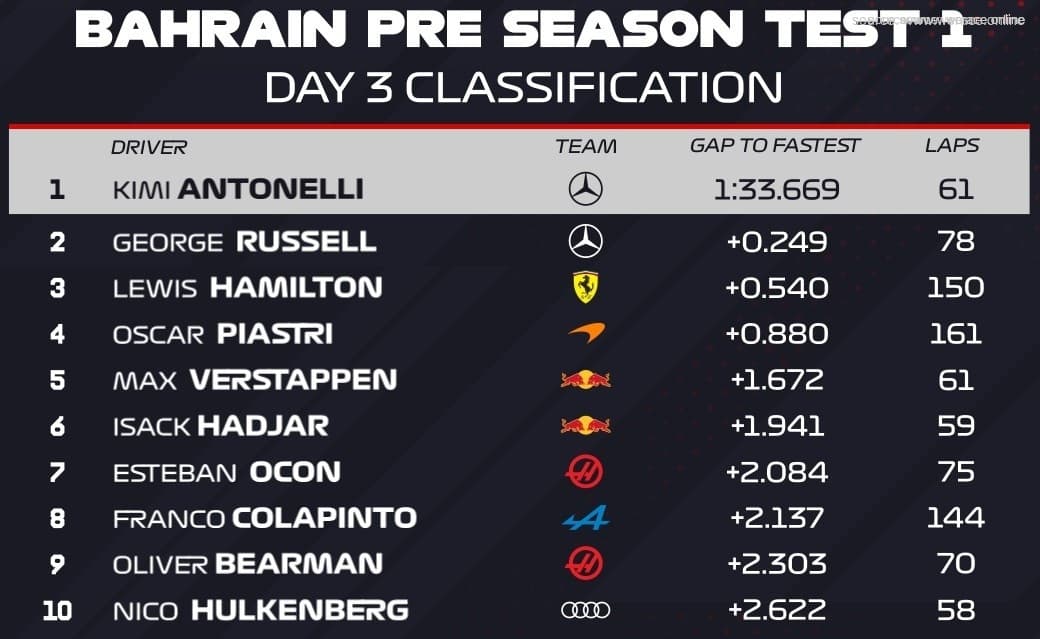
Kimi Antonelli takes the glory with a 1:33.669, but remember: testing times are just for show. The real data is in the race runs.
That's a wrap for Week 1. The cars are fast, the energy management is complex, and the drivers are exhausted.
Over the next few days, I'll be publishing detailed analyses of what emerged from these three intense days of testing. Stay tuned for deep dives into the telemetry data, race pace comparisons, and technical revelations that will shape the 2026 season!
Thanks for reading!