
Singapore Race: Verstappen in Control, Two Faces of Ferrari and the Hamilton VSC Mystery
Max Verstappen did not merely win in Singapore: he controlled the race from the opening metres. Behind him, Ferrari had enough speed to make the afternoon interesting, but not the complete package to turn it into a fight for victory. The most debated story, however, was Lewis Hamilton's strategy during the second Virtual Safety Car, and the pit call that the public radio feed never captured.
1. A Decisive Start and a Controlled Drive
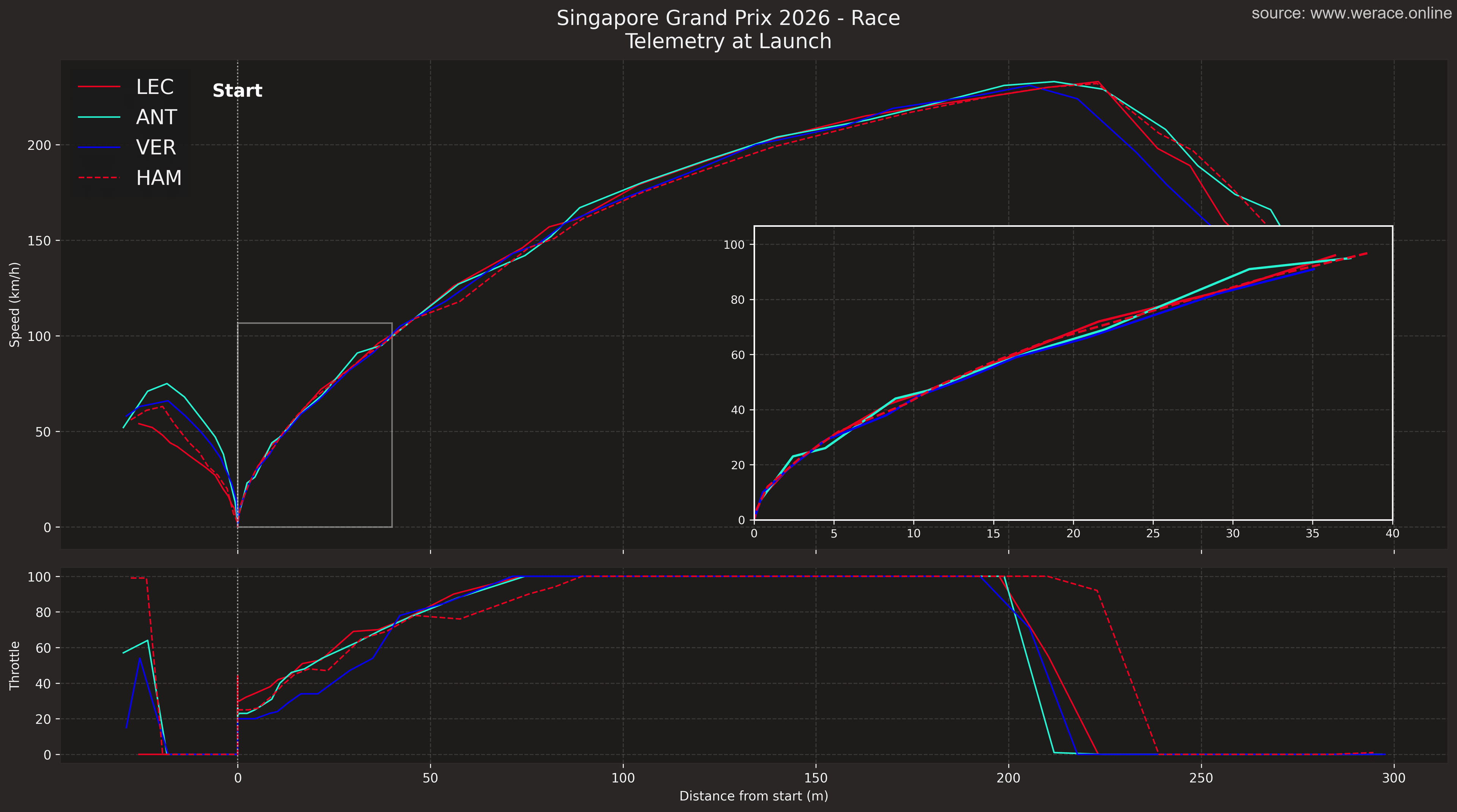
The launch tells an important part of the story. In the first 70 metres it is Charles Leclerc (solid red line) who reaches the higher speed, while Verstappen is the most measured on the throttle of the leading four, at around 20% off the line. The key moment, though, is not acceleration. Verstappen moves to the left, squeezing Leclerc towards the inside and leaving him no room to brake freely, and emerges from the second corner in front. From there, Singapore becomes his race to manage.
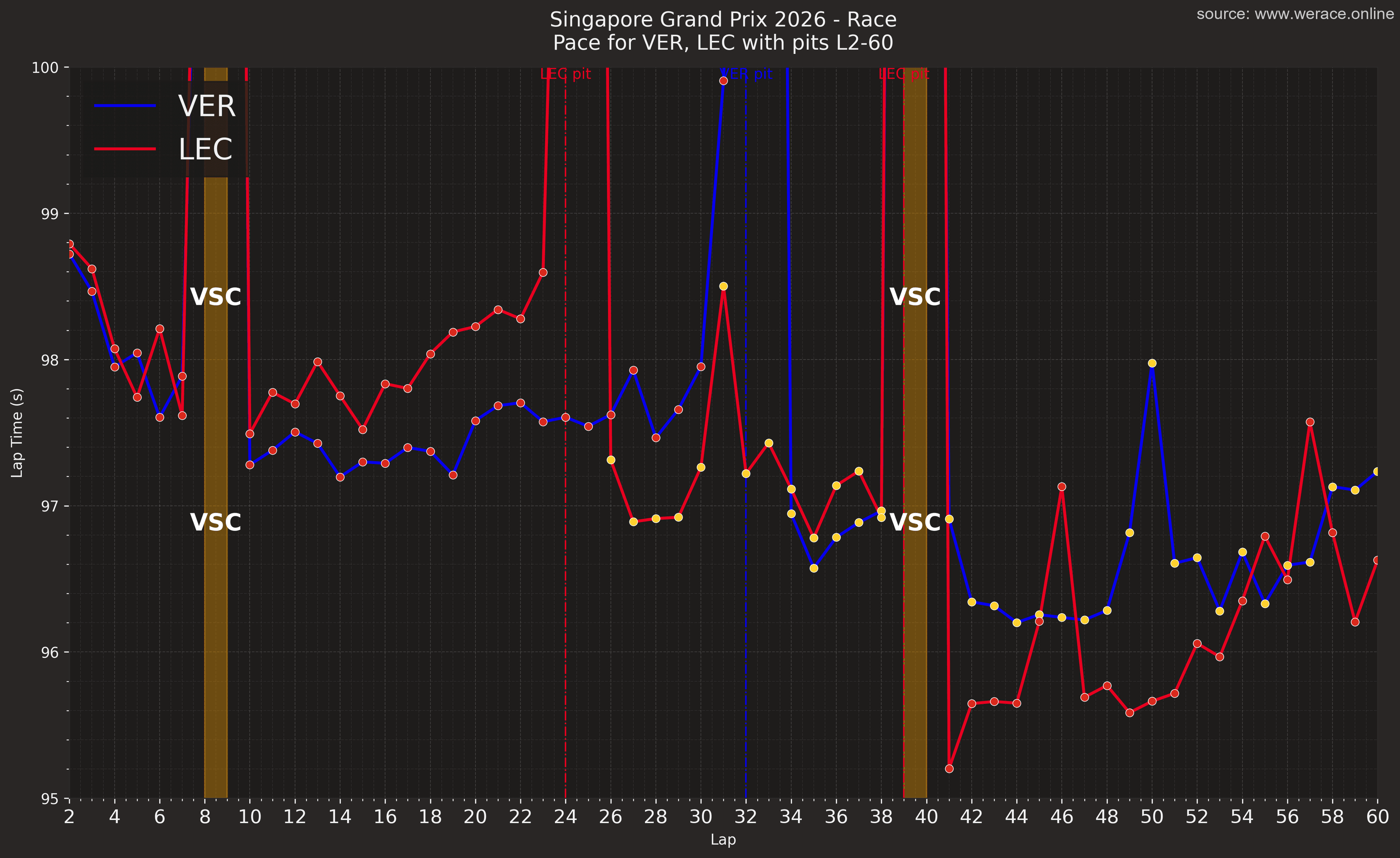
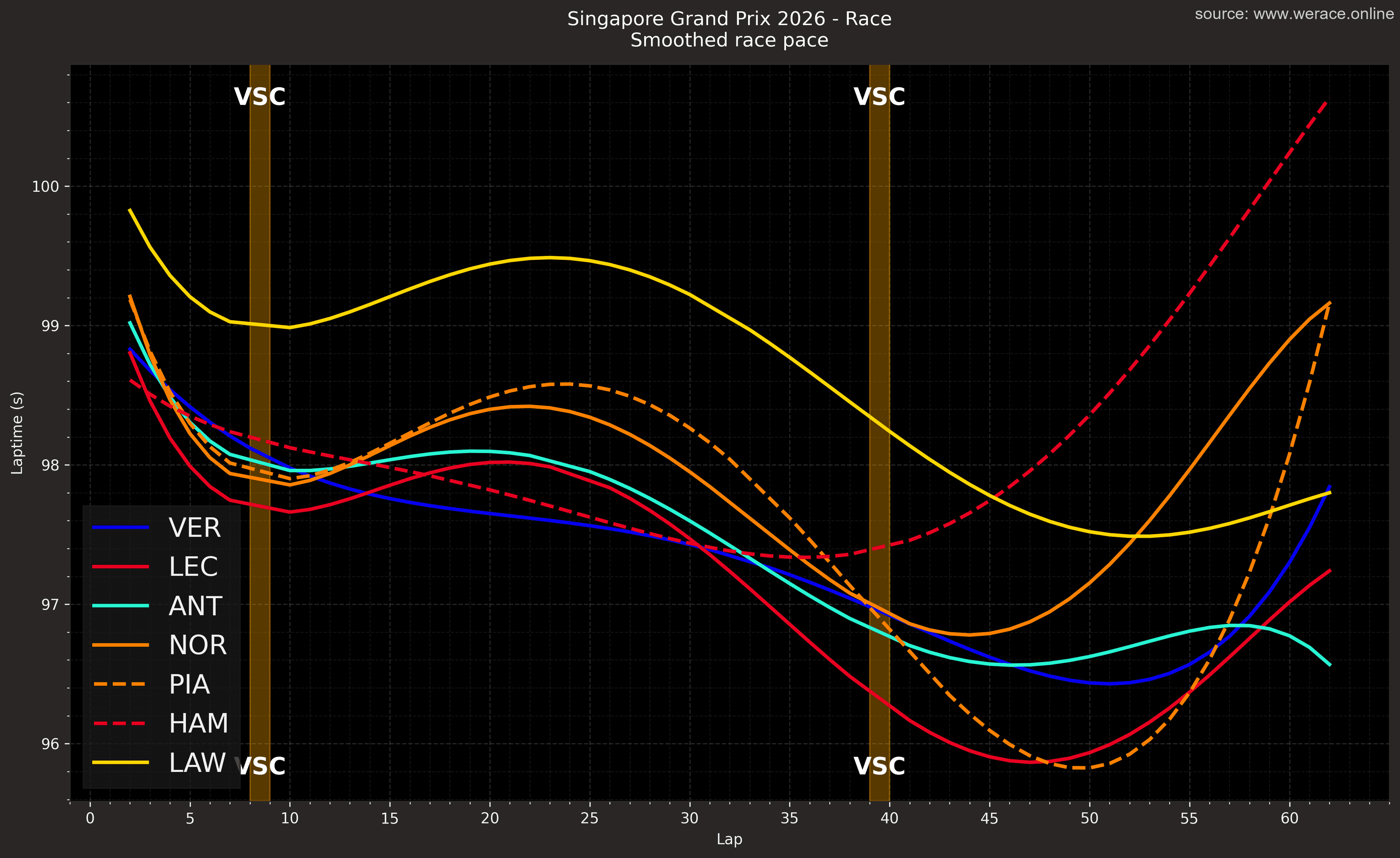
The pace traces underline how convincing that control was. Verstappen was particularly strong on the opening soft tyre and remained highly effective after switching to the medium. After the first Virtual Safety Car, his advantage over Leclerc became especially clear, with laps consistently a few tenths quicker between laps 10 and 23.
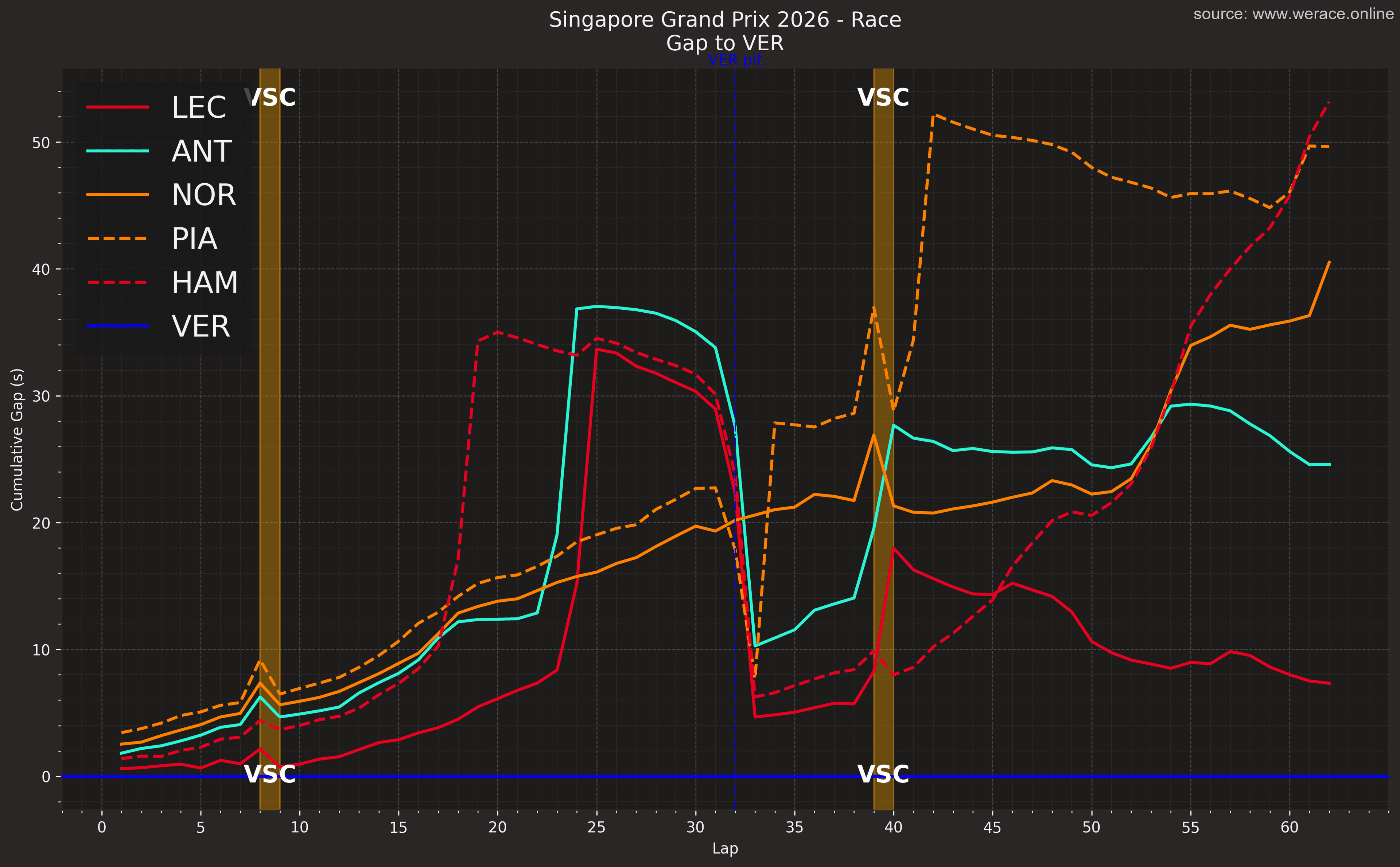
When the gaps to Verstappen are plotted across the field, the Ferrari of Leclerc is the only car that stays close for any meaningful stretch; everyone else drifts away.
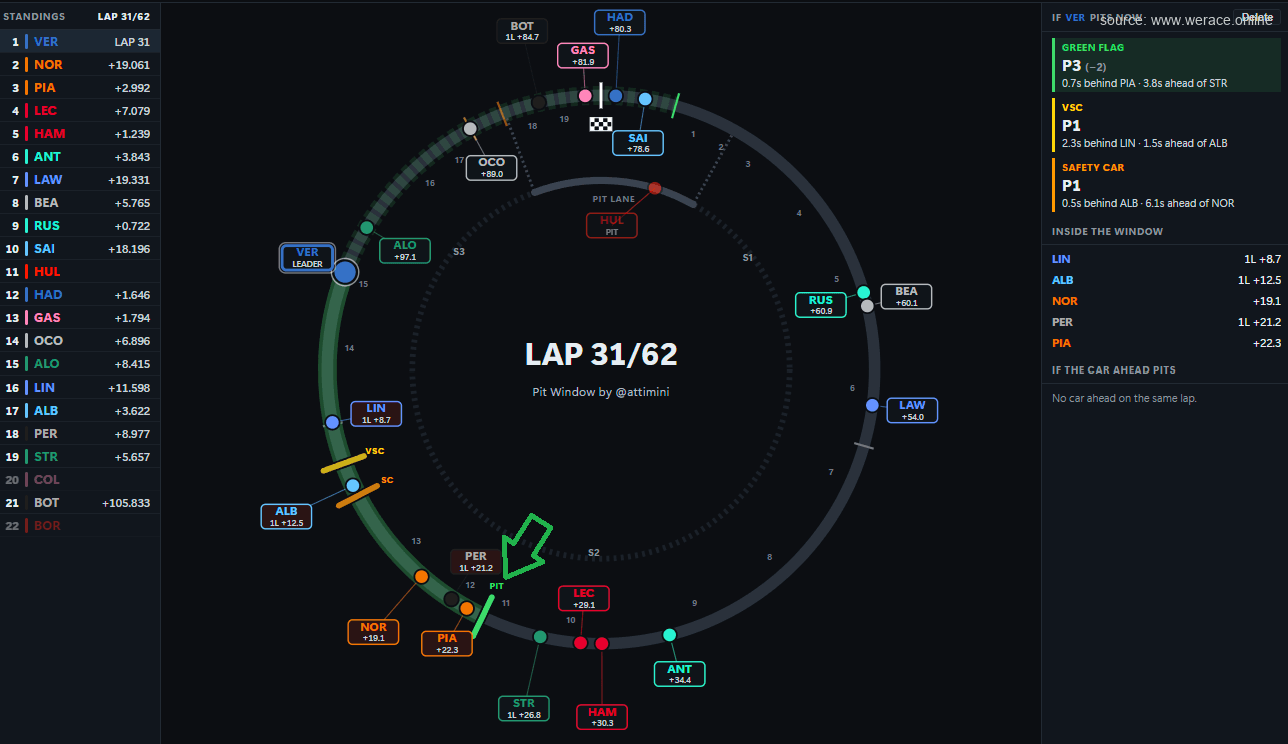
Strategy helped make that advantage usable. On lap 31 Verstappen had a margin of 19 seconds over the car then running second, Lando Norris. Even a green-flag stop at that point would only have dropped him behind the two McLarens, with a pace advantage to recover the positions. As McLaren pitted, Red Bull could bring Verstappen in without any pressure. It was the kind of pit window a driver earns by keeping the race under control, not by relying on a late gamble.
The broader picture supports the feeling that Red Bull have found a better balance. The car looked composed, the power unit had been strong since Friday, with a well-tuned hybrid and combustion integration, and Verstappen could drive with the freedom that had sometimes been missing earlier in the season. The only flaw in an outstanding weekend was his team radio, which stopped working from mid-race onwards.
2. Ferrari's Pace Was Real but Incomplete
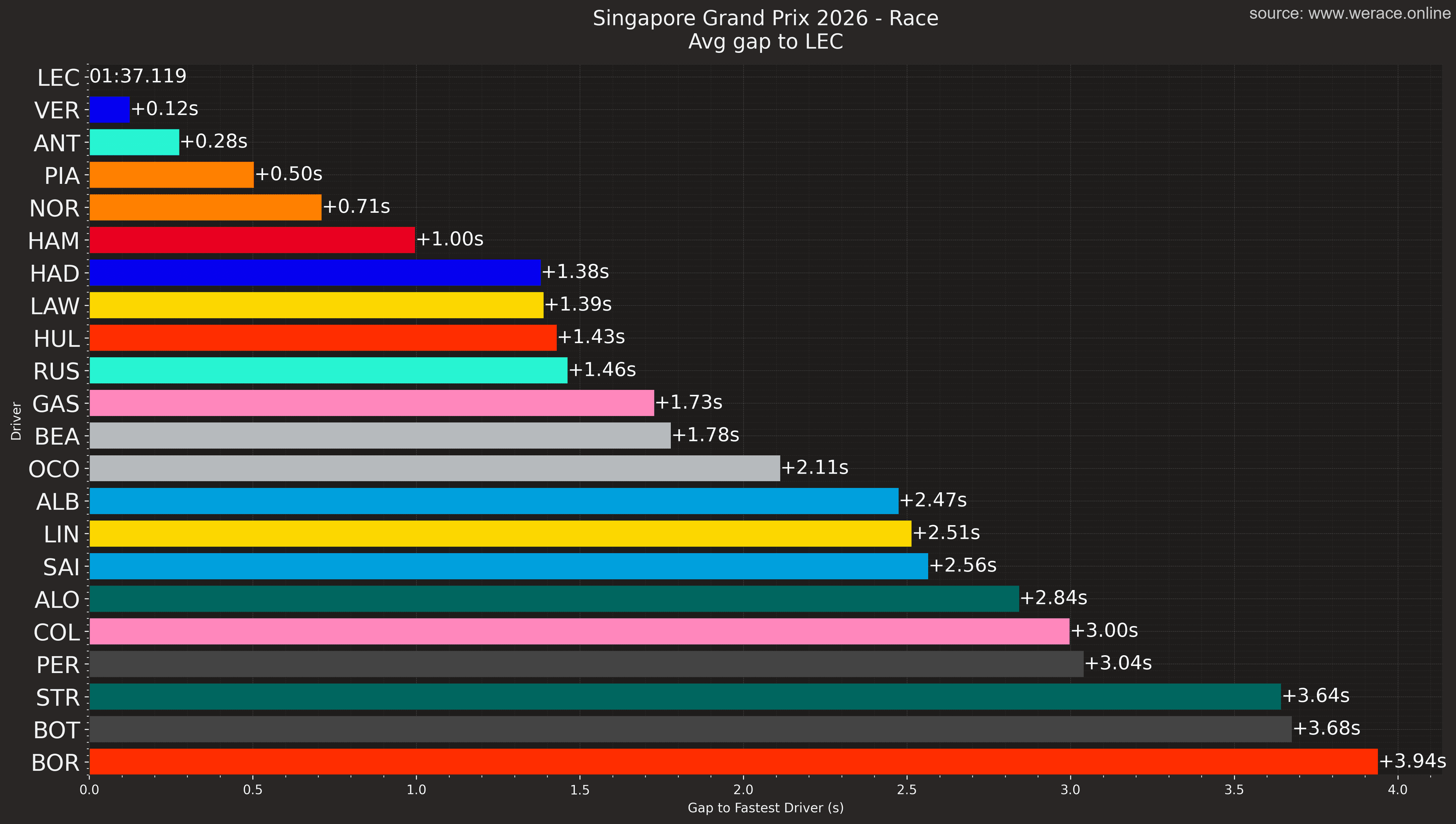
A raw race-pace comparison makes Leclerc look quicker than Verstappen: on average lap time he is the fastest driver in the race, with Verstappen 0.12s behind. That needs context. Leclerc made two stops while Verstappen made one, and comparing every lap without accounting for tyre age and strategy can mislead. The question is not who produced the best-looking pace figure, but who could sustain the required pace on the strategy that mattered. On that measure, Verstappen had the stronger Sunday.
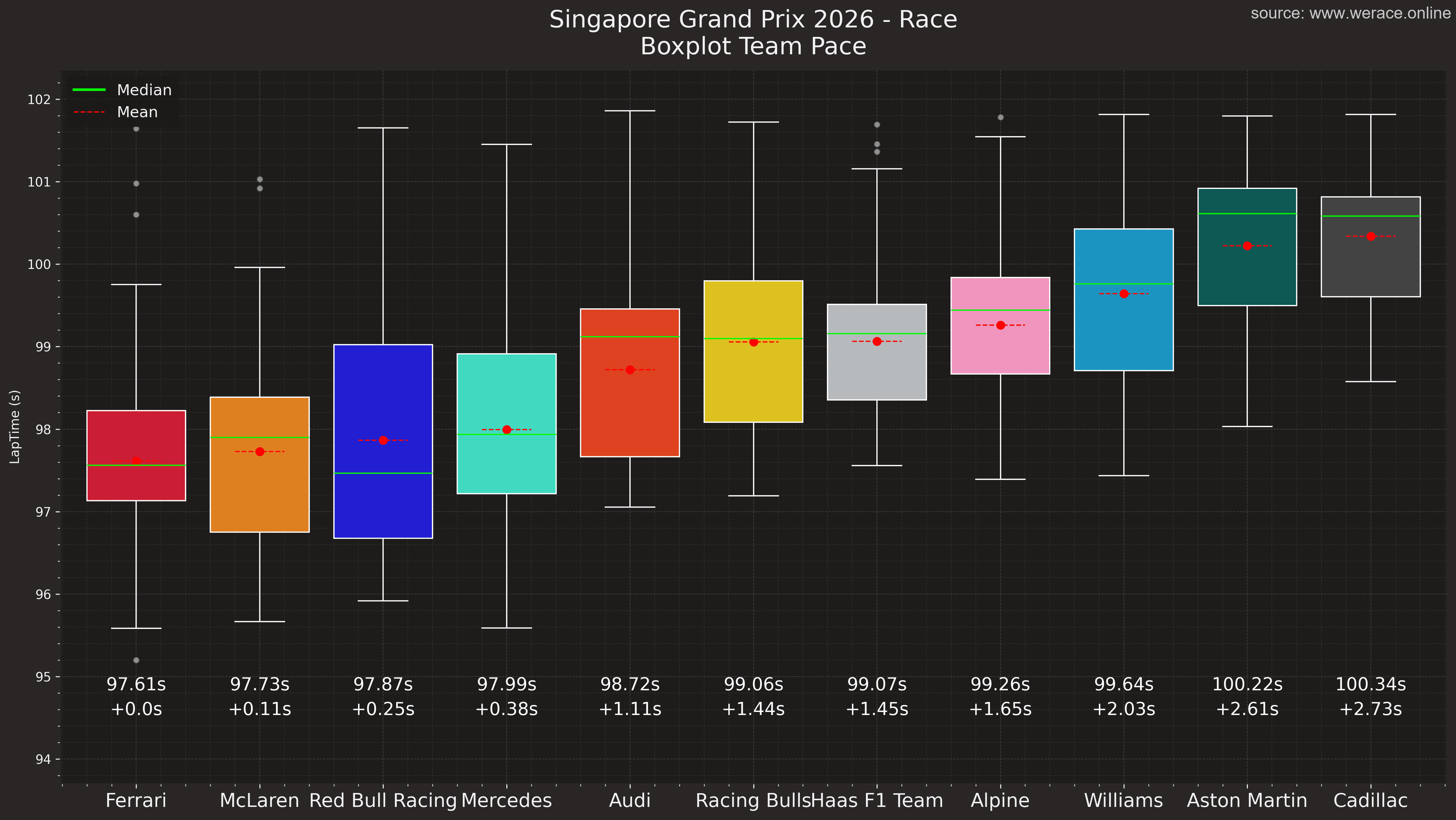
Ferrari were not anonymous. Combining both drivers, they had the best overall race pace of any team, ahead of McLaren by 0.11s and Red Bull by 0.25s. The car was competitive on the soft tyre, but the medium exposed the familiar limitation: on a rear-limited circuit, the Ferrari did not have the same comfort or consistency.
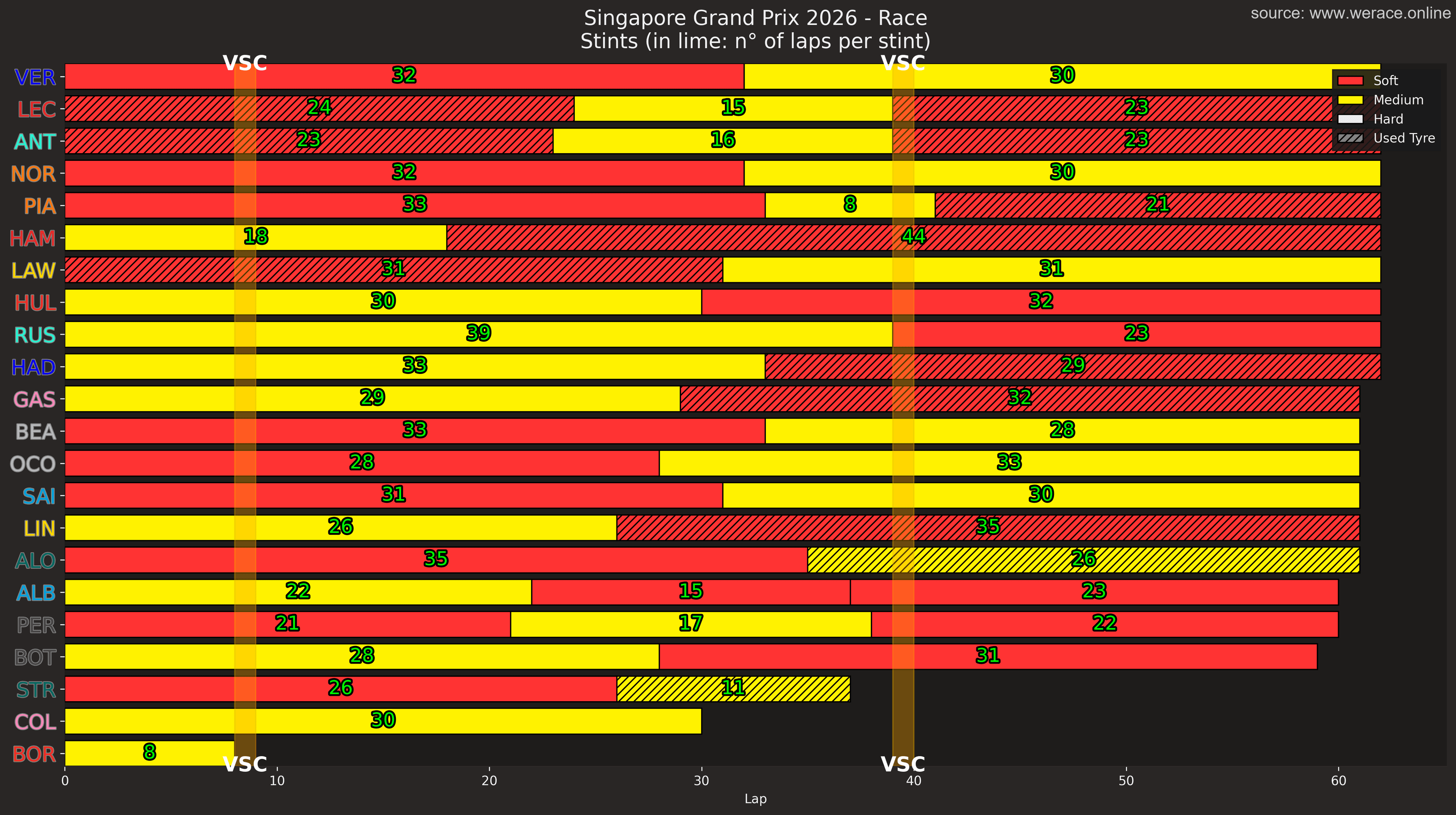
Leclerc's medium stint was officially 15 laps long, but only around ten of them were genuine racing laps once the in-lap and out-lap are removed, before the second Virtual Safety Car gave Ferrari the opportunity to stop again for softs.
Even with a cleaner opening lap, it is difficult to argue that Leclerc had enough to win. Singapore asks a great deal of the rear tyres, precisely the kind of circuit that magnifies Ferrari's weakness. The blanket, as we said after qualifying, is always a little too short.
3. Hamilton and the Virtual Safety Car Question
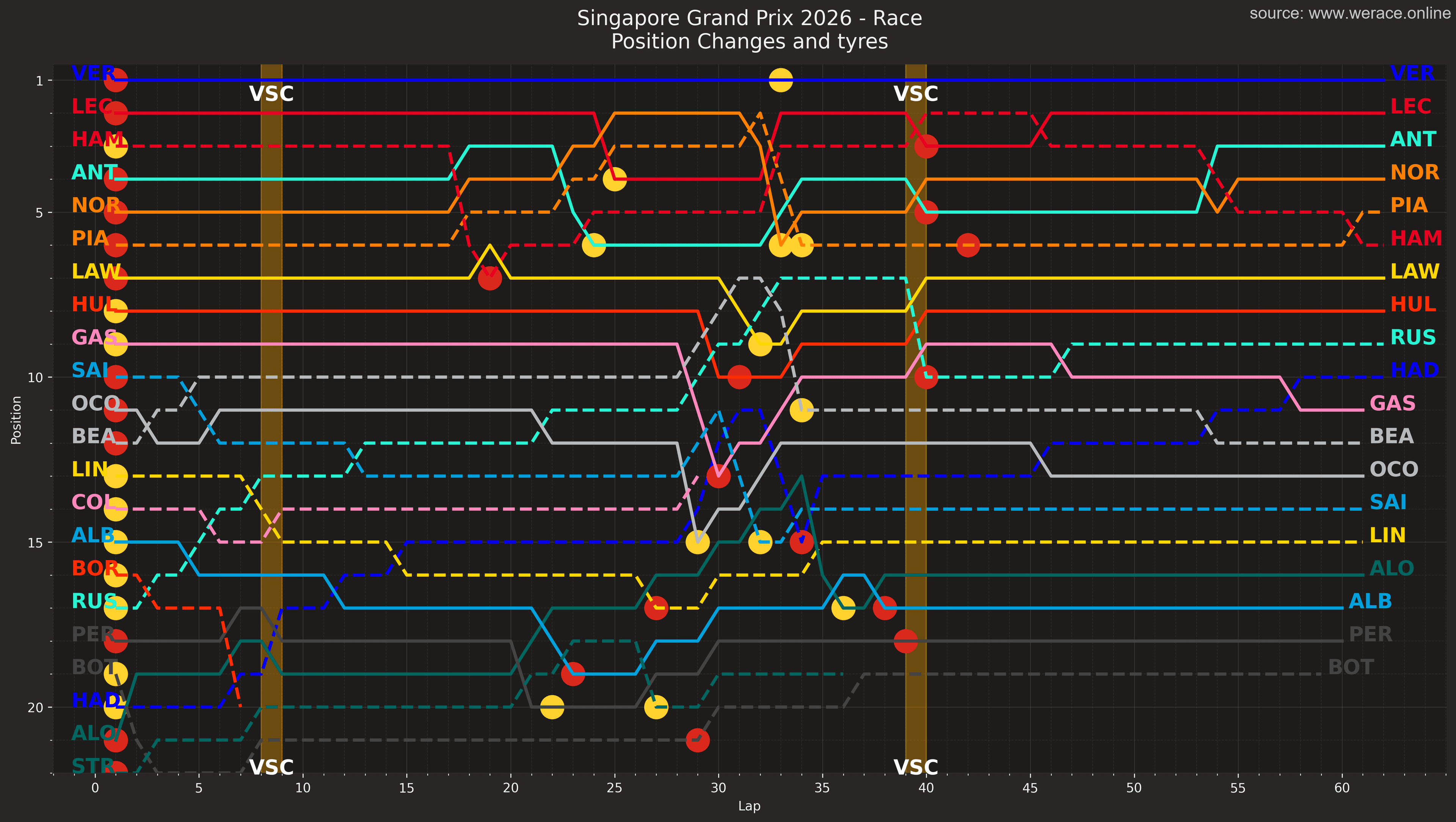
Hamilton's race followed a different path from the start. He began on mediums while most of the top seven chose softs, but the gap to Verstappen suggests he was uncomfortable almost immediately, consistent with the wider Ferrari picture on a rear-limited track. He held his position, then stopped for softs on lap 18. The new tyres were quick, but they brought him straight back into Leclerc's path, a pattern that keeps repeating this season: whether one starts ahead or behind, the two Ferraris always seem to end up fighting each other in the middle of the race.
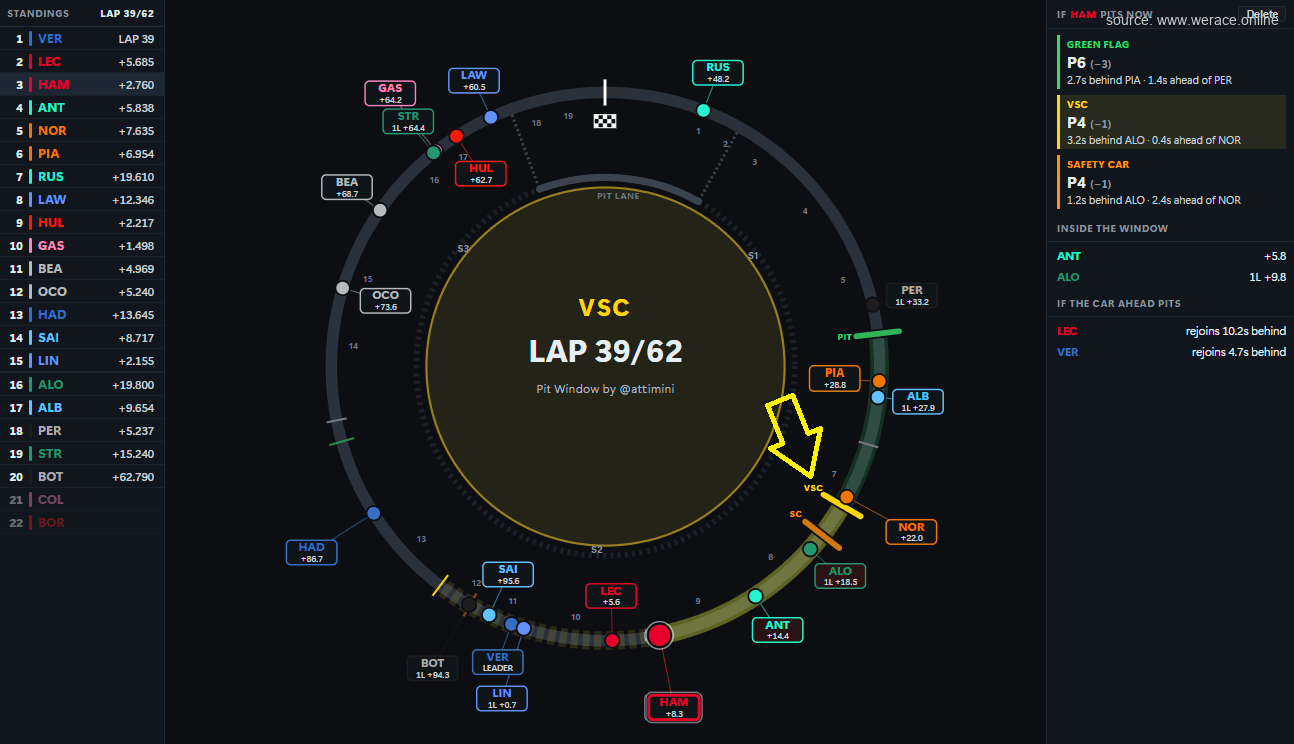
Before the second Virtual Safety Car, Hamilton's race was in good shape: third, with Antonelli almost six seconds behind and Norris more than 13 seconds back. The pit-window data at lap 39 is clear: a stop at that moment would have been perfect, because, as the yellow VSC marker shows, he would have rejoined just ahead of Norris. We cannot know how Norris would have reacted, but it would still have been a precise call, and one with half a lap of margin to make it, since the VSC was deployed just as Hamilton had started the second sector.
This is where certainty ends. The public radio feed clearly captures Ferrari calling Leclerc in: "Box, Charles, box". There is no equivalent call for Hamilton. After race engineer Carlo Santi announces the VSC, Hamilton's audio drops out for around two seconds, with a visible glitch in the broadcast footage at the same moment. It is quite possible that the pit call was made in exactly that gap and that Hamilton chose not to stop. It is also possible that Ferrari used another method, such as a coded message on the steering wheel. The available audio cannot settle it.
What we do know is this. Team principal Fred Vasseur told every broadcaster that both drivers had been called in, and Hamilton himself later accepted responsibility. During Leclerc's stop, a second set of tyres can be seen ready behind his, consistent with Ferrari preparing to double-stack.
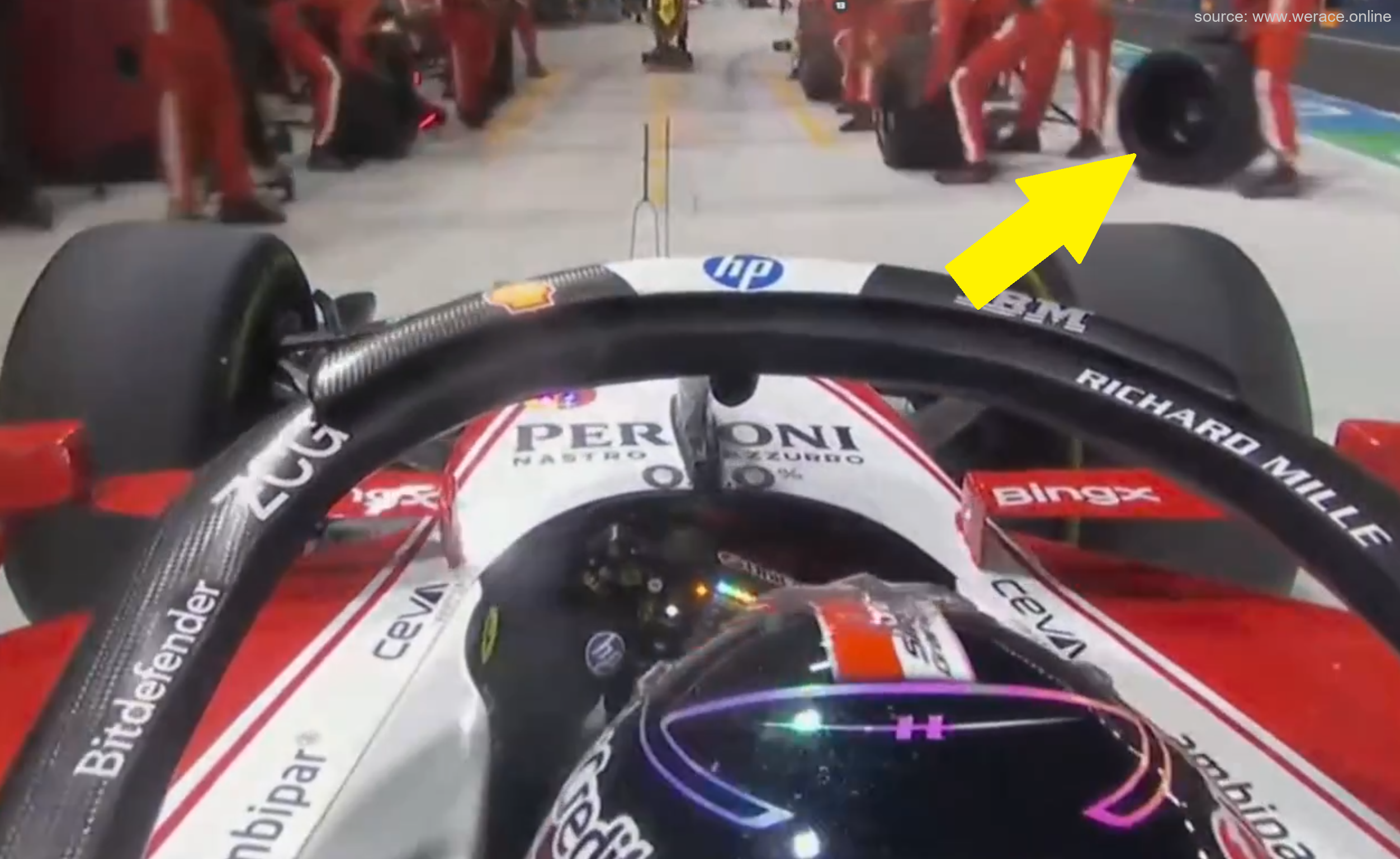
So Hamilton was called: Vasseur said so and Hamilton has now confirmed it. But no call can be heard, so whether it came in those two silent seconds or through another channel remains unknown.
P.S. Rewatching the onboard footage, a light can be seen switching on in the cockpit, most likely the indicator that the radio is active. So there probably was a conversation, before Hamilton reached the pit lane entry, but the audio never made it onto the onboard feed, which carried only the engine sound.
Whatever happened, the consequence was severe. Running 44 laps on softs, as many laps as his race number, at a rear-limited street circuit was close to impossible, and in the closing laps the car was sliding everywhere.
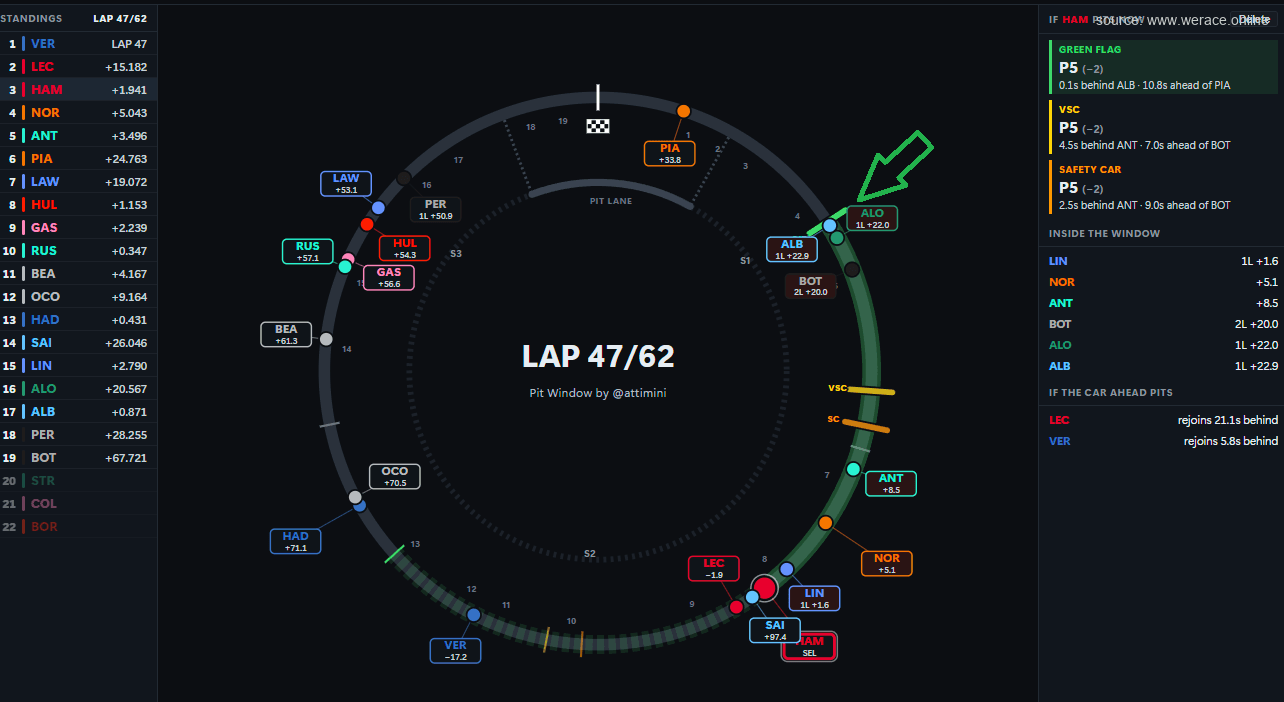
There was a second chance. With no further neutralisation, the team told Hamilton that stopping would cost two positions but give him fresh tyres; he replied that he would wait for another Virtual Safety Car. That was the wrong call too. The pit window at lap 47 shows that a stop would have put him fifth, between Norris and Piastri and almost 11 seconds clear of the Australian, who in the end passed him on the penultimate lap for fifth.
Hamilton's final radio message was an apology, taking responsibility for the strategy. He skipped the media pen, probably to avoid further controversy, and released a statement covering both the medium-tyre start, where the plan was a one-stop race but the yellow-walled tyre did not perform as hoped, and the decision not to pit under the VSC. It is tempting to reduce the episode to a single missed call, but the race was more complicated: the opening medium stint was already difficult, the VSC moment is not fully transparent, and the later decision to wait again compounded the tyre problem.
The bottom line is that a third place was thrown away, and with it a double Ferrari podium that was entirely within reach. A real shame.
4. Mercedes: Effective but Not Comfortable
Mercedes, with Kimi Antonelli, again showed their ability to salvage strong points even when the car is not at its best. A podium keeps the team's weekend looking healthy on paper, but the underlying picture is less convincing. Since the upgrades, the power-unit advantage they used to carry seems to have been absorbed by everything that is not working, starting with a weak front end and a lack of grip. It also remains a fragile car: listen to Antonelli's radio and there is something on the verge of breaking at almost every race.
5. The Verdict
Singapore delivered more than the usual street-circuit procession. Verstappen's dominance was the headline, but Ferrari's contrasting tyre behaviour, Leclerc's two-stop race and Hamilton's VSC mystery gave the race its tension. On Hamilton, everyone is partly right: Ferrari say the call was made, Hamilton has taken responsibility, and the public radio record still has a two-second gap in it.
For Verstappen, though, there is no uncertainty at all. He won the start, managed the pace, used the pit window and turned a strong Red Bull into a statement victory.
See you at the next race!