
- Published on
F1 2026: Barcelona Day 2 Recap
- Authors

- Name
- Attimini
- @attiminii
Rain, red flags, and secrecy. Day 2 of the Barcelona Shakedown felt less like a standard test session and more like a covert military operation. With security helicopters patrolling the circuit perimeter to chase away photographers and the track designated as an "Area 51" style exclusion zone, the few teams brave enough to face the wet conditions revealed some fascinating secrets.
While Mercedes and McLaren stayed dry in their garages to save mileage for better weather, Ferrari and Red Bull took center stage in a dramatic day that shifted the momentum of the test.
While Mercedes and McLaren stayed dry in their garages to save mileage for better weather, Ferrari and Red Bull took center stage in a dramatic day that shifted the momentum of the test.
Ferrari SF-26: The Marathon Runner
After sitting out Day 1, the Ferrari SF-26 made a thunderous debut. Maranello's plan was executed with military precision despite the rain arriving at 10:30 AM.
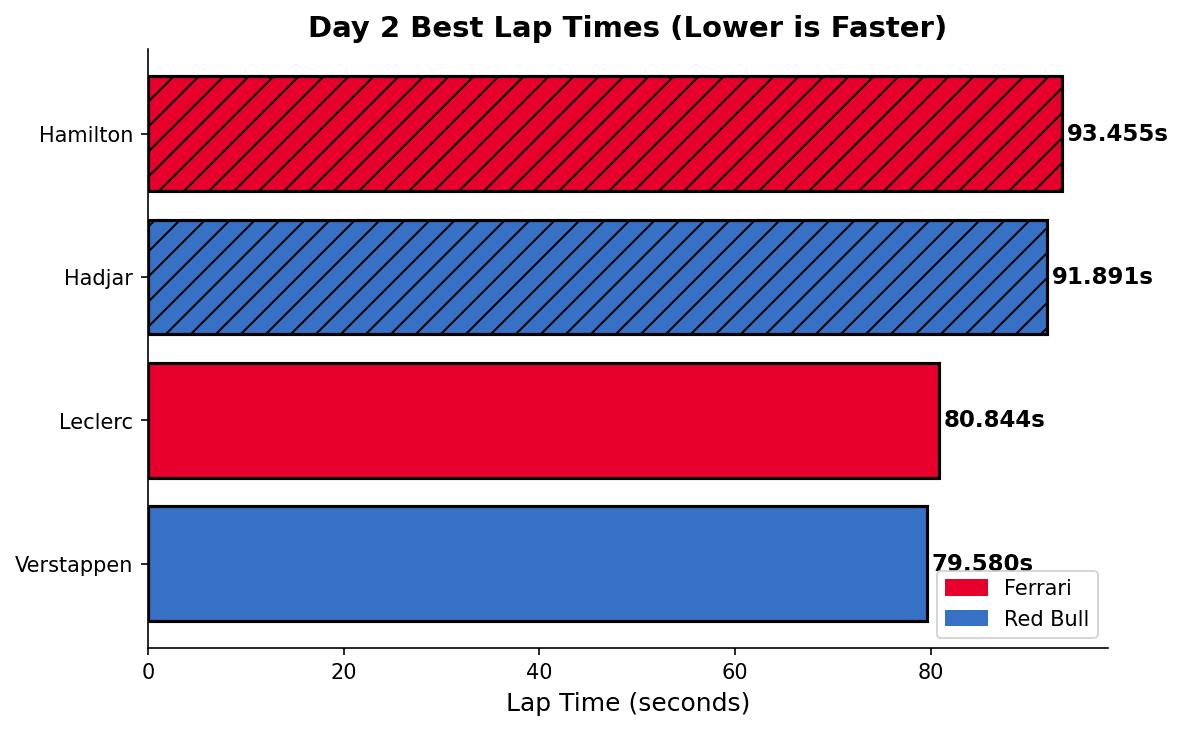
Charles Leclerc started the morning on dry asphalt, clocking a 1:20.844 before switching to wet testing. His focus wasn't lap times, but validating systems, specifically the new "Partial Active Aero Mode"—a complex feature permitted by the 2026 regulations that Ferrari was keen to test immediately.
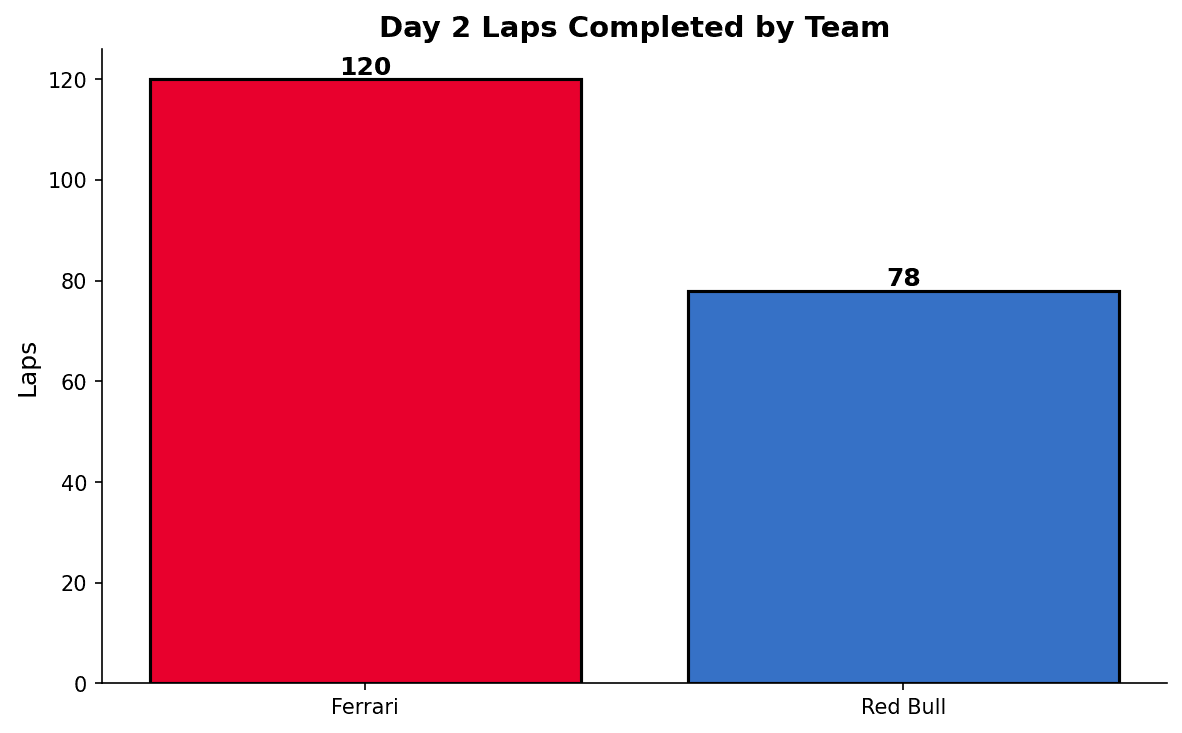
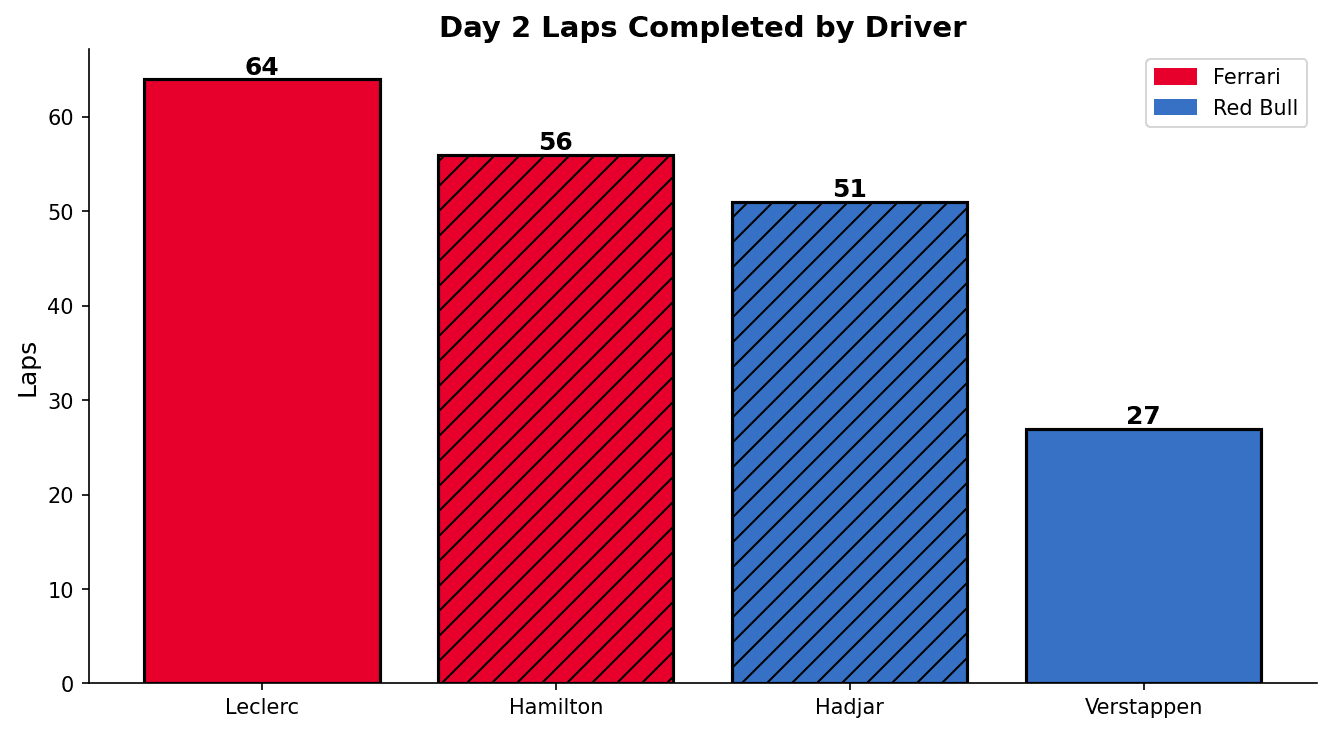
In the afternoon, Lewis Hamilton took over for a relentless wet-weather stint. The seven-time champion cycled through tires—Intermediates, Wets, Intermediates, and back to Wets—to understand the crossover points of the new Pirelli rubber. The result? A massive 121 laps (approx. 560 km), making Ferrari the reliability king of Day 2.
Head of Track Engineering Matteo Togninalli confirmed the team encountered "no major reliability issues", a sentiment echoed by Hamilton, who called the day "intense but productive".
Red Bull: Fast but Fragile?
The day started brilliantly for Red Bull. Max Verstappen debuted the RB22 and immediately went fastest (1:19.578). However, signs of nervousness appeared early: Verstappen caused a brief red flag in the morning with a gravel excursion, though he managed to return to the pits without damage.
The team spent the morning conducting intensive aerodynamic correlation, fitting the RB22 with massive sensor rakes behind the front wheels and using flow-vis paint to map airflow over the sidepods.
Disaster struck in the afternoon. Rookie Isack Hadjar, who had impressed on Day 1, lost control at the high-speed Turn 14. The crash was significant: the RB22 slammed backwards into the barriers, damaging the rear wing and rear suspension.
The Crisis: This isn't just a repair job. Team Principal Laurent Mekies admitted they are "unsure" when the car can run again. With the cars being brand new prototypes, spare parts are scarce. There is genuine concern in the paddock that Red Bull might run out of parts, potentially compromising Verstappen's running for the rest of the week.
🕵️ Paddock Whispers: Tech Secrets & Controversies
Beyond the lap times, Day 2 generated some serious technical buzz and controversy among the insiders.
1. The "Fake" Weight Declaration
Rumors are swirling about the weight of the new cars. While Ferrari's spec sheet reportedly lists the SF-26 at 770 kg (the target minimum), sources suggest this is merely a nominal "autocertification" for the shakedown. The real weight of these active-aero beasts remains a mystery, and it is highly skeptical that any team has actually hit the minimum weight limit this early.
2. Mercedes' Engine "Trick"?
Although Mercedes didn't run on Day 2, they are the talk of the town. Rivals have reportedly complained to the FIA about a potential loophole Mercedes is exploiting regarding the compression ratio. The 2026 rules lowered the ratio from 18:1 to 16:1, but rumors suggest Mercedes (and possibly Red Bull) might be running higher ratios on track while passing static checks, a "trick" that could offer significant performance advantages.
3. Active Aero Loophole
Mercedes has also been spotted testing a unique front wing solution. Observations suggest they are using a system to block the second flap while utilizing the third, effectively creating a "partial" active aero effect that offers more granular control than the regulations perhaps intended.
📊 Day 2 Official Recap
Unofficial Times & Laps
Note: Times are not directly comparable due to mixed dry/wet running.
| Pos | Driver | Team | Time | Conditions | Laps | Notes |
|---|---|---|---|---|---|---|
| 1 | M. Verstappen | Red Bull | 1:19.578 | Dry | 27 | Morning Best / Gravel excursion |
| 2 | C. Leclerc | Ferrari | 1:20.844 | Dry/Mix | 64 | Tested Active Aero systems |
| 3 | I. Hadjar | Red Bull | 1:31.891 | Wet | 51 | CRASH (Rear damage) |
| 4 | L. Hamilton | Ferrari | 1:33.455 | Wet | 56 | Heavy fuel / Tyre crossover tests |
Cumulative Reliability (Day 1 + Day 2)
Ferrari has surged to the top of the reliability charts, while Audi and the customer teams sat out the wet weather.
- 🐎 Ferrari Power: 318 Laps (Haas + Ferrari + Cadillac)
- 🐂 Red Bull Ford: 273 Laps (Red Bull + RB)
- ⭐️ Mercedes: 209 Laps (Mercedes + Alpine) Did not run Day 2
- ⭕️ Audi: 27 Laps Did not run Day 2